
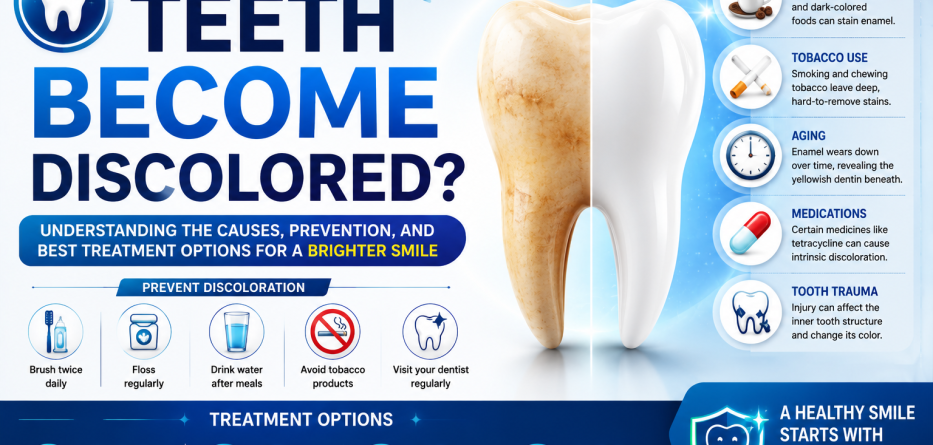
A bright, white smile is often associated with good health and confidence. However, over time, many people notice their teeth becoming yellow, brown, gray, or stained. Tooth discoloration is one of the most common cosmetic dental concerns, affecting people of all ages.
The good news is that understanding why teeth become discolored can help you take steps to prevent staining and maintain a healthier-looking smile. From everyday habits and dietary choices to aging and certain medical conditions, several factors can contribute to changes in tooth color.
In this guide, we’ll explore the causes of tooth discoloration, the different types of stains, prevention strategies, and the most effective treatment options available.
What Is Tooth Discoloration?
Tooth discoloration refers to any change in the natural color of your teeth.
Healthy teeth are naturally off-white rather than perfectly white. However, when stains accumulate or internal changes occur within the tooth structure, teeth can appear
- Yellow
- Brown
- Gray
- Black
- White spots
The type and severity of discoloration often determine the most appropriate treatment.
Types of Tooth Discoloration
Understanding the type of stain is important for effective treatment.
1. Extrinsic Stains
Extrinsic stains affect the outer layer of the tooth (enamel).
These stains are usually caused by:
- Food
- Drinks
- Tobacco use
- Poor oral hygiene
Extrinsic stains are often easier to remove through professional cleaning or whitening treatments.
2. Intrinsic Stains
Intrinsic stains develop inside the tooth structure.
Common causes include:
- Trauma
- Certain medications
- Excessive fluoride exposure
- Aging
These stains are generally more difficult to treat and may require professional whitening or cosmetic procedures.
3. Age-Related Discoloration
As people age, both extrinsic and intrinsic factors contribute to discoloration.
Changes include:
- Enamel thinning
- Exposure of yellow dentin
- Accumulated stains over time
This is one of the most common reasons adults notice darker teeth.
Common Causes of Tooth Discoloration
1. Coffee and Tea
Coffee and tea contain compounds called tannins that can stain enamel.
Regular consumption may lead to:
- Yellow stains
- Brown discoloration
- Surface staining
Dark-colored beverages are among the leading causes of tooth discoloration.
2. Red Wine
Red wine contains:
- Tannins
- Chromogens
- Acids
This combination makes it particularly likely to stain teeth.
Frequent consumption can result in noticeable discoloration over time.
3. Tobacco Use
Smoking and chewing tobacco are major contributors to stained teeth.
Nicotine and tar can produce the following:
- Yellow stains
- Brown stains
- Deep discoloration
Tobacco stains often become more difficult to remove the longer they remain on the teeth.
4. Poor Oral Hygiene
Failing to brush and floss regularly allows plaque and stain-causing substances to accumulate.
Consequences may include:
- Surface staining
- Tartar buildup
- Yellow appearance
Consistent oral hygiene helps prevent many types of discoloration.
5. Aging
As enamel naturally wears down with age, the underlying dentin becomes more visible.
Dentin is naturally more yellow than enamel.
This process often causes teeth to appear
- Darker
- More yellow
- Less vibrant
6. Certain Foods
Many foods contain pigments that can stain enamel.
Common examples include:
- Berries
- Tomato sauce
- Curry
- Soy sauce
- Beetroot
Repeated exposure can gradually discolor teeth.
7. Medications
Some medications may affect tooth color.
Examples include:
- Tetracycline antibiotics
- Doxycycline
- Antihistamines
- Certain blood pressure medications
Children exposed to tetracycline during tooth development may develop permanent discoloration.
8. Excessive Fluoride Exposure
Too much fluoride during childhood can cause dental fluorosis.
Signs include:
- White streaks
- White spots
- Brown discoloration in severe cases
Fluorosis occurs while teeth are developing beneath the gums.
9. Tooth Trauma
An injury can damage the internal structures of a tooth.
Following trauma, a tooth may become
- Gray
- Brown
- Black
This often indicates changes within the tooth’s nerve or blood supply.
How Enamel and Dentin Affect Tooth Color
Teeth have multiple layers.
Enamel
The outer protective layer.
Characteristics:
- Hard
- Translucent
- Naturally white
Dentin
The layer beneath enamel.
Characteristics:
- Yellowish color
- More visible as enamel thins
The interaction between these layers significantly affects the appearance of your smile.
How to Prevent Tooth Discoloration
Although some discoloration is unavoidable, many stains can be prevented.
Prevention Tips
- Brush twice daily
- Floss every day
- Use fluoride toothpaste
- Drink water after consuming staining foods
- Limit tobacco use
- Schedule regular dental cleanings
- Use a straw for dark beverages
Small lifestyle changes can make a significant difference over time.
Professional Treatments for Discolored Teeth
Professional Dental Cleaning
A dental cleaning removes:
- Plaque
- Tartar
- Surface stains
This is often the first step in improving tooth appearance.
Teeth Whitening
Professional whitening treatments can significantly brighten teeth.
Benefits include:
- Faster results
- Greater effectiveness
- Professional supervision
Whitening works best for many extrinsic stains.
Dental Bonding
For stubborn discoloration, bonding can cover stained areas with tooth-colored resin.
Suitable for:
- Intrinsic stains
- White spots
- Minor cosmetic imperfections
Porcelain Veneers
Veneers are thin shells placed over the front surface of teeth.
They can conceal:
- Severe discoloration
- Deep intrinsic stains
- Cosmetic irregularities
Veneers provide long-lasting aesthetic improvements.
Home Whitening Options
Many people choose at-home whitening products.
Popular options include:
- Whitening toothpaste
- Whitening strips
- Whitening gels
- Whitening trays
While convenient, results may vary compared to professional treatments.
Foods That Help Keep Teeth White
Some foods naturally support oral health and reduce staining.
Examples include:
- Apples
- Celery
- Carrots
- Cheese
- Yogurt
These foods can help stimulate saliva production and reduce plaque accumulation.
Frequently Asked Questions
Why are my teeth turning yellow?
Yellow teeth are often caused by aging, staining foods and drinks, smoking, or poor oral hygiene.
Can yellow teeth become white again?
In many cases, yes. Professional cleaning and whitening treatments can significantly improve tooth color.
Does coffee permanently stain teeth?
Coffee can cause long-term staining, but many stains can be reduced or removed with professional treatment.
Are whitening products safe?
When used correctly, most dentist-approved whitening products are considered safe.
Why is one tooth darker than the others?
A single dark tooth may indicate trauma, internal damage, or nerve-related issues and should be evaluated by a dentist.
Conclusion
Tooth discoloration is a common concern that can result from aging, diet, lifestyle habits, medications, and various oral health conditions. Understanding how teeth become discolored is the first step toward maintaining a brighter, healthier smile.
Fortunately, many causes of staining can be prevented through good oral hygiene, healthy lifestyle choices, and regular dental care. For existing discoloration, professional treatments such as whitening, bonding, and veneers can help restore confidence and improve the appearance of your smile.
