
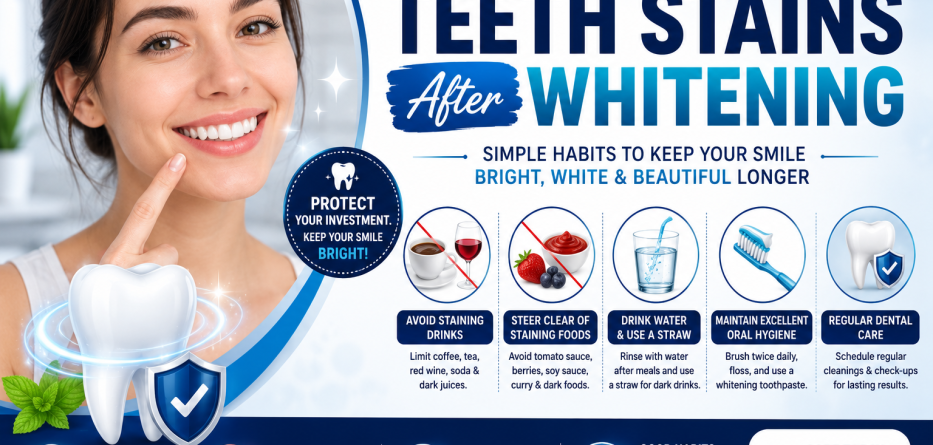
Teeth whitening is one of the most popular cosmetic dental treatments, helping people achieve a brighter, more confident smile. However, many patients are surprised to learn that maintaining those results requires proper aftercare. Without the right precautions, newly whitened teeth can quickly become stained again, reducing the longevity of your treatment.
After whitening, teeth are often more susceptible to discoloration because the enamel becomes temporarily more porous. This makes it easier for pigments from foods, beverages, and lifestyle habits to penetrate the tooth surface.
The good news is that with the right care, you can keep your smile brighter for months or even years. In this guide, we’ll explain how to avoid teeth stains after whitening and protect your investment in a whiter smile.
Why Are Teeth More Vulnerable to Stains After Whitening?
Professional and at-home whitening treatments work by opening microscopic pores in the enamel to remove deep stains.
For a short period after treatment:
- Teeth are more porous
- Pigments are absorbed more easily
- Sensitivity may increase
- Staining risks are higher
This period is commonly referred to as the “white diet” phase, during which special precautions are recommended.
The First 48 Hours Are Critical
The first 24 to 48 hours after whitening are the most important for protecting your results.
During this time:
- Avoid highly pigmented foods
- Avoid dark-colored drinks
- Avoid tobacco products
- Follow your dentist’s instructions carefully
Think of your teeth as a white shirt—anything that could stain a white shirt can potentially stain your teeth.
Foods to Avoid After Teeth Whitening
Certain foods contain strong pigments that can quickly stain freshly whitened teeth.
Avoid These Foods
- Tomato sauce
- Soy sauce
- Curry
- Berries
- Beetroot
- Dark chocolate
- Colored candies
- Balsamic vinegar
These foods contain chromogens, which are highly pigmented compounds that can attach to tooth enamel.
Drinks That Can Cause Teeth Stains
Beverages are among the most common causes of post-whitening discoloration.
Avoid or Limit
- Coffee
- Tea
- Red wine
- Cola
- Sports drinks
- Energy drinks
- Dark fruit juices
If You Must Drink Them
- Use a straw whenever possible.
- Rinse with water afterward.
- Avoid prolonged sipping.
Reducing contact time helps minimize staining.
Follow the White Diet
Many dentists recommend a temporary “white diet” after whitening treatment.
Safe Foods to Eat
- White rice
- Plain chicken
- Turkey
- Fish
- Potatoes
- Cauliflower
- White pasta
- Bananas
- Yogurt
- Eggs
These foods are less likely to cause staining and help preserve whitening results.
Avoid Smoking and Tobacco Products
Tobacco is one of the leading causes of tooth discoloration.
Smoking introduces:
- Nicotine
- Tar
- Staining chemicals
These substances can quickly reverse whitening results.
Benefits of Avoiding Tobacco
- Longer-lasting whitening
- Better oral health
- Reduced gum disease risk
- Fresher breath
Patients who quit smoking often maintain whitening results significantly longer.
Practice Excellent Oral Hygiene
Good oral hygiene helps prevent surface stains from accumulating.
Daily Oral Care Routine
- Brush twice daily.
- Floss once daily.
- Use fluoride toothpaste.
- Clean your tongue.
- Rinse after meals.
Consistent hygiene reduces plaque buildup and staining.
Consider Whitening Toothpaste
Whitening toothpaste can help maintain results by removing surface stains.
Benefits
- Gentle stain removal
- Brighter appearance
- Easy maintenance
However, whitening toothpaste does not typically change the natural shade of teeth like professional whitening treatments.
Choose products recommended by your dentist to avoid excessive abrasiveness.
Drink More Water
Water is one of the simplest ways to protect your smile.
Why Water Helps
- Washes away pigments
- Reduces acid exposure
- Stimulates saliva production
- Keeps teeth cleaner
Drinking water after meals and beverages can significantly reduce staining potential.
Use a Straw for Dark Beverages
A straw helps limit direct contact between staining liquids and your front teeth.
This simple habit can reduce exposure to:
- Coffee
- Tea
- Soft drinks
- Fruit juices
While not foolproof, it can help prolong whitening results.
Schedule Regular Dental Cleanings
Professional cleanings remove plaque and surface stains that brushing alone may miss.
Benefits of Routine Cleanings
- Cleaner teeth
- Healthier gums
- Improved appearance
- Longer-lasting whitening
Most dentists recommend cleanings every six months.
Avoid Acidic Foods and Drinks
Acidic substances can weaken enamel and make teeth more vulnerable to staining.
Examples Include
- Citrus fruits
- Vinegar-based dressings
- Soda
- Sports drinks
If consumed, rinse your mouth with water afterward.
Touch-Up Whitening Treatments
Even with excellent care, teeth naturally accumulate stains over time.
Touch-Up Options
- Dentist-supervised touch-up kits
- Professional whitening sessions
- Whitening strips (if recommended)
Periodic maintenance helps preserve a consistently bright smile.
Foods That Naturally Help Clean Teeth
Some foods can support oral cleanliness and reduce stain buildup.
Helpful Choices
- Apples
- Celery
- Carrots
- Cucumbers
- Cheese
These foods stimulate saliva production and may help remove surface debris.
Common Mistakes After Teeth Whitening
Avoid these common errors:
Drinking Coffee Immediately
Many people resume coffee consumption too soon.
Smoking After Treatment
Tobacco can quickly stain freshly whitened teeth.
Poor Oral Hygiene
Skipping brushing or flossing allows stains to accumulate.
Ignoring Dentist Instructions
Post-treatment guidelines are designed to maximize results.
How Long Do Teeth Whitening Results Last?
Results vary depending on:
- Diet
- Oral hygiene habits
- Smoking status
- Type of whitening treatment
Average Longevity
| Whitening Method | Typical Duration |
|---|---|
| Professional Whitening | 1–3 Years |
| Take-Home Trays | 6–12 Months |
| Whitening Strips | 3–6 Months |
Proper aftercare can significantly extend these timelines.
Frequently Asked Questions
How long should I avoid coffee after teeth whitening?
Most dentists recommend avoiding coffee for at least 48 hours after treatment.
Can I drink water immediately after whitening?
Yes. Water is encouraged and helps protect whitening results.
What foods are safe after teeth whitening?
White or lightly colored foods such as chicken, rice, fish, potatoes, eggs, and yogurt are generally safe choices.
Does smoking ruin teeth whitening?
Smoking can significantly reduce whitening longevity and quickly cause new stains.
How often should I whiten my teeth?
Follow your dentist’s recommendations. Over-whitening can increase sensitivity and enamel irritation.
Conclusion
Achieving a brighter smile through teeth whitening is only the first step. Proper aftercare plays a crucial role in maintaining those results and preventing new stains from developing.
By avoiding staining foods and beverages, practicing excellent oral hygiene, staying hydrated, and following a temporary white diet, you can keep your smile brighter for longer. Small lifestyle changes can make a big difference in protecting your whitening investment and preserving your confidence.
With the right habits, your freshly whitened smile can remain vibrant, healthy, and beautiful for months or even years to come.
