
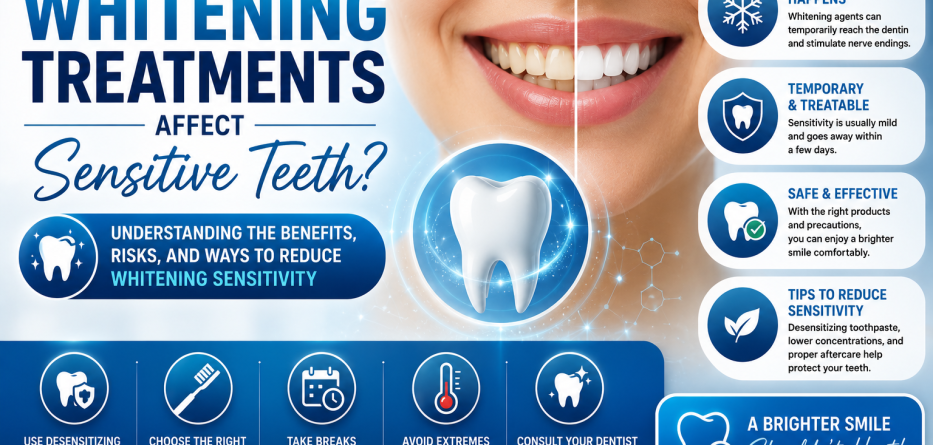
A brighter smile is one of the most sought-after cosmetic dental goals, and teeth whitening treatments have become increasingly popular for removing stains and enhancing appearance. However, many people with sensitive teeth hesitate to whiten their teeth because they worry about increased discomfort or pain.
If you’ve ever experienced a sharp sensation when drinking cold water, eating ice cream, or consuming hot beverages, you may wonder whether whitening treatments are safe for sensitive teeth. The good news is that teeth whitening is often possible for people with sensitivity, but understanding how whitening works and taking the right precautions is essential.
In this guide, we’ll explain how whitening treatments affect sensitive teeth, why sensitivity occurs, how long it lasts, and ways to minimize discomfort while achieving a brighter smile.
What Causes Tooth Sensitivity?
To understand why whitening can cause sensitivity, it’s important to know what makes teeth sensitive in the first place.
Tooth sensitivity occurs when the protective enamel layer becomes thinner or when gum recession exposes the dentin beneath the enamel.
Common Causes of Sensitive Teeth
- Enamel erosion
- Gum recession
- Tooth grinding (bruxism)
- Aggressive brushing
- Cavities
- Cracked teeth
- Recent dental procedures
Dentin contains microscopic tubules that connect to nerve endings inside the tooth. When exposed, these tubules allow temperature changes and external stimuli to trigger discomfort.
How Do Teeth Whitening Treatments Work?
Most whitening products contain one of two active ingredients:
- Hydrogen peroxide
- Carbamide peroxide
These whitening agents penetrate the enamel and break down stain molecules trapped within the tooth structure.
The process helps remove:
- Coffee stains
- Tea stains
- Wine discoloration
- Tobacco stains
- Age-related yellowing
While effective, the whitening process can temporarily affect the nerves inside the tooth.
Can Teeth Whitening Cause Sensitivity?
Quick Answer
Yes. Teeth whitening can temporarily increase tooth sensitivity, especially in people who already have sensitive teeth.
This is one of the most common side effects of whitening treatments.
Why It Happens
During whitening, peroxide molecules pass through the enamel and dentin to reach stain particles.
This process can temporarily irritate the nerve inside the tooth, resulting in:
- Sharp sensations
- Tingling
- Temporary discomfort
- Increased reaction to hot or cold foods
Fortunately, these effects are usually temporary.
How Common Is Whitening Sensitivity?
Sensitivity after whitening is very common.
Research suggests that many patients experience some level of sensitivity during or shortly after treatment.
The severity depends on factors such as the following:
- Existing sensitivity
- Whitening concentration
- Treatment duration
- Oral health condition
Most cases are mild and resolve within a few days.
Types of Whitening Treatments and Their Effect on Sensitive Teeth
Professional In-Office Whitening
Performed by a dentist using high-concentration whitening agents.
Advantages
- Faster results
- Professional supervision
- Customized treatment
Sensitivity Risk
Moderate to high, depending on the individual’s sensitivity level.
Dentists often use desensitizing products to minimize discomfort.
Take-Home Whitening Trays
Custom trays provided by a dentist.
Advantages
- Lower peroxide concentration
- Gradual whitening
- Better control
Sensitivity Risk
Typically lower than in-office treatments.
Many patients with sensitive teeth prefer this option.
Whitening Strips
Over-the-counter strips coated with whitening gel.
Advantages
- Affordable
- Convenient
Sensitivity Risk
Can vary depending on product strength and usage frequency.
Whitening Toothpastes
Contain mild abrasives and gentle whitening ingredients.
Advantages
- Lowest sensitivity risk
- Easy daily use
Sensitivity Risk
Generally minimal.
However, excessive abrasive use may contribute to enamel wear over time.
Signs of Whitening-Related Sensitivity
Common symptoms include:
- Sharp pain when consuming cold foods
- Tingling sensations
- Temporary tooth discomfort
- Increased sensitivity to hot beverages
- Mild aching after treatment
Symptoms typically peak within 24 to 48 hours and gradually improve.
How Long Does Sensitivity Last After Whitening?
For most people, sensitivity is temporary.
Typical Recovery Timeline
| Sensitivity Level | Duration |
|---|---|
| Mild | 1–2 Days |
| Moderate | 2–5 Days |
| Severe | Up to 1 Week |
Persistent pain should be evaluated by a dentist.
How to Reduce Sensitivity During Teeth Whitening
1. Use a Desensitizing Toothpaste
Products containing:
- Potassium nitrate
- Stannous fluoride
can help calm nerve responses and reduce discomfort.
Many dentists recommend starting desensitizing toothpaste one to two weeks before whitening treatment.
2. Choose Lower-Concentration Whitening Products
Lower peroxide concentrations often produce less sensitivity while still delivering noticeable results.
Gradual whitening may be more comfortable for sensitive teeth.
3. Take Breaks Between Treatments
Avoid whitening too frequently.
Spacing treatments apart allows teeth to recover and reduces irritation.
4. Follow Product Instructions Carefully
Overusing whitening products increases the likelihood of sensitivity and enamel irritation.
Always follow:
- Application times
- Frequency guidelines
- Professional recommendations
5. Avoid Trigger Foods Temporarily
After whitening, avoid:
- Ice-cold drinks
- Extremely hot beverages
- Acidic foods
- Sugary foods
This can help reduce discomfort while sensitivity subsides.
Can Sensitive Teeth Still Be Whitened Safely?
Yes.
Many people with sensitive teeth successfully whiten their teeth with proper precautions.
A dentist may recommend the following:
- Lower-strength whitening agents
- Customized trays
- Shorter treatment sessions
- Desensitizing gels
Professional supervision often provides the safest approach.
When to See a Dentist Before Whitening
Consult your dentist if you have:
- Severe tooth sensitivity
- Untreated cavities
- Gum disease
- Cracked teeth
- Receding gums
Treating these issues before whitening can improve comfort and safety.
Alternatives for People with Severe Sensitivity
If whitening is not appropriate, alternative cosmetic options may include:
Dental Bonding
Tooth-colored resin improves appearance without bleaching.
Porcelain Veneers
Provide a permanently bright smile while covering discoloration.
Professional Cleaning
Removes surface stains and improves brightness naturally.
Your dentist can recommend the most suitable option.
Frequently Asked Questions
Is teeth whitening safe for sensitive teeth?
Yes, in most cases. Professional guidance and desensitizing products can help minimize discomfort.
Why do my teeth hurt after whitening?
Whitening agents temporarily irritate the nerves inside the tooth, leading to increased sensitivity.
How long does whitening sensitivity last?
Most sensitivity resolves within a few days after treatment.
Can whitening damage enamel?
When used correctly, approved whitening products do not permanently damage enamel.
Should I stop whitening if my teeth become sensitive?
If discomfort becomes significant, pause treatment and consult your dentist for recommendations.
Conclusion
Teeth whitening treatments can temporarily affect sensitive teeth, but this side effect is usually mild and short-lived. Understanding how whitening works, choosing appropriate products, and following professional guidance can help minimize discomfort while achieving a brighter smile.
For individuals with existing tooth sensitivity, customized whitening plans, desensitizing products, and lower-concentration treatments often provide effective results without excessive discomfort. By working closely with your dentist, you can safely improve your smile while protecting your oral health.
