
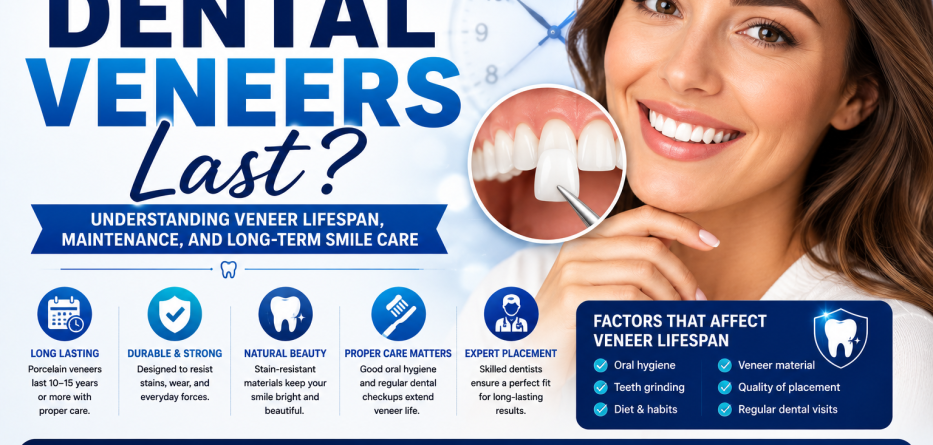
Dental veneers are one of the most popular cosmetic dentistry treatments available today. They can dramatically improve the appearance of your smile by correcting issues such as discoloration, chips, gaps, and minor misalignment. But before investing in veneers, many patients ask an important question: How long do dental veneers last?
The good news is that dental veneers are designed to be durable and long-lasting. With proper care and maintenance, many veneers can last well over a decade while maintaining their natural appearance and functionality.
In this guide, we’ll explore the average lifespan of dental veneers, the factors that affect their longevity, signs they may need replacement, and expert tips to help them last as long as possible.
What Are Dental Veneers?
Dental veneers are thin, custom-made shells that are bonded to the front surface of teeth to improve their appearance.
They are commonly used to correct:
- Tooth discoloration
- Chipped teeth
- Minor gaps
- Uneven teeth
- Worn enamel
- Slightly misaligned teeth
Veneers are typically made from:
- Porcelain
- Composite resin
Each material offers different benefits and lifespan expectations.
How Long Do Dental Veneers Last?
The lifespan of veneers depends on the material used, oral hygiene habits, and lifestyle factors.
Average Veneer Lifespan
| Veneer Type | Average Lifespan |
|---|---|
| Porcelain Veneers | 10–15 Years |
| Premium Porcelain Veneers | 15–20+ Years |
| Composite Veneers | 4–8 Years |
Many patients successfully maintain porcelain veneers for 15 years or longer with proper care.
Why Do Porcelain Veneers Last Longer?
Porcelain veneers are considered the gold standard because of their strength and stain resistance.
Benefits of Porcelain Veneers
- Highly durable
- Natural appearance
- Stain-resistant
- Long-lasting
- Strong bonding properties
Their advanced materials allow them to withstand everyday chewing and biting forces more effectively than composite alternatives.
Factors That Affect the Lifespan of Dental Veneers
Several factors influence how long veneers remain in excellent condition.
1. Oral Hygiene Habits
Although veneers themselves cannot develop cavities, the natural teeth underneath still require proper care.
Good oral hygiene includes:
- Brushing twice daily
- Flossing every day
- Using fluoride toothpaste
- Regular dental cleanings
Poor oral hygiene can lead to decay around veneer margins, potentially requiring replacement.
2. Type of Veneer Material
Material quality significantly affects longevity.
Porcelain Veneers
- More durable
- Better stain resistance
- Longer lifespan
Composite Veneers
- More affordable
- Easier repairs
- Shorter lifespan
Patients seeking maximum longevity often choose porcelain veneers.
3. Teeth Grinding (Bruxism)
Chronic teeth grinding places excessive stress on veneers.
Potential problems include the following:
- Chipping
- Cracking
- Debonding
- Premature wear
Dentists often recommend a custom nightguard for patients who grind their teeth during sleep.
4. Eating Habits
Certain foods and habits can shorten veneer lifespan.
Avoid:
- Chewing ice
- Biting hard candies
- Opening packages with teeth
- Excessive nail biting
Using teeth as tools can damage both veneers and natural teeth.
5. Quality of Placement
The skill and experience of the cosmetic dentist play a major role in veneer longevity.
Proper placement ensures:
- Strong bonding
- Correct alignment
- Natural appearance
- Reduced stress on restorations
Well-designed veneers generally last longer and perform better.
6. Regular Dental Checkups
Routine dental visits help identify problems before they become serious.
Dentists can monitor:
- Veneer integrity
- Gum health
- Bite alignment
- Early signs of wear
Professional maintenance helps maximize veneer lifespan.
Signs Your Veneers May Need Replacement
Even the highest-quality veneers eventually wear down.
Common signs include:
Chipping or Cracking
Visible damage can compromise appearance and function.
Discoloration Around Edges
Staining near the margins may indicate bonding issues.
Gum Recession
Exposed veneer edges may affect aesthetics.
Loose Veneers
Movement or detachment requires immediate evaluation.
Bite Changes
Shifts in bite alignment can place additional stress on veneers.
If you notice any of these issues, schedule a dental examination promptly.
Can Veneers Be Repaired?
In some cases, minor veneer damage can be repaired.
Repair Options
- Composite bonding
- Edge smoothing
- Surface polishing
However, significant damage often requires full veneer replacement.
Porcelain veneers are generally more difficult to repair than composite veneers.
How to Make Your Veneers Last Longer
Following proper care guidelines can significantly extend veneer lifespan.
Best Practices
- Brush twice daily.
- Floss every day.
- Wear a nightguard if you grind your teeth.
- Avoid chewing hard objects.
- Visit your dentist regularly.
- Maintain healthy gums.
- Limit habits that stress the veneers.
Consistent care protects both the veneers and underlying teeth.
Dental Veneers vs Other Cosmetic Treatments
| Treatment | Average Lifespan |
|---|---|
| Porcelain Veneers | 10–20 Years |
| Composite Veneers | 4–8 Years |
| Teeth Whitening | 6–24 Months |
| Dental Bonding | 3–10 Years |
| Crowns | 10–15 Years |
Veneers offer one of the longest-lasting cosmetic smile enhancement options available.
Are Veneers a Permanent Solution?
Veneers are often considered a long-term solution, but not a permanent one.
Because a small amount of enamel is usually removed during preparation, patients will generally require replacement veneers at some point in the future.
While veneers can last for many years, they should be viewed as an ongoing investment in your smile.
Frequently Asked Questions
Can dental veneers last 20 years?
Yes. High-quality porcelain veneers can sometimes last 20 years or longer with proper care.
Do veneers stain over time?
Porcelain veneers are highly stain resistant, while composite veneers may stain more easily.
Can veneers fall off?
Although uncommon, veneers can loosen or detach due to trauma, bonding failure, or excessive force.
Are porcelain veneers worth the investment?
Many patients consider them worthwhile because of their durability, natural appearance, and long lifespan.
How often do veneers need replacement?
Most porcelain veneers require replacement after 10–15 years, although some last significantly longer.
Conclusion
So, how long do dental veneers last?
Most porcelain veneers last between 10 and 15 years, while high-quality restorations can remain beautiful and functional for 20 years or more. Composite veneers typically have a shorter lifespan but can still provide excellent cosmetic improvements.
The longevity of your veneers depends on factors such as oral hygiene, lifestyle habits, material quality, and professional dental care. By following proper maintenance practices and attending regular dental checkups, you can enjoy a bright, confident smile for many years to come.
