
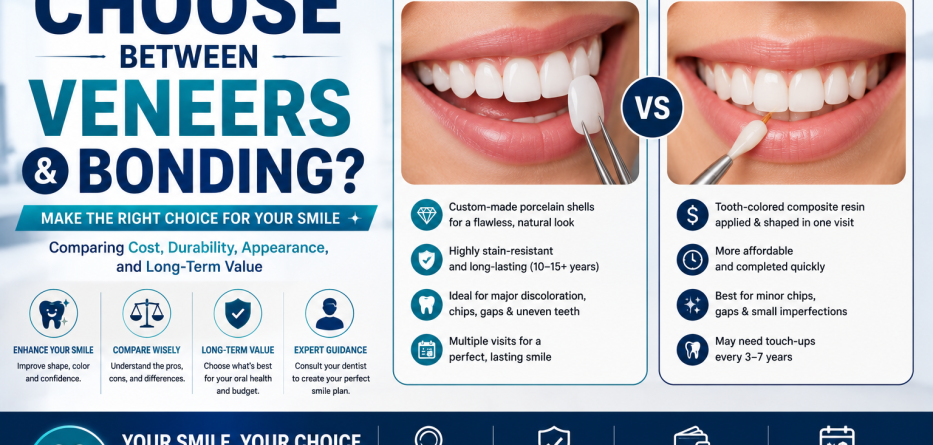
If you’re looking to improve your smile, you’ve probably come across two popular cosmetic dentistry treatments: dental veneers and dental bonding. Both procedures can correct chipped, stained, uneven, or misshapen teeth, but they differ significantly in cost, durability, appearance, and treatment process.
Choosing between veneers and bonding isn’t always straightforward. The right option depends on your dental goals, budget, lifestyle, and the condition of your teeth.
In this guide, we’ll compare veneers and bonding in detail, explain their pros and cons, and help you determine which cosmetic treatment may be the best choice for your smile.
What Are Dental Veneers?
Dental veneers are thin, custom-made shells typically crafted from porcelain or composite materials. They are bonded to the front surface of teeth to improve appearance.
Veneers can correct:
- Discolored teeth
- Chipped teeth
- Minor gaps
- Uneven teeth
- Worn enamel
- Misshapen teeth
Porcelain veneers are particularly popular because they closely mimic the appearance of natural teeth.
What Is Dental Bonding?
Dental bonding is a cosmetic procedure that uses a tooth-colored composite resin to reshape or repair teeth.
The resin is
- Applied directly to the tooth.
- Sculpted into the desired shape.
- Hardened using a special curing light.
- Polished to match surrounding teeth.
Bonding is commonly used to repair the following:
- Small chips
- Cracks
- Minor gaps
- Tooth discoloration
- Slightly misshapen teeth
Veneers vs Bonding: Quick Comparison
| Feature | Veneers | Dental Bonding |
|---|---|---|
| Material | Porcelain or Composite | Composite Resin |
| Appearance | Highly Natural | Natural |
| Durability | 10–15+ Years | 3–7 Years |
| Stain Resistance | Excellent | Moderate |
| Treatment Time | Multiple Visits | Usually One Visit |
| Cost | Higher | Lower |
| Reversibility | Typically no. | Often Yes |
| Maintenance | Minimal | May Require Repairs |
Both treatments can dramatically improve your smile, but their long-term performance differs.
When Are Veneers the Better Choice?
Veneers are often recommended when patients want a comprehensive smile transformation.
Veneers May Be Best If You Have the Following:
- Severe staining
- Multiple cosmetic concerns
- Worn teeth
- Significant discoloration
- Uneven smile symmetry
- Desire for long-lasting results
Advantages of Veneers
Superior Aesthetics
Porcelain reflects light similarly to natural enamel, creating an exceptionally realistic appearance.
Long Lifespan
With proper care, porcelain veneers often last 10 to 15 years or longer.
Stain Resistance
Unlike natural teeth and bonding materials, porcelain resists staining from:
- Coffee
- Tea
- Red wine
- Tobacco
Comprehensive Smile Makeovers
Veneers can completely transform the appearance of a smile.
When Is Dental Bonding the Better Choice?
Dental bonding is often ideal for minor cosmetic corrections.
Bonding May Be Best If You Have:
- Small chips
- Minor cracks
- Small gaps
- Limited discoloration
- Budget concerns
Advantages of Bonding
More Affordable
Bonding is generally less expensive than veneers.
Quick Treatment
Most bonding procedures can be completed in a single appointment.
Conservative Treatment
Little to no tooth enamel removal is usually required.
Easy Repairs
Damaged bonding material can often be repaired quickly.
Appearance: Which Looks More Natural?
Both veneers and bonding can produce attractive results.
Veneers
Porcelain veneers offer:
- Better translucency
- Superior color stability
- Enhanced light reflection
- Premium cosmetic results
Bonding
Modern composite resins provide the following:
- Good aesthetics
- Natural color matching
- Effective cosmetic improvements
For highly visible front teeth, veneers typically deliver the most natural appearance.
Durability Comparison
Durability is one of the biggest differences between these treatments.
Veneers
Average lifespan:
- 10–15+ years
Highly resistant to:
- Staining
- Wear
- Chipping
Bonding
Average lifespan:
- 3–7 years
More susceptible to:
- Staining
- Chipping
- Wear over time
Patients seeking a long-term solution often prefer veneers.
Cost Comparison
Cost varies depending on location, materials, and complexity.
Veneers
Higher upfront investment due to:
- Custom fabrication
- Premium materials
- Laboratory work
Bonding
More affordable because:
- Completed chairside
- Less material cost
- Fewer appointments
While bonding costs less initially, repairs and replacements may increase long-term expenses.
Treatment Process: What to Expect
Veneers Procedure
- Consultation and smile design.
- Tooth preparation.
- Impressions or digital scans.
- Temporary veneers (if necessary).
- Final veneer placement.
Treatment usually requires two or more appointments.
Bonding Procedure
- Tooth preparation.
- Composite resin application.
- Sculpting and shaping.
- Light curing.
- Polishing.
Most bonding procedures take 30–60 minutes per tooth.
Maintenance and Aftercare
Both treatments require proper oral hygiene.
Daily Care Tips
- Brush twice daily.
- Floss regularly.
- Attend dental checkups.
- Avoid biting hard objects.
- Wear a nightguard if you grind your teeth.
Good habits help maximize longevity.
Veneers vs Bonding for Different Dental Problems
| Dental Concern | Best Option |
|---|---|
| Severe Staining | Veneers |
| Small Chip | Bonding |
| Minor Gap | Bonding |
| Complete Smile Makeover | Veneers |
| Budget-Friendly Solution | Bonding |
| Long-Term Durability | Veneers |
| Quick Treatment | Bonding |
The best choice depends on your specific needs and goals.
What Do Dentists Usually Recommend?
Dentists evaluate several factors before recommending treatment.
These include:
- Tooth condition
- Bite alignment
- Oral health
- Cosmetic goals
- Budget
- Lifestyle habits
For extensive cosmetic improvements, veneers are often preferred. For smaller corrections, bonding may provide excellent results at a lower cost.
Frequently Asked Questions
Are veneers better than bonding?
Not necessarily. Veneers offer greater durability and aesthetics, while bonding is more affordable and conservative.
Do veneers last longer than bonding?
Yes. Veneers typically last 10–15 years or more, while bonding usually lasts 3–7 years.
Is bonding cheaper than veneers?
Yes. Bonding generally costs significantly less than porcelain veneers.
Can bonding look as natural as veneers?
For small repairs, bonding can look very natural. However, veneers often provide superior cosmetic results.
Which option is best for stained teeth?
Veneers are usually the better option for severe or long-term discoloration.
Conclusion
When deciding how to choose between veneers and bonding, there is no one-size-fits-all answer. Both treatments can enhance your smile and boost confidence, but they serve different purposes.
Dental bonding is ideal for minor cosmetic improvements, quick treatment, and budget-conscious patients. Veneers, on the other hand, provide superior aesthetics, greater durability, and long-lasting smile transformations.
The best way to determine which option is right for you is to consult with an experienced cosmetic dentist who can evaluate your smile and recommend a personalized treatment plan based on your goals and oral health needs.
