
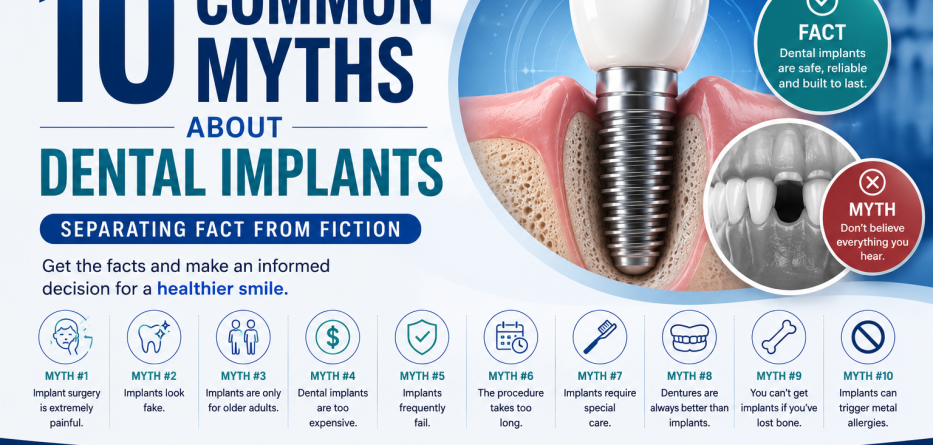
Dental implants have become one of the most reliable and effective solutions for replacing missing teeth. Despite their proven success and growing popularity, many people still hesitate to consider implants because of outdated information and common misconceptions.
These myths can prevent patients from making informed decisions about their oral health. Understanding the facts behind dental implants can help you determine whether they are the right solution for restoring your smile.
In this article, we’ll debunk 10 common myths about dental implants and reveal the truth behind one of modern dentistry’s most successful treatments.
What Are Dental Implants?
A dental implant is a titanium post surgically placed into the jawbone to replace a missing tooth root. Once the implant fuses with the bone through a process called osseointegration, a custom crown, bridge, or denture is attached.
Dental implants are designed to look, feel, and function like natural teeth while helping preserve long-term oral health.
Myth #1: Dental Implant Surgery Is Extremely Painful
The Truth
One of the biggest misconceptions is that implant surgery is very painful.
In reality, most patients report that implant placement is less uncomfortable than a tooth extraction.
During the procedure:
- Local anesthesia is used
- Sedation options may be available
- Patients feel little to no pain
Most post-surgical discomfort can be managed with over-the-counter pain medication and usually subsides within a few days.
Myth #2: Dental Implants Look Fake
The Truth
Modern dental implants are designed to blend seamlessly with natural teeth.
Custom-made crowns are matched to:
- Tooth color
- Shape
- Size
- Smile aesthetics
Many people cannot tell the difference between an implant and a natural tooth.
Myth #3: Dental Implants Are Only for Older Adults
The Truth
Dental implants are suitable for adults of various ages.
Candidates may include:
- Young adults with missing teeth
- Middle-aged patients
- Seniors seeking stable tooth replacement
The determining factor is not age but overall oral health and jawbone condition.
Myth #4: Dental Implants Are Too Expensive
The Truth
While implants may have a higher upfront cost than bridges or dentures, they often provide better long-term value.
Benefits include:
- Longer lifespan
- Fewer replacements
- Reduced maintenance costs
- Better oral health outcomes
Many patients discover that implants are more cost-effective over time.
Myth #5: Dental Implants Frequently Fail
The Truth
Dental implants have one of the highest success rates in dentistry.
Studies consistently show success rates exceeding 95% when performed by experienced professionals and maintained properly.
Success depends on:
- Good oral hygiene
- Healthy bone structure
- Regular dental visits
- Avoiding smoking
Myth #6: The Procedure Takes Too Long
The Truth
Although complete treatment may take several months, much of this time is dedicated to healing and bone integration.
The actual implant placement procedure often takes:
- 30–90 minutes for a single implant
Many patients return to normal activities within a day or two.
Myth #7: Dental Implants Require Special Care
The Truth
Dental implants are maintained similarly to natural teeth.
Daily care includes:
- Brushing twice daily
- Flossing
- Routine dental cleanings
- Regular examinations
No soaking solutions or special adhesives are required.
Myth #8: Dentures Are Always Better Than Implants
The Truth
Dentures can be a good solution for some patients, but they do not offer the same benefits as implants.
| Feature | Dental Implants | Dentures |
|---|---|---|
| Bone Preservation | Yes | No |
| Stability | Excellent | Moderate |
| Comfort | Excellent | Variable |
| Lifespan | 20+ Years | 5–10 Years |
| Natural Feel | Excellent | Moderate |
Implants provide superior stability and help preserve jawbone health.
Myth #9: You Can’t Get Implants If You’ve Lost Bone
The Truth
Even patients with significant bone loss may still qualify for implants.
Modern dentistry offers procedures such as:
- Bone grafting
- Sinus lifts
- Ridge augmentation
These treatments can rebuild bone and create a suitable foundation for implant placement.
Myth #10: Dental Implants Can Trigger Metal Allergies
The Truth
Most dental implants are made from medical-grade titanium, a highly biocompatible material that has been used safely in medicine for decades.
Titanium allergies are extremely rare.
For patients with specific concerns, alternative materials such as zirconia implants may also be available.
Why Dental Implants Remain the Gold Standard for Tooth Replacement
Dental implants offer unique advantages that other tooth replacement options cannot fully replicate.
Benefits include:
- Natural appearance
- Long-lasting durability
- Improved chewing ability
- Better speech
- Bone preservation
- Enhanced confidence
Because implants replace both the tooth root and visible tooth structure, they provide the most complete restoration available.
Who Is a Good Candidate for Dental Implants?
You may be a good candidate if you have:
- One or more missing teeth
- Healthy gums
- Adequate jawbone support
- Good overall health
- A commitment to oral hygiene
A consultation with an implant dentist can determine your suitability.
Frequently Asked Questions
Are dental implants worth the investment?
For many patients, yes. Their durability, functionality, and long-term benefits often outweigh the initial cost.
How long do dental implants last?
With proper care, implants can last 20 years or more and often a lifetime.
Can smokers get dental implants?
Yes, but smoking can increase the risk of implant complications and failure.
How successful are dental implants?
Most studies report success rates above 95%.
Do implants feel like natural teeth?
Yes. Once healed, implants closely mimic the function and feel of natural teeth.
Conclusion
Dental implants are surrounded by myths that can cause unnecessary fear and confusion. The truth is that modern dental implants are safe, effective, natural-looking, and highly successful. Understanding the facts behind these common misconceptions can help patients make confident decisions about replacing missing teeth.
If you’re considering dental implants, consult with an experienced implant dentist to learn how this advanced treatment can restore your smile and improve your quality of life.
