
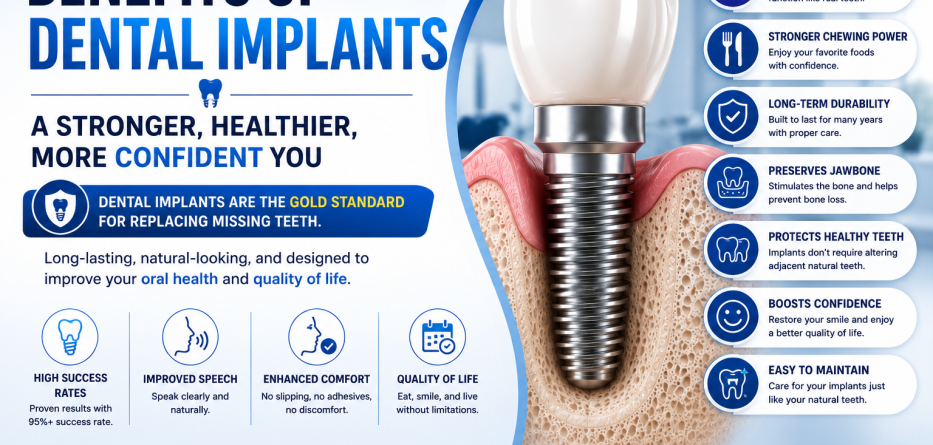
Missing teeth can affect much more than your appearance. They can impact your ability to eat, speak, smile confidently, and maintain good oral health. Fortunately, modern dentistry offers a long-lasting solution: dental implants.
Dental implants have become the preferred choice for millions of patients worldwide because they provide unmatched stability, durability, and natural-looking results. Unlike traditional dentures or bridges, dental implants replace both the visible tooth and its root, offering a complete restoration solution.
In this article, we’ll explore the many benefits of dental implants and why they are considered the gold standard for replacing missing teeth.
What Are Dental Implants?
A dental implant is a small titanium post surgically placed into the jawbone to replace a missing tooth root. Once the implant integrates with the bone through a process called osseointegration, a custom-made crown, bridge, or denture is attached.
A dental implant consists of:
- Implant post
- Abutment
- Dental restoration
The result is a replacement tooth that closely resembles and functions like a natural tooth.
Top Benefits of Dental Implants
1. Natural Look and Feel
One of the biggest advantages of dental implants is their natural appearance.
Dental implants are designed to:
- Match surrounding teeth
- Blend seamlessly with your smile
- Feel like natural teeth
- Restore facial aesthetics
Most patients find it difficult to distinguish an implant from a natural tooth.
2. Improved Chewing Ability
Missing teeth can make eating difficult and uncomfortable.
Dental implants restore nearly full chewing power, allowing patients to enjoy the following:
- Fruits
- Vegetables
- Nuts
- Steak
- Crunchy foods
Unlike dentures, implants do not slip or shift while eating.
3. Long-Term Durability
Dental implants are built to last.
Average Lifespan
| Tooth Replacement Option | Average Lifespan |
|---|---|
| Dental Implants | 20+ Years |
| Dental Bridges | 5–15 Years |
| Dentures | 5–10 Years |
With proper care, many implants can last a lifetime.
4. Prevents Jawbone Loss
After losing a tooth, the jawbone begins to shrink because it no longer receives stimulation from the tooth root.
Dental implants help prevent this process by stimulating the bone during chewing.
Benefits include:
- Bone preservation
- Reduced facial sagging
- Better facial structure
- Long-term oral health
This is a major advantage that dentures and bridges cannot provide.
5. Preserves Healthy Teeth
Traditional dental bridges often require neighboring teeth to be reshaped.
Dental implants:
- Stand independently
- Do not affect adjacent teeth
- Preserve natural tooth structure
- Support long-term oral health
This conservative approach helps protect healthy teeth.
6. Improved Speech
Missing teeth and loose dentures can affect pronunciation and speech clarity.
Dental implants provide the following:
- Better speech control
- Improved pronunciation
- Increased confidence in conversations
Because implants remain fixed in place, patients don’t have to worry about movement while speaking.
7. Enhanced Comfort
Unlike removable dentures, implants become a permanent part of your mouth.
Benefits include:
- No slipping
- No adhesives
- No irritation from movement
- Greater overall comfort
Many patients report forgetting they even have dental implants.
8. Boosted Self-Confidence
Tooth loss can negatively affect self-esteem.
Dental implants help restore confidence by:
- Improving appearance
- Creating a complete smile
- Enhancing social interactions
- Supporting professional confidence
Many patients smile more freely after treatment.
9. Easy Maintenance
Dental implants are easy to care for.
Daily maintenance includes:
- Brushing twice daily
- Flossing regularly
- Routine dental visits
Unlike dentures, there is no need for
- Special soaking solutions
- Adhesives
- Removal for cleaning
Implants can be maintained similarly to natural teeth.
10. High Success Rates
Dental implants are one of the most successful procedures in dentistry.
Success Statistics
- Success rates typically exceed 95%
- Many implants remain functional for decades
- Modern implant technology continues to improve outcomes
This makes implants a highly predictable treatment option.
11. Better Overall Oral Health
Dental implants support long-term oral health by:
- Preserving jawbone density
- Maintaining proper tooth alignment
- Preventing shifting teeth
- Supporting healthy gums
Replacing missing teeth promptly can reduce future dental complications.
12. Improved Quality of Life
The combination of comfort, functionality, and aesthetics often leads to significant improvements in quality of life.
Patients commonly report:
- Better eating experiences
- Increased confidence
- Enhanced social interactions
- Greater overall satisfaction
Dental implants help people return to normal daily activities without worrying about missing teeth.
Dental Implants vs Dentures
| Feature | Dental Implants | Dentures |
|---|---|---|
| Stability | Excellent | Moderate |
| Bone Preservation | Yes | No |
| Natural Feel | Excellent | Moderate |
| Longevity | 20+ Years | 5–10 Years |
| Maintenance | Simple | More Complex |
| Chewing Ability | Excellent | Limited |
Dental implants consistently outperform dentures in terms of comfort, function, and durability.
Dental Implants vs Bridges
| Feature | Dental Implants | Bridges |
|---|---|---|
| Bone Preservation | Yes | No |
| Impact on Adjacent Teeth | None | Requires Modification |
| Lifespan | 20+ Years | 5–15 Years |
| Stability | Excellent | Good |
This is why many dentists recommend implants whenever possible.
Who Can Benefit from Dental Implants?
Dental implants may be suitable for:
- Adults missing one tooth
- Patients missing multiple teeth
- Individuals with complete tooth loss
- Denture wearers seeking more stability
A comprehensive evaluation determines whether implants are the right option.
Frequently Asked Questions
What is the biggest benefit of dental implants?
The biggest benefit is their ability to replace missing teeth while preserving jawbone health and providing natural function.
How long do dental implants last?
Many dental implants last 20 years or more and can potentially last a lifetime with proper care.
Are dental implants worth the cost?
Many patients consider implants a worthwhile investment because of their durability, comfort, and long-term benefits.
Do dental implants feel like real teeth?
Yes. Once healed, implants closely resemble and function like natural teeth.
Can dental implants prevent bone loss?
Yes. Implants stimulate the jawbone and help maintain bone density after tooth loss.
Conclusion
The benefits of dental implants extend far beyond simply replacing missing teeth. From preserving jawbone health and restoring chewing ability to enhancing confidence and improving overall quality of life, dental implants offer a comprehensive and long-lasting solution.
With their natural appearance, exceptional durability, and proven success rates, dental implants continue to be the preferred choice for patients seeking a permanent tooth replacement option. For many individuals, investing in dental implants means investing in a healthier, stronger, and more confident smile for years to come.
