
Dental implants are one of the most effective and long-lasting solutions for replacing missing teeth. While the results can last for decades, many patients considering treatment have one common question: How long is the dental implant recovery time?
The recovery process varies from person to person and depends on factors such as overall health, bone quality, the number of implants placed, and whether additional procedures like bone grafting are required. Understanding the healing timeline can help patients prepare for treatment and achieve the best possible outcome.
In this guide, we’ll explain each stage of dental implant recovery, what to expect during healing, and tips to ensure a smooth and successful recovery.
What Is Dental Implant Recovery?
Dental implant recovery refers to the healing period after an implant is surgically placed into the jawbone.
During this time:
- The gums heal around the implant.
- The jawbone fuses with the implant.
- Inflammation gradually subsides.
- The implant becomes stable enough to support a restoration.
The most important part of recovery is a biological process called osseointegration, where the implant bonds with the surrounding bone.
How Long Does Dental Implant Recovery Take?
Recovery occurs in stages.
Quick Answer
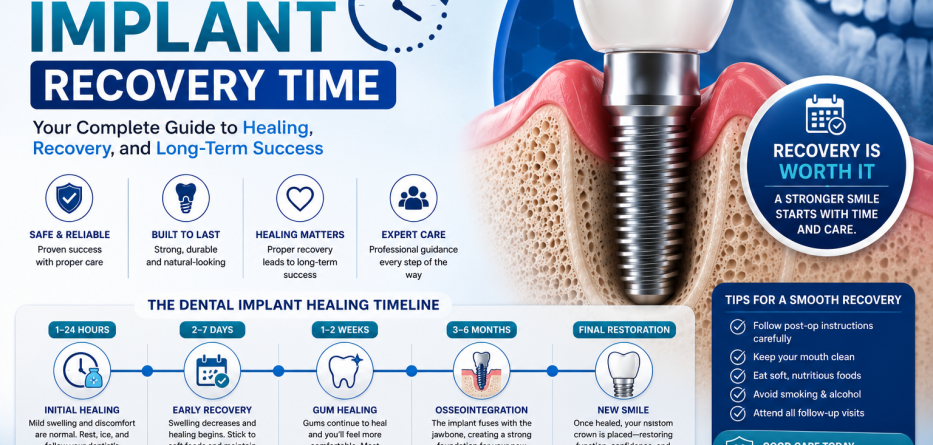
Most patients recover from the initial implant surgery within a few days to two weeks, while complete osseointegration usually takes 3 to 6 months.
Typical Recovery Timeline
| Recovery Stage | Time Frame |
|---|---|
| Initial Healing | 1–7 Days |
| Gum Tissue Recovery | 1–2 Weeks |
| Bone Integration (Osseointegration) | 3–6 Months |
| Final Crown Placement | After Healing Completion |
Some patients may heal faster, while others may require additional time depending on their individual circumstances.
The First 24 Hours After Surgery
The first day is primarily focused on controlling bleeding and minimizing swelling.
Common Symptoms
- Mild bleeding
- Swelling
- Tenderness
- Minor discomfort
Recovery Tips
- Rest as much as possible
- Avoid strenuous activities
- Apply ice packs
- Eat soft foods
- Follow medication instructions
Most patients find discomfort manageable with prescribed or over-the-counter pain medications.
Days 2–7: Early Recovery Phase
During the first week, the body begins repairing the surgical site.
What to Expect
- Swelling gradually decreases
- Minor bruising may appear
- Discomfort continues to improve
- Soft tissue healing begins
Recommended Foods
- Yogurt
- Smoothies
- Soup
- Mashed potatoes
- Scrambled eggs
Avoid hard, crunchy, or sticky foods that may irritate the implant site.
Weeks 1–2: Gum Healing
By the second week, most patients notice significant improvement.
Typical Changes
- Reduced swelling
- Improved comfort
- Healing gum tissue
- Return to normal daily activities
In many cases, patients can resume their regular routine within a few days after surgery.
Months 1–6: Osseointegration Phase
This stage is critical for long-term implant success.
What Happens During Osseointegration?
The jawbone gradually bonds with the titanium implant.
Benefits include:
- Improved stability
- Strong foundation
- Long-term durability
- Natural tooth function
Although patients usually feel normal during this phase, the implant is still healing beneath the surface.
Factors That Affect Dental Implant Recovery Time
Not every patient heals at the same rate.
1. Bone Quality
Healthy, dense bone often supports faster integration.
Patients with bone loss may require:
- Bone grafting
- Extended healing periods
2. Overall Health
Medical conditions that may influence healing include:
- Diabetes
- Autoimmune disorders
- Osteoporosis
Proper medical management helps improve recovery outcomes.
3. Smoking
Smoking significantly affects healing.
It can:
- Reduce blood flow
- Delay osseointegration
- Increase infection risk
- Raise implant failure rates
Dentists strongly encourage patients to stop smoking during recovery.
4. Oral Hygiene
Clean implant sites heal more effectively.
Daily oral care helps prevent:
- Infection
- Gum inflammation
- Implant complications
5. Number of Implants
Patients receiving multiple implants or full-mouth restorations may require longer healing periods.
Recovery After Bone Grafting
Some patients need bone grafting before implant placement.
Additional Healing Time
Bone graft recovery may require:
- 3–6 months before implant placement
- Additional monitoring appointments
Although treatment takes longer, grafting often improves long-term implant success.
Signs of Healthy Implant Recovery
Normal healing signs include:
- Mild tenderness
- Decreasing swelling
- Healthy pink gums
- Gradual comfort improvement
Most symptoms improve steadily over the first two weeks.
Warning Signs to Watch For
Contact your dentist if you experience:
- Severe pain
- Excessive bleeding
- Persistent swelling
- Fever
- Pus or infection
- Implant mobility
Early treatment can prevent serious complications.
Tips for Faster Dental Implant Recovery
Following your dentist’s instructions is essential.
Recovery Best Practices
- Get adequate rest.
- Follow medication guidelines.
- Maintain excellent oral hygiene.
- Eat soft foods initially.
- Avoid smoking and tobacco products.
- Attend all follow-up appointments.
- Avoid excessive pressure on the implant site.
These habits help support successful healing and osseointegration.
Dental Implant Recovery vs Other Tooth Replacement Procedures
| Treatment | Initial Recovery | Long-Term Healing |
|---|---|---|
| Dental Implants | 1–2 Weeks | 3–6 Months |
| Dental Extraction | 1–2 Weeks | Several Weeks |
| Dental Bridge | Minimal | Immediate Function |
| Dentures | Minimal | Immediate Function |
While implants require a longer healing period, they often provide superior long-term benefits.
Frequently Asked Questions
How painful is dental implant recovery?
Most patients experience only mild to moderate discomfort, which improves within a few days.
How long before I can eat normally?
Many patients resume normal eating habits within a few weeks, although hard foods should be introduced gradually.
Can I return to work after implant surgery?
Many people return to work within 1–3 days, depending on the complexity of the procedure.
Why does osseointegration take several months?
Bone cells need time to grow and bond with the implant surface to create a stable foundation.
Can dental implants heal faster?
Following aftercare instructions, maintaining oral hygiene, and avoiding smoking can help support efficient healing.
Conclusion
Dental implant recovery is a gradual process that involves both soft tissue healing and bone integration. While most patients recover from surgery within one to two weeks, complete osseointegration typically takes three to six months.
Understanding the dental implant recovery timeline helps set realistic expectations and encourages patients to follow proper aftercare instructions. With patience, good oral hygiene, and regular dental visits, dental implants can provide a strong, healthy, and long-lasting smile for many years to come.
