

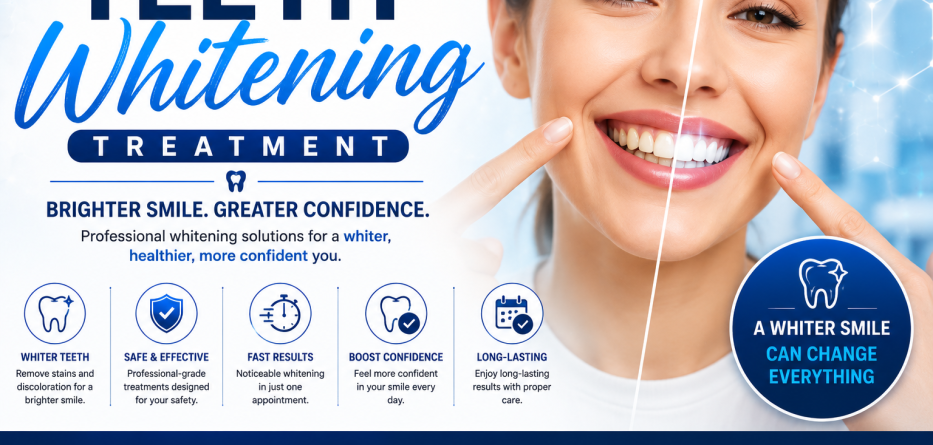
A bright, white smile is often associated with good oral health, confidence, and attractiveness. Over time, however, teeth can become stained or discolored due to aging, food, beverages, smoking, and certain medications. Fortunately, modern teeth whitening treatment offers a safe and effective way to restore the natural brightness of your smile.
Teeth whitening is one of the most popular cosmetic dental procedures worldwide because it delivers noticeable results with minimal discomfort and downtime. Whether you’re preparing for a special event or simply want to enhance your appearance, professional teeth whitening can significantly improve your smile.
In this guide, you’ll learn everything you need to know about teeth whitening treatment, including how it works, available options, benefits, costs, risks, and aftercare tips.
What Is Teeth Whitening Treatment?
Teeth whitening treatment is a cosmetic dental procedure designed to remove stains and discoloration from teeth, making them appear brighter and whiter.
The treatment uses bleaching agents such as the following:
- Hydrogen peroxide
- Carbamide peroxide
These ingredients penetrate the enamel and break down stain molecules, resulting in a visibly whiter smile.
Quick Definition
Teeth whitening treatment is a cosmetic procedure that lightens the color of teeth and removes stains caused by food, drinks, smoking, aging, and other factors.
Why Do Teeth Become Discolored?
Several factors can affect the color of your teeth.
Common Causes of Tooth Stains
Food and Beverages
Certain foods and drinks can stain enamel over time, including:
- Coffee
- Tea
- Red wine
- Cola
- Berries
Tobacco Use
Smoking and chewing tobacco can cause stubborn yellow or brown stains.
Aging
As enamel wears down with age, the underlying dentin becomes more visible, making teeth appear darker.
Poor Oral Hygiene
Inadequate brushing and flossing can allow plaque and stains to accumulate.
Medications
Certain antibiotics and medical treatments may contribute to tooth discoloration.
Types of Teeth Whitening Treatments
Professional In-Office Whitening
This is the fastest and most effective whitening option.
A dentist applies a professional-grade whitening gel and may use a special light or laser to enhance results.
Benefits
- Immediate results
- Safe supervision
- More powerful whitening agents
- Minimal risk of misuse
Take-Home Whitening Kits
Dentists may provide custom trays and professional whitening gel for home use.
Benefits
- Convenient
- Gradual whitening
- Professional guidance
- Lower cost than in-office treatment
Over-the-Counter Whitening Products
These include:
- Whitening strips
- Whitening toothpaste
- Whitening pens
- Whitening gels
While convenient, results are often less dramatic than professional treatments.
How Does Teeth Whitening Work?
Whitening agents penetrate the enamel and break apart stain molecules.
The Whitening Process
- Whitening gel is applied to the teeth.
- Active ingredients penetrate the enamel.
- Stain molecules break down into smaller particles.
- Teeth appear brighter and whiter.
This process can significantly improve both surface and deeper stains.
Benefits of Teeth Whitening Treatment
Improved Appearance
A brighter smile can make a person look younger and healthier.
Increased Confidence
Many patients report greater confidence in social and professional situations.
Fast Results
Professional whitening often produces noticeable improvements after a single session.
Non-Invasive Procedure
Unlike veneers or crowns, whitening does not alter the structure of healthy teeth.
Affordable Cosmetic Enhancement
Teeth whitening is generally less expensive than many other cosmetic dental treatments.
Who Is a Good Candidate for Teeth Whitening?
Teeth whitening works best for individuals with:
- Healthy teeth and gums
- Yellow-toned stains
- Good oral hygiene habits
- Realistic expectations
A dental examination can determine whether whitening is appropriate.
Who May Not Benefit from Whitening?
Teeth whitening may not be effective for:
- Crowns
- Veneers
- Fillings
- Severe intrinsic stains
- Certain medication-related discoloration
In these situations, alternative cosmetic treatments may be recommended.
How Long Do Teeth Whitening Results Last?
Results vary depending on lifestyle habits.
Average Duration
| Whitening Method | Typical Duration |
|---|---|
| Professional In-Office | 1–3 Years |
| Take-Home Kits | 6–18 Months |
| OTC Products | Few Weeks to Several Months |
Avoiding stain-causing foods and smoking can help maintain results longer.
Is Teeth Whitening Safe?
Yes. Professional teeth whitening is generally considered safe when performed under the supervision of a qualified dentist.
Possible Side Effects
Some patients may experience:
- Temporary tooth sensitivity
- Mild gum irritation
- Temporary discomfort
These effects usually resolve within a few days.
How to Maintain Whitening Results
To keep your smile brighter for longer:
Follow These Tips
- Brush twice daily
- Floss regularly
- Use whitening toothpaste
- Limit coffee and tea consumption
- Avoid tobacco products
- Attend routine dental cleanings
These habits can significantly extend whitening results.
Professional Whitening vs Store-Bought Products
| Feature | Professional Whitening | Store-Bought Products |
|---|---|---|
| Results | Faster | Slower |
| Strength | Higher | Lower |
| Safety Monitoring | Yes | No |
| Customization | Yes | Limited |
| Longevity | Longer | Shorter |
Professional whitening generally produces more predictable and dramatic results.
Cost of Teeth Whitening Treatment
Costs vary based on location and treatment type.
Typical Price Range
| Treatment Type | Estimated Cost |
|---|---|
| In-Office Whitening | $300–$1,000 |
| Take-Home Professional Kits | $150–$500 |
| OTC Products | $20–$100 |
Consult your dentist for exact pricing.
Frequently Asked Questions
How many shades whiter can teeth become?
Many patients experience improvements of several shades after professional treatment.
Is teeth whitening painful?
Most patients experience little to no discomfort.
Can whitening damage enamel?
When performed correctly, professional whitening does not damage healthy enamel.
How often can I whiten my teeth?
Your dentist will recommend a safe whitening schedule based on your needs.
Can smokers whiten their teeth?
Yes, but continued smoking may cause stains to return more quickly.
Does whitening work on crowns or veneers?
No. Whitening products do not change the color of dental restorations.
Conclusion
Teeth whitening treatment is one of the simplest and most effective ways to enhance your smile. Whether performed in a dental office or through a professionally supervised home kit, whitening can significantly improve the appearance of stained or discolored teeth.
By choosing the right treatment option and maintaining good oral hygiene habits, you can enjoy a brighter, more confident smile for months or even years. If you’re considering teeth whitening, consult a qualified dental professional to determine the safest and most effective approach for your needs.

