
Dental implants have become the most advanced and reliable solution for replacing missing teeth. One of the primary reasons for their remarkable success is a biological process called osseointegration. While most patients focus on the visible crown of a dental implant, the true magic happens beneath the gum line where the implant connects with the jawbone.
Osseointegration is the foundation of dental implant stability, strength, and longevity. Without it, dental implants would not be able to function like natural teeth. Understanding this process can help patients appreciate why implants are considered the gold standard for tooth replacement.
In this article, we’ll explain what osseointegration is, how it works, why it’s important, and how it contributes to long-term dental implant success.
What Is Osseointegration?
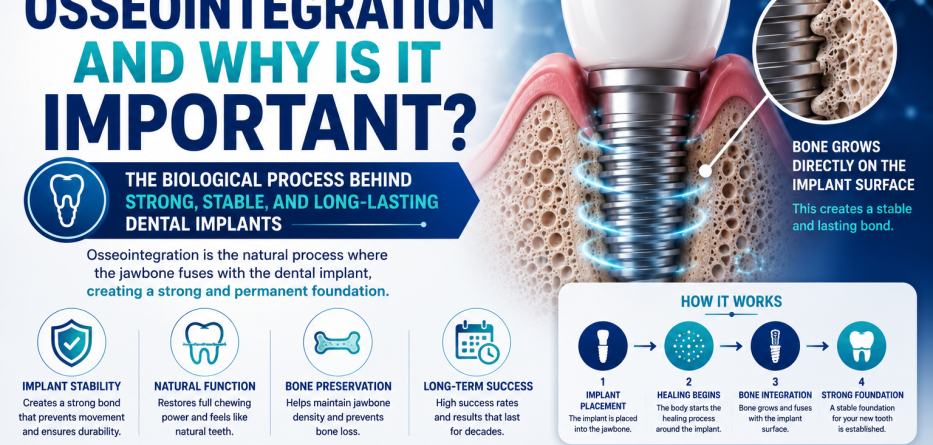
Osseointegration is the biological process through which a dental implant fuses directly with the surrounding jawbone.
The word “osseointegration” comes from the following:
- Osseo = Bone
- Integration = Joining together
When a titanium dental implant is placed into the jawbone, the surrounding bone tissue gradually grows around the implant surface and forms a secure connection.
Quick Definition
Osseointegration is the natural process by which the jawbone bonds with a dental implant, creating a stable and permanent foundation for a replacement tooth.
Why Is Osseointegration Important?
Osseointegration is the key reason dental implants can function like natural teeth.
Without successful integration, the implant would remain loose and unable to support chewing forces.
Major Benefits of Osseointegration
- Creates implant stability
- Prevents implant movement
- Supports chewing and biting
- Preserves jawbone health
- Improves long-term implant success
- Enhances patient comfort
This process transforms the implant into a functional part of the oral structure.
How Does Osseointegration Work?
The process occurs in several stages after implant placement.
Step 1: Implant Placement
A titanium implant is surgically inserted into the jawbone.
Step 2: Healing Begins
The body immediately starts repairing the surrounding tissue.
Blood vessels form around the implant, supporting healing and bone regeneration.
Step 3: Bone Growth
Specialized cells called osteoblasts begin producing new bone tissue around the implant.
Step 4: Bone Fusion
Over several months, the new bone integrates directly with the implant surface.
Step 5: Restoration Placement
Once integration is complete, the final crown, bridge, or denture is attached.
The implant is now ready to function like a natural tooth root.
Why Titanium Is Ideal for Osseointegration
Most dental implants are made from titanium because of its unique properties.
Benefits of Titanium
- Biocompatible
- Corrosion-resistant
- Strong and lightweight
- Highly durable
- Bonds naturally with bone
Titanium is one of the few materials capable of forming such a strong connection with living bone tissue.
How Long Does Osseointegration Take?
Healing times vary depending on the patient and treatment complexity.
Typical Timeline
| Stage | Approximate Time |
|---|---|
| Initial Healing | 1–2 Weeks |
| Bone Formation | 4–8 Weeks |
| Full Osseointegration | 3–6 Months |
| Final Restoration | After Integration |
Some patients may heal faster, while others require additional time due to bone quality or health factors.
Factors That Affect Osseointegration
Several factors influence whether osseointegration occurs successfully.
Bone Density
Strong, healthy bone provides better implant support and improves healing outcomes.
Oral Hygiene
Good oral hygiene reduces infection risk and promotes healthy healing.
Smoking
Smoking restricts blood flow and significantly increases the risk of implant failure.
Overall Health
Conditions such as uncontrolled diabetes can affect healing and bone regeneration.
Surgical Technique
Proper implant placement by an experienced dentist greatly improves success rates.
How Osseointegration Prevents Bone Loss
One of the most important benefits of dental implants is their ability to preserve jawbone health.
When a tooth is lost:
- The jawbone loses stimulation
- Bone begins shrinking
- Facial structure may change
Dental implants restore natural stimulation through osseointegration.
Benefits
- Preserves bone density
- Maintains facial structure
- Supports surrounding teeth
- Improves long-term oral health
This advantage sets implants apart from traditional dentures and bridges.
Osseointegration vs Other Tooth Replacement Options
| Feature | Dental Implants | Bridges | Dentures |
|---|---|---|---|
| Osseointegration | Yes | No | No |
| Bone Preservation | Excellent | Limited | None |
| Stability | Excellent | Good | Moderate |
| Longevity | 20+ Years | 5–15 Years | 5–10 Years |
| Natural Feel | Excellent | Good | Moderate |
Because implants integrate with bone, they provide benefits that other tooth replacement options cannot match.
What Happens If Osseointegration Fails?
Although uncommon, implant failure can occur if the implant does not properly bond with the jawbone.
Common Causes
- Smoking
- Infection
- Poor oral hygiene
- Insufficient bone support
- Excessive pressure on the implant
Warning Signs
- Implant mobility
- Persistent pain
- Swelling
- Difficulty chewing
- Gum inflammation
Early diagnosis often improves treatment outcomes.
How Dentists Improve Osseointegration Success
Modern dentistry uses advanced technology to maximize implant success.
Techniques Include
- 3D CBCT imaging
- Digital treatment planning
- Guided implant surgery
- Bone grafting procedures
- Advanced implant surface treatments
These innovations help create optimal conditions for bone integration.
Scientific Success Rates
Modern dental implants have some of the highest success rates in dentistry.
Clinical Findings
- Overall implant success rates exceed 95%
- Many implants last 20 years or longer
- Properly integrated implants can function for decades
Success depends heavily on patient health, oral hygiene, and professional care.
Frequently Asked Questions
Is osseointegration painful?
No. Patients may experience mild discomfort after implant placement, but the integration process itself is painless.
Why is osseointegration important for dental implants?
It creates the stable connection between the implant and jawbone that allows implants to function like natural teeth.
How long does osseointegration take?
Most patients achieve full integration within 3 to 6 months.
Can osseointegration fail?
Yes, but failures are uncommon when implants are properly placed and maintained.
What improves osseointegration success?
Healthy bone, good oral hygiene, avoiding smoking, and following your dentist’s recommendations.
Conclusion
Osseointegration is the scientific foundation behind the success of modern dental implants. By allowing the jawbone to fuse directly with the implant surface, this remarkable biological process creates exceptional stability, durability, and long-term function.
Understanding what osseointegration is and why it is important helps patients appreciate why dental implants are considered the most advanced solution for replacing missing teeth. With proper care and professional treatment, successful osseointegration can provide a strong, healthy, and natural-looking smile for decades.
