
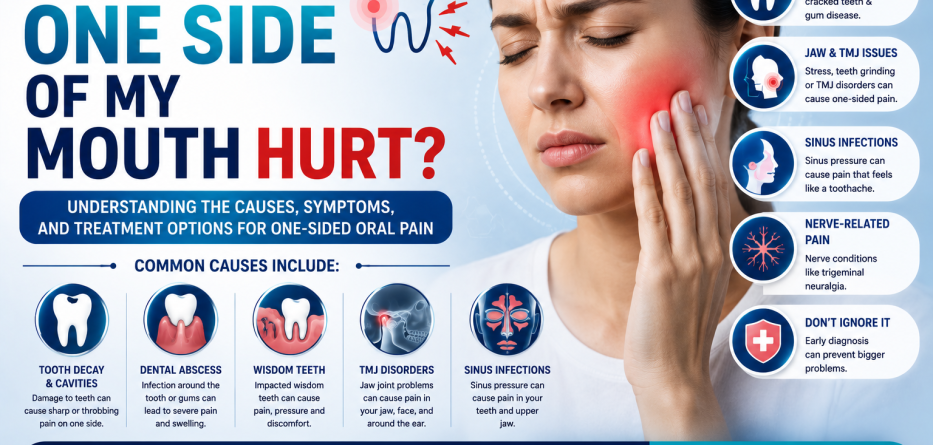
Pain on one side of the mouth can be frustrating, uncomfortable, and sometimes alarming. Whether the pain is sharp, throbbing, dull, or intermittent, it often signals an underlying dental or medical issue that requires attention. Many people wonder, “Why does one side of my mouth hurt?” The answer can range from a simple cavity to a more serious infection or jaw disorder.
Understanding the possible causes can help you determine when to seek professional treatment and prevent the problem from worsening. In this guide, we’ll explore the most common reasons for one-sided mouth pain, associated symptoms, treatment options, and when to see a dentist.
What Does One-Sided Mouth Pain Mean?
Pain affecting only one side of the mouth typically indicates that the issue originates from a specific tooth, gum area, jaw joint, or nerve on that side.
The discomfort may involve:
- Teeth
- Gums
- Jaw
- Cheek
- Tongue
- Sinuses
- Facial nerves
Identifying the exact location and nature of the pain can help determine the cause.
Common Causes of Pain on One Side of the Mouth
1. Tooth Decay (Cavities)
One of the most common reasons for localized mouth pain is tooth decay.
When bacteria break down tooth enamel, cavities can develop and expose sensitive inner layers of the tooth.
Symptoms
- Sharp pain when eating sweets
- Sensitivity to hot or cold foods
- Pain while chewing
- Visible holes or dark spots
Treatment
- Dental fillings
- Crowns
- Root canal therapy (for advanced decay)
2. Dental Abscess
A dental abscess is a serious infection that develops around the tooth root or gum tissue.
Symptoms
- Severe throbbing pain
- Swollen gums
- Facial swelling
- Fever
- Bad taste in the mouth
Why It Hurts on One Side
The infection is usually confined to a single tooth or area, causing localized pain.
Treatment
- Drainage of the abscess
- Antibiotics
- Root canal treatment
- Tooth extraction (if necessary)
3. Gum Disease
Inflamed or infected gums can cause pain on one side of the mouth.
Symptoms
- Red gums
- Bleeding while brushing
- Gum tenderness
- Bad breath
- Gum recession
Treatment
- Professional cleaning
- Scaling and root planing
- Improved oral hygiene
Early treatment can prevent tooth loss.
4. Impacted Wisdom Teeth
Wisdom teeth often emerge during the late teens or early twenties.
If a wisdom tooth becomes trapped beneath the gum or grows at an angle, it may cause significant pain.
Symptoms
- Jaw pain
- Swollen gums
- Difficulty opening the mouth
- Pain at the back of the mouth
Treatment
- Monitoring
- Wisdom tooth extraction
5. Cracked or Fractured Tooth
A cracked tooth may not always be visible but can cause intense discomfort.
Symptoms
- Sharp pain while biting
- Sensitivity to temperature changes
- Intermittent discomfort
Treatment
- Dental bonding
- Crown placement
- Root canal therapy
- Extraction in severe cases
6. Temporomandibular Joint (TMJ) Disorder
The temporomandibular joint connects the jaw to the skull.
Problems affecting this joint can cause pain on one side of the face and mouth.
Symptoms
- Jaw clicking
- Facial pain
- Headaches
- Difficulty chewing
- Ear pain
Treatment
- Nightguards
- Physical therapy
- Stress reduction
- Medication
7. Teeth Grinding (Bruxism)
Grinding or clenching your teeth can place excessive pressure on one side of the jaw.
Symptoms
- Jaw soreness
- Tooth sensitivity
- Headaches
- Worn teeth
Treatment
- Custom nightguards
- Stress management
- Bite adjustments
8. Sinus Infection
Surprisingly, sinus infections can sometimes cause pain that feels like a toothache.
Symptoms
- Facial pressure
- Nasal congestion
- Headache
- Upper tooth pain
Why It Hurts One Side
When one sinus cavity becomes inflamed, pressure may affect nearby upper teeth.
Treatment
- Treating the sinus infection
- Decongestants
- Medical evaluation
9. Mouth Ulcers or Canker Sores
Small sores inside the mouth can create significant discomfort.
Symptoms
- Painful white or yellow sores
- Burning sensation
- Pain while eating
Treatment
- Saltwater rinses
- Topical medications
- Avoiding spicy foods
Most heal within one to two weeks.
10. Trigeminal Neuralgia
Trigeminal neuralgia is a nerve disorder that causes sudden facial pain.
Symptoms
- Electric shock-like pain
- Pain triggered by speaking or chewing
- Episodes lasting seconds to minutes
Treatment
- Prescription medications
- Neurological evaluation
- Advanced treatment if needed
How to Relieve One-Sided Mouth Pain at Home
While professional evaluation is often necessary, temporary relief may include:
Home Remedies
- Warm saltwater rinses
- Cold compresses
- Over-the-counter pain relievers
- Avoiding extremely hot or cold foods
- Maintaining good oral hygiene
These measures may reduce discomfort but should not replace professional care.
When Should You See a Dentist?
Schedule a dental appointment if your pain:
- Lasts more than two days
- Becomes severe
- Causes swelling
- Makes eating difficult
- Is accompanied by fever
- Involves a damaged tooth
Early diagnosis often prevents more complex treatment later.
Warning Signs That Require Immediate Care
Seek emergency dental or medical treatment if you experience:
- Facial swelling
- Difficulty breathing
- Difficulty swallowing
- Severe infection symptoms
- Uncontrolled bleeding
These symptoms may indicate a serious condition requiring urgent attention.
How Dentists Diagnose One-Sided Mouth Pain
Your dentist may use:
Diagnostic Methods
- Oral examination
- Dental X-rays
- CBCT imaging
- Bite analysis
- Periodontal evaluation
Accurate diagnosis is essential because many different conditions can produce similar symptoms.
Preventing Future Mouth Pain
Reduce your risk by:
- Brushing twice daily
- Flossing every day
- Visiting the dentist regularly
- Wearing a nightguard if you grind your teeth
- Addressing dental problems early
- Maintaining a healthy diet
Preventive care remains the best defense against dental pain.
Frequently Asked Questions
Why does only one side of my mouth hurt?
Localized pain is often caused by a specific tooth problem, gum infection, wisdom tooth issue, TMJ disorder, or nerve condition.
Can stress cause one-sided mouth pain?
Yes. Stress can contribute to teeth grinding and TMJ disorders, which may cause pain on one side.
Is one-sided mouth pain always a dental problem?
No. Sinus infections, nerve disorders, and jaw conditions can also cause pain.
Can a cavity cause pain on one side of the mouth?
Yes. Cavities often affect a single tooth, creating localized discomfort.
Should I see a dentist if the pain comes and goes?
Yes. Intermittent pain may still indicate an underlying dental issue requiring treatment.
Conclusion
If you’ve been wondering, “Why does one side of my mouth hurt?” the cause could range from a simple cavity to a more complex condition such as a dental abscess, TMJ disorder, impacted wisdom tooth, or nerve problem. While some cases may improve with temporary home care, persistent or severe pain should never be ignored.
Prompt evaluation by a dental professional can identify the underlying cause, relieve discomfort, and prevent more serious complications. When it comes to oral health, early diagnosis and treatment are often the key to protecting your smile and overall well-being.
