
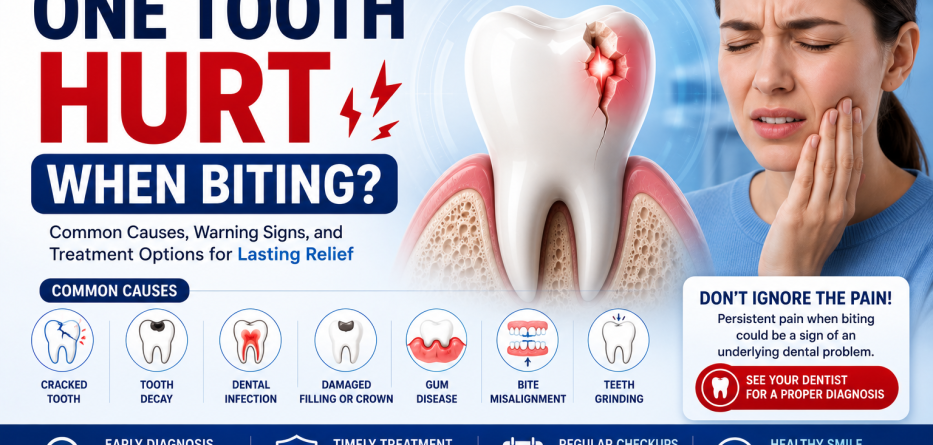
Have you ever noticed a sharp pain in a single tooth when chewing food or biting down? If so, you’re not alone. Tooth pain when biting is a common dental problem that can range from mild discomfort to severe pain. While it may seem like a minor issue at first, pain when biting often indicates an underlying dental condition that requires attention.
The good news is that most causes of tooth pain can be successfully treated when diagnosed early. Understanding why one tooth hurts when biting can help you recognize potential problems and seek professional care before the condition worsens.
In this article, we’ll explore the most common causes of tooth pain when biting, available treatment options, and signs that indicate it’s time to visit your dentist.
Why Does One Tooth Hurt When Biting?
Pain when biting usually occurs because pressure is being applied to a damaged, infected, inflamed, or structurally compromised tooth.
Quick Answer
If one tooth hurts when biting, it may be caused by:
- A cracked tooth
- Tooth decay
- Dental infection
- Gum disease
- A damaged filling or crown
- Teeth grinding
- Bite misalignment
- Tooth sensitivity
Identifying the exact cause requires a professional dental examination.
Common Causes of Tooth Pain When Biting
1. Cracked Tooth Syndrome
A cracked tooth is one of the most common causes of pain when chewing.
Small cracks may not be visible to the naked eye but can cause discomfort when pressure is applied.
Symptoms
- Sharp pain while biting
- Pain that comes and goes
- Sensitivity to hot and cold
- Difficulty identifying the exact location
Treatment
Depending on the severity, treatment may include the following:
- Dental bonding
- Crown placement
- Root canal therapy
- Tooth extraction in severe cases
2. Tooth Decay (Cavities)
Untreated cavities can penetrate deeper layers of the tooth and eventually reach the sensitive inner pulp.
Symptoms
- Pain when chewing
- Sensitivity to sweets
- Visible holes or dark spots
- Persistent toothache
Treatment
- Dental fillings
- Crowns
- Root canal treatment if the pulp becomes infected
Early treatment prevents further damage.
3. Dental Abscess or Infection
A dental abscess is a pocket of infection that develops around the tooth root or gums.
Symptoms
- Severe throbbing pain
- Pain when biting
- Swelling
- Fever
- Bad taste in the mouth
Why It Hurts
Pressure from infection around the root makes biting extremely painful.
Treatment
- Root canal therapy
- Drainage of the abscess
- Antibiotics if necessary
Dental infections require prompt treatment.
4. Damaged Filling or Crown
Old fillings and crowns can wear down, crack, or become loose over time.
Symptoms
- Pain while chewing
- Sensitivity
- Feeling pressure on one tooth
- Visible damage to restoration
Treatment
Your dentist may:
- Replace the filling
- Repair the crown
- Adjust the restoration
5. Bite Misalignment
Sometimes the problem isn’t the tooth itself but the way your teeth come together.
A tooth that contacts first during chewing may experience excessive force.
Symptoms
- Pain on one tooth
- Jaw discomfort
- Uneven wear patterns
- Headaches
Treatment
- Bite adjustment
- Orthodontic treatment
- Nightguards
Correcting the bite often resolves the discomfort.
6. Teeth Grinding (Bruxism)
Grinding or clenching your teeth places excessive pressure on the enamel and supporting structures.
Symptoms
- Tooth pain when biting
- Jaw soreness
- Worn teeth
- Morning headaches
Treatment
- Custom nightguard
- Stress management
- Bite correction if needed
7. Gum Disease
Advanced gum disease can weaken the structures supporting a tooth.
Symptoms
- Swollen gums
- Bleeding during brushing
- Tooth mobility
- Pain while chewing
Treatment
- Deep cleaning
- Periodontal therapy
- Improved oral hygiene
Healthy gums are essential for comfortable chewing.
8. Tooth Sensitivity
Exposed dentin or receding gums may cause temporary pain during biting.
Common Causes
- Enamel erosion
- Gum recession
- Aggressive brushing
- Acidic foods
Treatment
- Desensitizing toothpaste
- Fluoride treatments
- Dental bonding
How Dentists Diagnose Tooth Pain
Finding the exact cause often requires a comprehensive evaluation.
Diagnostic Tools
- Visual examination
- Dental X-rays
- Bite testing
- Cold sensitivity tests
- Percussion testing
These methods help dentists identify hidden cracks, infections, and structural damage.
When Should You See a Dentist?
Schedule an appointment if:
- Pain lasts more than two days
- Biting becomes increasingly painful
- Swelling develops
- You experience fever
- The tooth becomes sensitive to temperature
Early treatment usually leads to better outcomes and lower treatment costs.
Can Tooth Pain When Biting Go Away on Its Own?
Sometimes mild irritation may improve temporarily.
However, most causes of persistent biting pain require professional treatment.
Ignoring symptoms can lead to:
- Larger cavities
- Tooth fractures
- Root infections
- Tooth loss
Prompt diagnosis is always the safest approach.
How to Prevent Tooth Pain When Biting
Prevention Tips
- Brush twice daily
- Floss every day
- Visit your dentist regularly
- Wear a mouthguard if you grind your teeth
- Avoid chewing hard objects
- Treat cavities early
- Maintain healthy gums
Preventive care remains the best defense against dental pain.
Home Remedies While Waiting for Your Appointment
Temporary relief measures include:
- Warm saltwater rinses
- Cold compresses
- Over-the-counter pain medication
- Avoiding hard foods
- Chewing on the opposite side
These measures do not replace professional treatment but may reduce discomfort.
Frequently Asked Questions
Why does only one tooth hurt when I chew?
The pain is often caused by a cracked tooth, cavity, infection, or bite problem affecting that specific tooth.
Can a cracked tooth heal itself?
No. Cracked teeth typically require professional dental treatment.
Is tooth pain when biting an emergency?
Severe pain, swelling, or signs of infection should be treated as soon as possible.
Can a filling cause pain when biting?
Yes. High fillings or damaged restorations can create pressure and discomfort.
Why does my tooth hurt when I bite but not otherwise?
This often indicates a crack, infection, ligament inflammation, or bite issue that becomes noticeable only under pressure.
Conclusion
If you’re wondering, “Why does one tooth hurt when biting?” the answer can range from a simple bite adjustment to a more serious issue such as a cracked tooth or infection. While the discomfort may seem minor initially, persistent pain is often your body’s warning sign that something needs attention.
The best approach is to schedule a dental evaluation as soon as possible. Early diagnosis and treatment can relieve pain, prevent complications, and help preserve your natural tooth for years to come.
