
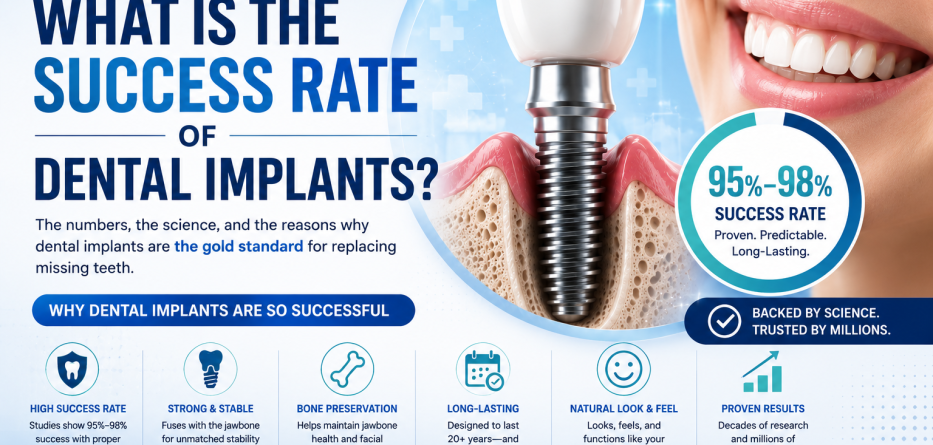
Dental implants have become one of the most trusted and effective solutions for replacing missing teeth. Millions of patients worldwide choose dental implants because they provide a natural appearance, strong functionality, and long-lasting results. However, one of the most common questions patients ask before treatment is, “What is the success rate of dental implants?”
The good news is that dental implants are among the most successful procedures in modern dentistry. Advances in implant technology, surgical techniques, and treatment planning have significantly improved outcomes over the past few decades.
In this article, we’ll explore the success rates of dental implants, the factors that contribute to successful treatment, and what patients can do to maximize the lifespan of their implants.
What Is the Success Rate of Dental Implants?
Dental implants have an impressive track record of success.
Most clinical studies report success rates between 95% and 98%, making implants one of the most predictable dental treatments available today.
Quick Answer
The success rate of dental implants is typically between 95% and 98%, depending on factors such as implant location, bone quality, oral hygiene, and overall patient health.
These high success rates are one of the primary reasons dental implants are considered the gold standard for replacing missing teeth.
Understanding Dental Implant Success
Success doesn’t simply mean the implant remains in place.
A successful dental implant should:
- Remain stable in the jawbone
- Function normally during chewing
- Cause no pain or discomfort
- Support healthy surrounding tissues
- Maintain bone levels around the implant
- Provide an attractive appearance
When all these criteria are met, the implant is considered successful.
Success Rates by Implant Location
The location of the implant can influence treatment outcomes.
Lower Jaw (Mandible)
Implants placed in the lower jaw often have slightly higher success rates due to denser bone structure.
Average success rate:
- 95%–98%
Upper Jaw (Maxilla)
The upper jaw generally contains softer bone, which may slightly affect healing and stability.
Average success rate:
- 90%–95%
Modern implant techniques have significantly reduced these differences.
Why Are Dental Implants So Successful?
Several factors contribute to the outstanding success of dental implants.
Osseointegration
The primary reason implants succeed is a biological process called osseointegration.
During healing, the jawbone fuses directly with the titanium implant, creating a strong and stable foundation.
Benefits include:
- Excellent stability
- Long-term durability
- Improved chewing function
- Bone preservation
Advanced Materials
Modern implants are typically made from medical-grade titanium, which is:
- Biocompatible
- Corrosion-resistant
- Highly durable
- Capable of integrating with bone
Titanium’s unique properties have played a major role in implant success.
Improved Treatment Planning
Today’s dentists use advanced technology such as:
- Digital X-rays
- 3D CBCT imaging
- Guided implant surgery
- Computer-assisted planning
These tools improve precision and reduce complications.
Factors That Affect Dental Implant Success Rates
1. Oral Hygiene
Proper oral hygiene is essential for maintaining healthy gums and bone around implants.
Poor hygiene can increase the risk of:
- Peri-implantitis
- Gum inflammation
- Bone loss
- Implant failure
Recommended habits include:
- Brushing twice daily
- Flossing regularly
- Professional cleanings
2. Bone Quality and Density
Strong bone support improves implant stability and healing.
Patients with insufficient bone may require:
- Bone grafting
- Sinus lift procedures
- Additional healing time
Healthy bones significantly improve success rates.
3. Smoking
Smoking remains one of the most significant risk factors for implant failure.
Smoking can:
- Reduce blood flow
- Delay healing
- Increase infection risk
- Impair osseointegration
Patients who avoid tobacco generally experience better outcomes.
4. Overall Health
Certain medical conditions can affect implant healing.
Examples include:
- Uncontrolled diabetes
- Autoimmune disorders
- Osteoporosis
- Immune system deficiencies
Proper medical management often improves treatment success.
5. Dentist Experience
An experienced implant dentist can significantly improve outcomes through:
- Accurate diagnosis
- Precise implant placement
- Effective treatment planning
- Proper follow-up care
Choosing a qualified implant provider is one of the most important decisions a patient can make.
What Causes Dental Implant Failure?
Although uncommon, implant failure can occur.
Early Implant Failure
Occurs before osseointegration is complete.
Possible causes:
- Infection
- Poor bone quality
- Surgical complications
- Excessive movement during healing
Late Implant Failure
Occurs months or years after successful treatment.
Common causes include:
- Peri-implantitis
- Smoking
- Chronic gum disease
- Excessive bite forces
- Poor oral hygiene
Fortunately, many complications can be prevented through regular dental care.
Dental Implant Success Rates Compared to Other Tooth Replacement Options
| Treatment Option | Average Success/Longevity |
|---|---|
| Dental Implants | 95–98% Success Rate |
| Dental Bridges | 5–15 Years Average Lifespan |
| Partial Dentures | 5–10 Years |
| Complete Dentures | 5–10 Years |
Dental implants consistently outperform traditional tooth replacement solutions in terms of durability and functionality.
How to Improve the Success of Your Dental Implants
Patients can play an active role in protecting their investment.
Best Practices
- Maintain excellent oral hygiene.
- Attend regular dental checkups.
- Avoid smoking and tobacco products.
- Follow all post-operative instructions.
- Wear a nightguard if you grind your teeth.
- Maintain a healthy diet.
- Manage medical conditions appropriately.
These habits help ensure long-term implant success.
Long-Term Outlook for Dental Implants
Many dental implants remain successful for decades.
Research shows that:
- Most implants survive beyond 20 years.
- Many patients keep their implants for life.
- Modern implant technology continues to improve outcomes.
The implant itself often lasts a lifetime, while the crown may require replacement after 10 to 15 years due to normal wear.
Frequently Asked Questions
Are dental implants 100% successful?
No medical procedure has a 100% success rate. However, dental implants have one of the highest success rates in dentistry, typically between 95% and 98%.
What is the biggest reason implants fail?
Peri-implantitis, smoking, poor oral hygiene, and insufficient bone support are among the leading causes of implant failure.
Do older adults have lower implant success rates?
Age alone does not significantly affect success rates. Overall health and bone quality are more important factors.
How long do successful dental implants last?
Many implants last 20 years or more, and some can last a lifetime with proper care.
Can a failed dental implant be replaced?
Yes. In many cases, failed implants can be replaced after appropriate healing and treatment.
Conclusion
So, what is the success rate of dental implants?
The answer is encouraging. Modern dental implants achieve success rates of approximately 95% to 98%, making them one of the most predictable and reliable treatments in modern dentistry. Their ability to restore function, preserve bone, and provide long-term stability has made them the preferred choice for replacing missing teeth.
By choosing an experienced dental professional, maintaining excellent oral hygiene, and following recommended aftercare, patients can enjoy the benefits of dental implants for decades and potentially a lifetime.
