
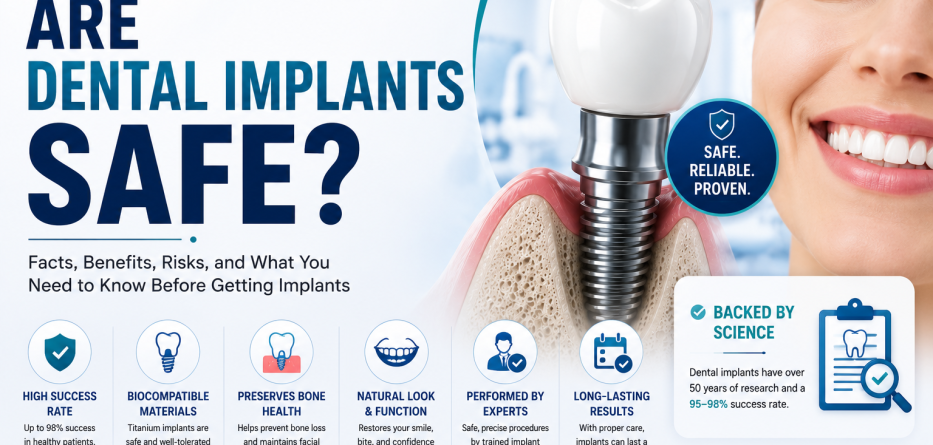
If you’re considering dental implants to replace missing teeth, one of the first questions you may have is, “Are dental implants safe?”
The short answer is yes. Dental implants are widely recognized as one of the safest and most successful tooth replacement treatments available today. Millions of patients worldwide have restored their smiles and oral function with dental implants, enjoying long-term results and improved quality of life.
Modern implant dentistry is supported by decades of research, advanced technology, and highly predictable treatment protocols. However, like any surgical procedure, dental implants come with certain risks and considerations that patients should understand before treatment.
In this guide, we’ll explore the safety of dental implants, how they work, potential risks, success rates, and what you can do to ensure the best possible outcome.
What Are Dental Implants?
Dental implants are artificial tooth roots typically made from medical-grade titanium. They are surgically placed into the jawbone and serve as a strong foundation for replacement teeth such as crowns, bridges, or implant-supported dentures.
A dental implant consists of:
- Implant post
- Abutment
- Custom dental crown
Once placed, the implant integrates with the jawbone through a natural process called osseointegration, creating a stable and durable tooth replacement solution.
Quick Answer
Dental implants are considered safe because they use biocompatible materials, have high success rates, and have been extensively studied for more than 50 years.
How Safe Are Dental Implants?
Dental implants have one of the highest success rates in modern dentistry.
Implant Success Statistics
| Factor | Success Rate |
|---|---|
| Overall Implant Success | 95–98% |
| Healthy Non-Smokers | Up to 98% |
| Long-Term Success (10+ Years) | Over 90% |
Numerous clinical studies have demonstrated excellent long-term outcomes when implants are properly placed and maintained.
Why Dental Implants Are Considered Safe
1. Biocompatible Materials
Most dental implants are made from titanium, a material that has been safely used in medicine for decades.
Benefits include:
- Excellent compatibility with human bone
- Low risk of allergic reactions
- High durability
- Strong resistance to corrosion
Titanium naturally bonds with bone tissue, making it ideal for implant treatment.
2. Decades of Clinical Research
Dental implants have been used successfully since the 1960s.
Over the years, researchers and clinicians have gathered extensive evidence supporting their safety and effectiveness.
Advantages include:
- Well-established treatment protocols
- Predictable outcomes
- Continuous technological improvements
- Long-term clinical data
3. Preservation of Jawbone Health
Unlike traditional dentures, dental implants stimulate the jawbone.
Benefits include:
- Prevention of bone loss
- Maintenance of facial structure
- Improved oral health
- Enhanced stability
This makes implants beneficial not only for replacing teeth but also for preserving oral structures.
Are Dental Implant Procedures Safe?
For most healthy adults, implant surgery is considered a routine and safe procedure.
The treatment is typically performed under the following conditions:
- Local anesthesia
- Sedation dentistry
- Conscious sedation (when appropriate)
Most patients report less discomfort than expected and recover quickly.
Typical Procedure Steps
- Consultation and evaluation
- Treatment planning
- Implant placement
- Healing and osseointegration
- Crown attachment
Advanced digital imaging and guided surgery techniques further improve safety and precision.
Potential Risks of Dental Implants
Although uncommon, complications can occur.
Possible risks include the following:
Infection
Bacterial infection around the implant site may interfere with healing.
Implant Failure
In rare cases, the implant may fail to integrate with the bone.
Nerve Damage
Improper placement can potentially affect nearby nerves.
Sinus Complications
Upper jaw implants occasionally require special planning due to proximity to the sinus cavity.
Gum Problems
Poor oral hygiene can lead to peri-implant disease.
Fortunately, careful planning and proper aftercare significantly reduce these risks.
Who Is a Good Candidate for Dental Implants?
Most adults with missing teeth can safely receive dental implants.
Ideal candidates generally have:
- Healthy gums
- Adequate jawbone density
- Good oral hygiene habits
- Stable overall health
- Realistic expectations
Even patients with bone loss may qualify after bone grafting procedures.
Are Dental Implants Safe for Older Adults?
Yes.
Age alone is rarely a barrier to dental implant treatment.
Many patients in their 60s, 70s, and even 80s successfully receive implants.
More important factors include the following:
- Overall health
- Bone quality
- Healing ability
- Oral hygiene commitment
In many cases, implants can significantly improve comfort and quality of life for seniors.
Are Dental Implants Safe for Patients with Medical Conditions?
Many medical conditions do not automatically prevent implant treatment.
However, certain conditions require careful management.
Examples include:
- Diabetes
- Osteoporosis
- Heart disease
- Autoimmune disorders
A thorough evaluation helps determine whether implants are appropriate and safe.
Patients should always disclose their complete medical history to their dentist.
How to Improve Dental Implant Safety
Patients can improve treatment outcomes by following several important guidelines.
Before Treatment
- Choose an experienced implant dentist
- Discuss medical conditions
- Complete recommended imaging
- Follow pre-surgical instructions
After Treatment
- Maintain excellent oral hygiene
- Attend regular dental checkups
- Avoid smoking
- Follow recovery instructions carefully
These habits help minimize complications and support long-term success.
Dental Implants vs Other Tooth Replacement Options
| Feature | Dental Implants | Bridges | Dentures |
| Surgical Procedure | Yes | No | No |
| Bone Preservation | Yes | Limited | No |
| Stability | Excellent | Good | Moderate |
| Longevity | 20+ Years | 5–15 Years | 5–10 Years |
| Natural Feel | Excellent | Good | Moderate |
Although implants involve surgery, their long-term benefits often outweigh the risks for suitable candidates.
Common Myths About Dental Implant Safety
Myth 1: Dental Implants Are Dangerous
Reality: Dental implants have one of the highest success rates in dentistry.
Myth 2: Implant Surgery Is Extremely Painful
Reality: Most patients experience mild discomfort that is easily managed with medication.
Myth 3: The Body Rejects Dental Implants
Reality: True rejection is extremely rare. Most failures result from infection, smoking, or healing complications rather than immune rejection.
Myth 4: Older Adults Cannot Get Implants
Reality: Many seniors are excellent implant candidates.
Frequently Asked Questions
Are dental implants safe long-term?
Yes. Many dental implants function successfully for 20 years or more.
Can dental implants cause health problems?
Serious health complications are rare when implants are properly planned and maintained.
Is titanium safe inside the body?
Yes. Titanium is highly biocompatible and has been safely used in medical implants for decades.
What is the risk of implant failure?
Most studies report success rates between 95% and 98%.
Can smokers safely get dental implants?
Yes, but smoking increases the risk of complications and implant failure.
Conclusion
So, are dental implants safe?
For the vast majority of patients, the answer is yes. Dental implants are supported by decades of scientific research, impressive success rates, and advanced treatment techniques. They offer a reliable, durable, and natural-looking solution for replacing missing teeth while preserving oral health and jawbone structure.
While every surgical procedure carries some risk, choosing an experienced dental professional, maintaining excellent oral hygiene, and following post-treatment instructions can significantly improve outcomes. For many patients, dental implants remain one of the safest and most effective investments in long-term oral health and confidence.
