

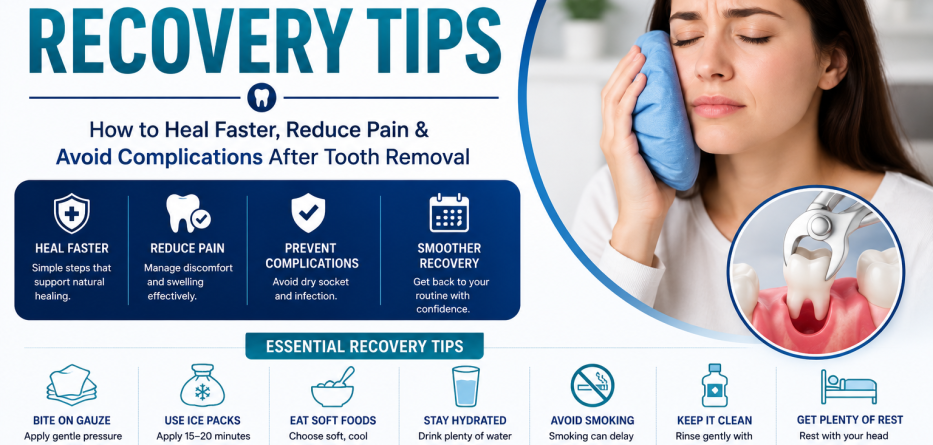
Having a tooth extracted can feel overwhelming, especially if you’re unsure what to expect during recovery. Whether you’ve had a wisdom tooth removed, an infected tooth extracted, or a tooth removed before dental implant treatment, proper aftercare is essential for a smooth healing process.
The good news is that most tooth extractions heal successfully when patients follow their dentist’s post-operative instructions. Taking the right steps during the first few days can help reduce pain, prevent complications, and speed up recovery.
In this guide, we’ll share the most effective tooth extraction recovery tips, explain what to expect during healing, and discuss how to avoid common problems such as dry socket and infection.
What Happens After a Tooth Extraction?
When a tooth is removed, the body immediately begins the healing process.
A blood clot forms inside the extraction socket to:
- Stop bleeding
- Protect the bone and nerves
- Support new tissue growth
- Promote healing
Protecting this blood clot is one of the most important parts of recovery.
Quick Answer
Most patients recover from a simple tooth extraction within 7–10 days, while surgical extractions and wisdom tooth removal may require several weeks for complete healing.
Recovery Timeline After Tooth Extraction
First 24 Hours
During the first day:
- Bleeding gradually slows
- Blood clot forms
- Mild swelling may begin
- Tenderness is common
Days 2–3
Patients often experience:
- Reduced bleeding
- Peak swelling
- Mild discomfort
- Improved healing
Days 4–7
Most symptoms begin to improve.
You may notice:
- Less swelling
- Less pain
- Increased comfort while eating
Weeks 2–4
Soft tissue healing continues, and the extraction site gradually closes.
1. Follow Your Dentist’s Instructions Carefully
Your dentist will provide personalized aftercare instructions.
These may include:
- Medication schedules
- Cleaning instructions
- Dietary recommendations
- Activity restrictions
Following these instructions can significantly reduce recovery complications.
2. Bite Down on Gauze Properly
Immediately after extraction, your dentist will place gauze over the socket.
Tips
- Bite firmly but gently
- Change gauze as directed
- Avoid excessive talking
- Keep pressure on the area
This helps control bleeding and encourages clot formation.
3. Rest During the First 24 Hours
Rest is one of the simplest ways to support healing.
Avoid
- Heavy lifting
- Intense exercise
- Strenuous activity
- Excessive bending
Physical exertion may increase bleeding and delay recovery.
4. Use Ice Packs to Reduce Swelling
Swelling is a normal part of the healing process.
How to Apply Ice
- Apply an ice pack for 15–20 minutes.
- Remove for 15–20 minutes.
- Repeat during the first 24–48 hours.
Cold therapy helps reduce:
- Swelling
- Inflammation
- Discomfort
5. Eat Soft Foods
Your mouth needs time to heal.
Recommended Foods
- Yogurt
- Applesauce
- Mashed potatoes
- Smoothies (without a straw)
- Scrambled eggs
- Oatmeal
- Soup (lukewarm)
Soft foods reduce irritation at the extraction site.
6. Stay Hydrated
Drinking water supports healing and overall health.
Hydration Tips
- Sip water frequently
- Avoid alcohol
- Limit caffeinated beverages
- Do not use straws
Straws can create suction that dislodges the blood clot.
7. Avoid Smoking and Tobacco Products
Smoking is one of the leading causes of post-extraction complications.
Tobacco use can:
- Delay healing
- Increase infection risk
- Cause dry socket
- Reduce blood flow
Dentists typically recommend avoiding smoking for at least 72 hours, and preferably longer.
8. Do Not Use Straws
Many patients underestimate the importance of this advice.
The suction created by a straw can pull the protective blood clot from the extraction socket.
This may lead to:
- Dry socket
- Severe pain
- Delayed healing
Avoid straws for at least one week unless otherwise instructed.
9. Keep Your Mouth Clean
Good oral hygiene helps prevent infection.
First 24 Hours
Avoid vigorous rinsing.
After 24 Hours
Gently rinse with warm salt water:
- ½ teaspoon salt
- 8 ounces warm water
Repeat several times daily, especially after meals.
10. Take Medications as Prescribed
Your dentist may recommend:
- Pain relievers
- Anti-inflammatory medications
- Antibiotics
Always follow dosage instructions carefully.
Never stop antibiotics early unless directed by your healthcare provider.
11. Sleep with Your Head Elevated
Keeping your head elevated can help:
- Reduce swelling
- Minimize bleeding
- Improve comfort
Use an extra pillow during the first few nights.
12. Avoid Touching the Extraction Site
Avoid:
- Poking the socket
- Using your tongue excessively
- Touching the area with fingers
Disturbing the extraction site can slow healing and increase infection risk.
Common Recovery Mistakes to Avoid
Many complications occur because patients unintentionally interfere with healing.
Avoid These Mistakes
❌ Smoking
❌ Drinking through a straw
❌ Excessive rinsing
❌ Eating hard foods
❌ Intense exercise
❌ Skipping medications
❌ Poor oral hygiene
Signs of Dry Socket
Dry socket occurs when the protective blood clot becomes dislodged.
Symptoms
- Severe pain 2–5 days after extraction
- Pain radiating to the ear
- Bad taste in the mouth
- Visible empty socket
- Bad breath
Contact your dentist immediately if these symptoms occur.
Signs of Infection After Tooth Extraction
Although uncommon, infections can develop.
Warning Signs
- Persistent swelling
- Fever
- Pus drainage
- Increasing pain
- Foul odor
- Difficulty swallowing
Prompt dental evaluation is recommended.
When to Contact Your Dentist
Call your dentist if you experience:
- Heavy bleeding that won’t stop
- Severe pain
- Signs of infection
- Persistent swelling
- Difficulty breathing
- Allergic reactions to medication
Early treatment helps prevent complications.
Best Foods During Tooth Extraction Recovery
| Recommended Foods | Foods to Avoid |
|---|---|
| Yogurt | Chips |
| Applesauce | Nuts |
| Mashed Potatoes | Popcorn |
| Smoothies | Hard Candy |
| Soup | Crunchy Foods |
| Scrambled Eggs | Spicy Foods |
| Oatmeal | Sticky Foods |
Choosing the right foods helps protect the extraction site.
Frequently Asked Questions
How long does it take to recover from a tooth extraction?
Most patients recover within 7–10 days, although complete healing may take several weeks.
When can I brush my teeth after extraction?
You can usually resume gentle brushing the same day, avoiding the extraction site.
How can I heal faster after tooth extraction?
Rest, hydration, soft foods, proper oral hygiene, and following your dentist’s instructions all promote faster healing.
What causes dry socket?
Dry socket occurs when the protective blood clot becomes dislodged before healing is complete.
When can I eat normally again?
Most patients gradually return to a normal diet after several days, depending on comfort and healing progress.
Is swelling normal after extraction?
Yes. Mild to moderate swelling is common during the first 48–72 hours.
Conclusion
Proper aftercare plays a critical role in successful healing after a tooth extraction. By following these tooth extraction recovery tips, patients can reduce discomfort, prevent complications, and support faster healing.
Simple habits such as resting, eating soft foods, staying hydrated, avoiding smoking, and protecting the blood clot can make a significant difference in your recovery experience. If you notice any unusual symptoms or signs of infection, contact your dentist promptly to ensure your healing stays on track.

