
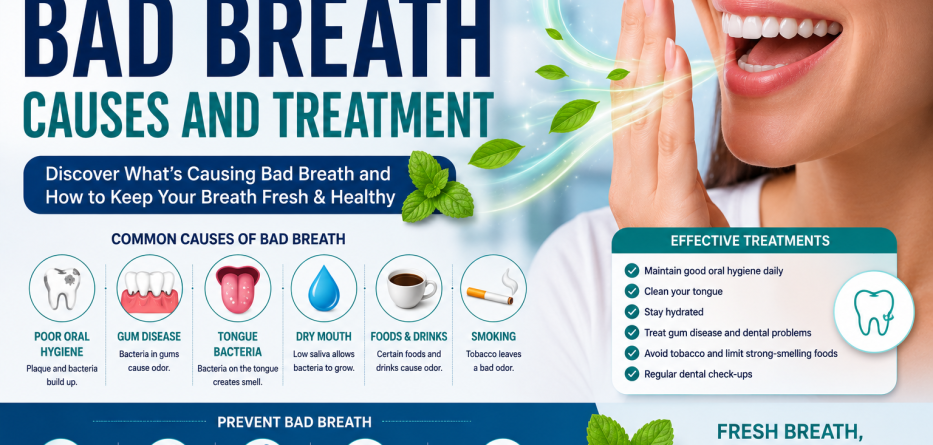
Bad breath, also known as halitosis, is a common oral health problem that affects millions of people worldwide. While occasional bad breath is normal, persistent bad breath can be embarrassing and may indicate an underlying dental or medical issue.
The good news is that most cases of bad breath can be successfully treated once the root cause is identified. Understanding the causes, symptoms, and treatment options can help you maintain fresh breath and improve your overall oral health.
In this article, we’ll explore the most common causes of bad breath, effective treatment methods, prevention strategies, and when it’s time to see a dentist.
What Is Bad Breath (Halitosis)?
Bad breath, or halitosis, is an unpleasant odor that originates from the mouth, throat, or digestive system.
Quick Definition
Halitosis is a condition characterized by persistent unpleasant breath odor caused by oral bacteria, poor oral hygiene, food particles, gum disease, dry mouth, or certain medical conditions.
While temporary bad breath after eating foods like garlic or onions is normal, chronic bad breath often requires professional evaluation.
What Causes Bad Breath?
There are several reasons why bad breath develops.
1. Poor Oral Hygiene
Poor brushing and flossing habits allow food particles and bacteria to accumulate in the mouth.
This can lead to:
- Plaque buildup
- Tooth decay
- Gum disease
- Bacterial growth
Bacteria release sulfur compounds that create unpleasant odors.
Signs
- Coated tongue
- Plaque accumulation
- Bleeding gums
- Persistent bad taste
2. Gum Disease
One of the leading causes of chronic bad breath is gum disease.
When bacteria collect below the gumline, they produce foul-smelling gases.
Symptoms
- Swollen gums
- Bleeding gums
- Receding gums
- Loose teeth
- Persistent bad breath
Treating gum disease often significantly improves breath odor.
3. Dry Mouth (Xerostomia)
Saliva helps wash away food particles and bacteria.
When saliva production decreases, bacteria multiply more easily.
Common Causes of Dry Mouth
- Dehydration
- Certain medications
- Mouth breathing
- Smoking
- Aging
Patients often notice worse breath upon waking in the morning.
4. Tongue Bacteria
The tongue contains tiny grooves where bacteria can accumulate.
A coated tongue is a common source of bad breath.
Why It Happens
- Food debris becomes trapped
- Bacteria produce sulfur compounds
- Odors become concentrated
Using a tongue scraper can help reduce bacterial buildup.
5. Food and Drinks
Certain foods temporarily cause bad breath.
Common culprits include the following:
- Garlic
- Onions
- Coffee
- Alcohol
- Spicy foods
These odors can enter the bloodstream and be released through the lungs during breathing.
6. Tooth Decay and Dental Infections
Cavities and infections create spaces where bacteria thrive.
Dental Problems Linked to Bad Breath
- Cavities
- Abscesses
- Broken teeth
- Failing dental restorations
Professional treatment is necessary to eliminate the source.
7. Smoking and Tobacco Use
Tobacco products contribute to bad breath in several ways.
They:
- Dry out the mouth
- Promote bacterial growth
- Increase gum disease risk
- Leave lingering odors
Smokers are significantly more likely to experience chronic halitosis.
8. Tonsil Stones
Tonsil stones are small, hardened deposits that form in the tonsils.
They contain:
- Food particles
- Bacteria
- Dead cells
These stones often produce a strong, unpleasant odor.
9. Digestive and Medical Conditions
Sometimes bad breath originates outside the mouth.
Possible medical causes include the following:
- Acid reflux (GERD)
- Sinus infections
- Respiratory infections
- Diabetes
- Liver disease
- Kidney disease
Persistent bad breath that doesn’t improve with oral care should be evaluated by a healthcare provider.
Common Symptoms Associated With Bad Breath
In addition to unpleasant breath odor, patients may experience:
- Dry mouth
- White tongue coating
- Bitter taste
- Metallic taste
- Gum bleeding
- Loose teeth
These symptoms can help identify the underlying cause.
How Dentists Diagnose Bad Breath
A dentist will typically perform the following:
Oral Examination
Checking for:
- Gum disease
- Tooth decay
- Plaque buildup
- Tongue coating
Medical History Review
Identifying medications and health conditions that may contribute.
Diagnostic Imaging
X-rays may be necessary to detect hidden infections.
Effective Treatments for Bad Breath
Treatment depends on the underlying cause.
Improve Oral Hygiene
The first step is maintaining proper oral care.
A daily routine should include the following:
- Brushing twice daily
- Flossing once daily
- Tongue cleaning
- Antibacterial mouthwash
Professional Dental Cleaning
Professional cleanings remove:
- Plaque
- Tartar
- Bacteria
Regular cleanings are essential for fresh breath and healthy gums.
Treat Gum Disease
Treatment options may include:
- Deep cleaning (scaling and root planing)
- Antibiotics
- Periodontal therapy
Healthy gums often lead to significant improvement in breath odor.
Increase Saliva Production
To combat dry mouth:
- Drink more water
- Use sugar-free gum
- Avoid tobacco
- Use saliva substitutes if recommended
Hydration plays a key role in preventing bad breath.
Treat Dental Problems
Addressing oral infections may involve:
- Fillings
- Root canal treatment
- Tooth extraction
- Crown replacement
Eliminating infection often resolves persistent odor.
Home Remedies for Bad Breath
While professional treatment may be necessary, several home remedies can help.
Helpful Strategies
- Stay hydrated
- Brush your tongue daily
- Use alcohol-free mouthwash
- Chew sugar-free gum
- Avoid smoking
- Eat crunchy fruits and vegetables
These habits support better oral health and fresher breath.
How to Prevent Bad Breath
Daily Prevention Tips
- Brush teeth twice daily.
- Floss every day.
- Clean your tongue.
- Visit your dentist every six months.
- Drink plenty of water.
- Avoid tobacco products.
- Replace your toothbrush every three months.
- Maintain a balanced diet.
Consistency is the key to preventing halitosis.
Bad Breath Treatment Comparison
| Cause | Treatment |
|---|---|
| Poor Oral Hygiene | Brushing, Flossing, Cleanings |
| Gum Disease | Periodontal Treatment |
| Dry Mouth | Hydration, Saliva Stimulation |
| Tongue Bacteria | Tongue Scraping |
| Tooth Decay | Fillings or Restorations |
| Dental Infection | Root Canal or Extraction |
| Tonsil Stones | Removal and Hygiene |
| Medical Conditions | Medical Treatment |
Frequently Asked Questions
What is the most common cause of bad breath?
Poor oral hygiene and bacterial buildup are among the most common causes.
Can gum disease cause bad breath?
Yes. Gum disease is one of the leading causes of chronic halitosis.
Why does my breath smell bad even after brushing?
Persistent bad breath may indicate gum disease, dry mouth, tongue bacteria, or an underlying medical condition.
Does drinking water help bad breath?
Yes. Water helps rinse away bacteria and supports saliva production.
Can bad breath be cured permanently?
In many cases, yes. Identifying and treating the underlying cause often resolves the problem.
When should I see a dentist for bad breath?
If bad breath persists despite good oral hygiene, schedule a professional evaluation.
Conclusion
Bad breath is a common but often treatable condition. Whether it’s caused by poor oral hygiene, gum disease, dry mouth, dental infections, or underlying health issues, identifying the root cause is essential for effective treatment.
Maintaining good oral hygiene, staying hydrated, attending regular dental checkups, and addressing dental problems early can significantly reduce the risk of chronic bad breath. If persistent halitosis continues despite home care, consulting a dentist can help uncover the cause and restore fresh, healthy breath.
