
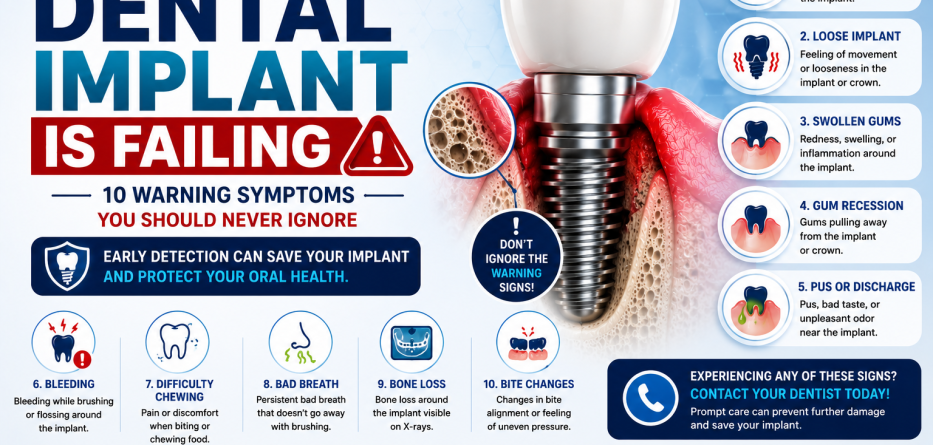
Dental implants are one of the most successful and reliable tooth replacement solutions available today. With success rates exceeding 95%, they can provide decades of comfortable function and a natural-looking smile. However, like any medical or dental procedure, complications can occasionally occur.
Recognizing the early signs of dental implant failure is essential for protecting your oral health and preventing more serious problems. Early intervention often allows dentists to address issues before significant damage occurs.
In this guide, we’ll discuss the most common signs of a failing dental implant, possible causes, treatment options, and how to protect your investment for the long term.
What Is Dental Implant Failure?
Dental implant failure occurs when the implant does not properly integrate with the jawbone or loses stability after initially functioning successfully.
Implant failure can occur:
Early Failure
Occurs within the first few months after placement.
Common causes include:
- Poor osseointegration
- Infection
- Surgical complications
- Insufficient bone support
Late Failure
Occurs months or years after successful placement.
Common causes include:
- Peri-implantitis
- Bone loss
- Excessive bite pressure
- Poor oral hygiene
How Common Is Dental Implant Failure?
Dental implants have an impressive success rate.
Average Success Rates
| Implant Type | Success Rate |
|---|---|
| Single Tooth Implants | 95–98% |
| Multiple Implants | 95%+ |
| Full-Mouth Implants | 90–98% |
Although failure is uncommon, knowing the warning signs can help prevent serious complications.
1. Persistent Pain Around the Implant
Some discomfort is normal after implant surgery.
However, pain that
- Persists for weeks
- Returns after healing
- Gradually worsens
may indicate a problem.
Possible Causes
- Infection
- Implant movement
- Nerve irritation
- Bone loss
Persistent pain should always be evaluated by a dentist.
2. Loose or Wobbly Implant
One of the clearest signs of implant failure is mobility.
A healthy dental implant should feel as stable as a natural tooth.
Warning Signs
- Movement when chewing
- Shifting sensation
- Looseness around the crown
A loose implant often indicates loss of bone support or failed osseointegration.
3. Swollen or Inflamed Gums
Healthy gums should fit snugly around the implant.
Symptoms of concern include:
- Redness
- Swelling
- Tenderness
- Bleeding
These symptoms may indicate infection or peri-implant disease.
Early treatment can often prevent further complications.
4. Gum Recession Around the Implant
Receding gums can expose portions of the implant surface.
Signs Include
- Longer-looking implant crown
- Visible implant threads
- Increased tooth sensitivity nearby
Gum recession often occurs due to:
- Peri-implantitis
- Poor oral hygiene
- Smoking
- Excessive bite forces
5. Difficulty Chewing
Dental implants should function similarly to natural teeth.
If chewing becomes uncomfortable, painful, or unstable, it may signal:
- Implant mobility
- Infection
- Bone loss
- Crown complications
Changes in chewing comfort should not be ignored.
6. Bleeding Around the Implant
Occasional irritation can happen.
However, persistent bleeding during:
- Brushing
- Flossing
- Eating
may indicate inflammation or infection.
Healthy implant tissues generally do not bleed regularly.
7. Pus or Unpleasant Taste
Pus around the implant site is a serious warning sign.
Common Symptoms
- Bad taste in the mouth
- Bad breath
- Drainage around the implant
- Swelling
These symptoms often indicate infection and require immediate professional care.
8. Bone Loss Around the Implant
Bone loss is one of the most significant causes of implant failure.
As supporting bone decreases, the implant may become unstable.
Possible Signs
- Gum recession
- Loose implant
- Changes visible on X-rays
Routine dental examinations help detect bone loss early.
9. Persistent Bad Breath
Chronic bad breath may indicate bacterial buildup around the implant.
Possible causes include the following:
- Infection
- Peri-implantitis
- Poor oral hygiene
Professional evaluation can identify and address the underlying problem.
10. Changes in Bite Alignment
If your bite suddenly feels different, it may indicate implant complications.
Symptoms may include:
- Uneven chewing pressure
- Jaw discomfort
- Difficulty closing your mouth comfortably
Changes in bite should be assessed promptly.
What Is Peri-Implantitis?
Peri-implantitis is one of the leading causes of late implant failure.
Definition
Peri-implantitis is an inflammatory condition that affects the tissues and bone surrounding a dental implant.
Symptoms
- Swollen gums
- Bleeding
- Bone loss
- Pus formation
- Implant mobility
Without treatment, peri-implantitis can lead to complete implant failure.
Risk Factors for Dental Implant Failure
Several factors increase the likelihood of implant complications.
Smoking
Smoking reduces blood flow and impairs healing.
Poor Oral Hygiene
Bacterial buildup can trigger infection and bone loss.
Teeth Grinding (Bruxism)
Excessive force can overload implants.
Diabetes
Uncontrolled diabetes may slow healing and increase infection risk.
Gum Disease History
Patients with previous periodontal disease require careful monitoring.
What Should You Do If You Suspect Implant Failure?
If you notice any warning signs:
Step 1
Contact your dentist immediately.
Step 2
Avoid excessive pressure on the implant.
Step 3
Maintain excellent oral hygiene.
Step 4
Attend all recommended follow-up appointments.
Early intervention often improves treatment outcomes.
Can a Failing Dental Implant Be Saved?
In many cases, yes.
Treatment options depend on the underlying cause.
Possible Treatments
- Professional deep cleaning
- Antibiotic therapy
- Bite adjustment
- Bone grafting
- Surgical treatment
- Implant replacement
The sooner the issue is detected, the greater the chance of saving the implant.
How to Prevent Dental Implant Failure
Follow these preventive measures:
Daily Care
- Brush twice daily
- Floss regularly
- Use antimicrobial rinses if recommended
Professional Care
- Schedule regular dental checkups
- Attend implant maintenance visits
Lifestyle Habits
- Avoid smoking
- Wear a nightguard if you grind your teeth
- Maintain a healthy diet
Consistent care significantly improves implant longevity.
Frequently Asked Questions
How do I know if my dental implant is failing?
Common signs include pain, swelling, bleeding, looseness, gum recession, and difficulty chewing.
Can dental implant failure happen years later?
Yes. Late implant failure can occur months or years after successful placement.
Is pain normal after implant healing?
No. Persistent or recurring pain after healing should be evaluated by a dentist.
Can a loose dental implant be repaired?
Depending on the cause, treatment may include cleaning, bone grafting, component replacement, or implant replacement.
What is the most common cause of implant failure?
Peri-implantitis and poor oral hygiene are among the leading causes.
Conclusion
Dental implants are highly successful, but complications can occasionally occur. Recognizing the signs your dental implant is failing—such as pain, looseness, swelling, bleeding, gum recession, or difficulty chewing—can help prevent more serious problems.
The key to successful treatment is early detection. If you notice any unusual symptoms around your implant, contact your dentist as soon as possible. With prompt care and proper maintenance, many implant issues can be treated before they lead to complete implant failure, helping you preserve your smile and oral health for years to come.
