
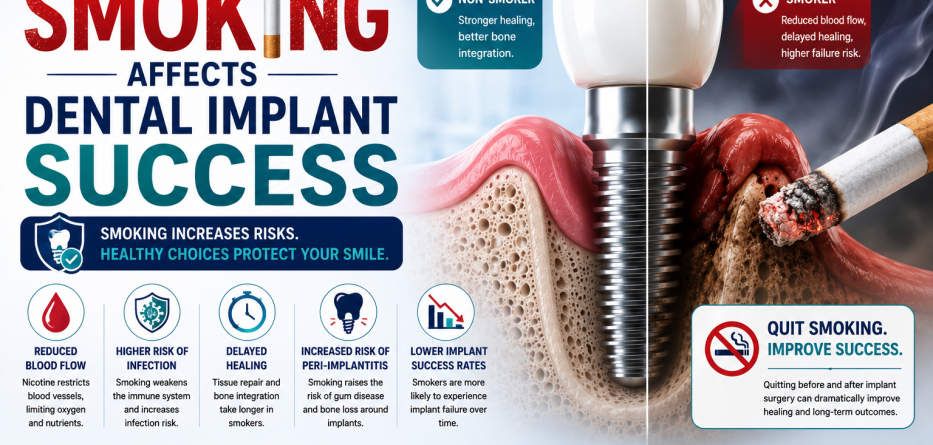
Dental implants are one of the most successful and long-lasting solutions for replacing missing teeth. With success rates often exceeding 95%, they provide a stable, natural-looking, and functional replacement for lost teeth. However, certain lifestyle habits can significantly impact implant success—and smoking is one of the biggest risk factors.
If you smoke and are considering dental implants, it’s important to understand how tobacco use can affect healing, bone integration, gum health, and the long-term lifespan of your implants. While smokers can still receive dental implants, they often face a higher risk of complications compared to non-smokers.
In this article, we’ll explore how smoking affects dental implant success, why it increases the risk of failure, and what steps smokers can take to improve their outcomes.
Can Smokers Get Dental Implants?
Quick Answer
Yes, smokers can get dental implants. However, smoking significantly increases the risk of implant complications, delayed healing, and implant failure.
Dentists do not automatically disqualify smokers from implant treatment, but they may recommend quitting or reducing tobacco use before and after surgery to improve the chances of success.
Why Smoking Is Harmful to Dental Implants
Smoking affects nearly every stage of the implant process.
Tobacco contains thousands of harmful chemicals that negatively impact:
- Blood circulation
- Immune response
- Bone healing
- Gum health
- Infection resistance
These effects can interfere with the body’s ability to heal properly after implant placement.
The Role of Osseointegration
One of the most important stages of implant success is osseointegration.
What Is Osseointegration?
Osseointegration is the biological process through which the jawbone bonds directly to the titanium implant.
Successful osseointegration creates:
- Implant stability
- Long-term support
- Natural chewing function
- Bone preservation
Smoking can disrupt this process and increase the likelihood of implant failure.
How Smoking Reduces Blood Flow
Nicotine causes blood vessels to constrict.
When blood vessels narrow, less oxygen and fewer nutrients reach the surgical site.
This can lead to:
- Slower healing
- Delayed tissue repair
- Reduced bone formation
- Increased risk of complications
Healthy blood circulation is essential for implant recovery and bone integration.
Increased Risk of Implant Failure
Research consistently shows higher implant failure rates among smokers compared to non-smokers.
Why Failure Occurs
Smoking can contribute to:
- Poor osseointegration
- Bone loss
- Gum disease
- Infection
- Implant instability
The longer and more heavily a person smokes, the greater the risk.
Smoking and Gum Health
Healthy gums are critical for supporting dental implants.
Smoking increases the likelihood of:
- Gingivitis
- Periodontitis
- Gum recession
- Peri-implantitis
What Is Peri-Implantitis?
Peri-implantitis is an inflammatory disease affecting the tissues surrounding a dental implant.
Symptoms include:
- Swollen gums
- Bleeding
- Bone loss
- Implant mobility
If left untreated, peri-implantitis can result in implant failure.
Delayed Healing After Implant Surgery
Following implant placement, the body begins a complex healing process.
This involves:
- Blood clot formation
- Tissue repair
- Bone regeneration
- Osseointegration
Smoking interferes with each stage by reducing oxygen levels and impairing the body’s natural healing response.
As a result, smokers often experience longer recovery times.
Increased Risk of Infection
Smoking weakens the immune system’s ability to fight bacteria.
This makes smokers more vulnerable to:
- Post-surgical infections
- Gum infections
- Implant-related complications
Infections around the implant can compromise healing and increase the likelihood of failure.
Bone Loss Around Dental Implants
One of the primary reasons implants fail is bone loss.
Smoking accelerates bone deterioration by:
- Reducing blood supply
- Limiting bone regeneration
- Increasing inflammation
Without adequate bone support, implants may loosen or fail over time.
Smoking and Long-Term Implant Survival
Even when implants initially heal successfully, smoking can affect long-term outcomes.
Potential long-term consequences include:
- Progressive bone loss
- Chronic inflammation
- Gum recession
- Reduced implant lifespan
Patients who continue smoking after treatment often face greater maintenance challenges.
Are E-Cigarettes and Vaping Safer?
Many patients wonder whether vaping is a safer alternative.
While vaping eliminates some harmful substances found in traditional cigarettes, it still exposes tissues to nicotine and other chemicals.
Potential concerns include the following:
- Reduced blood flow
- Delayed healing
- Increased inflammation
- Negative effects on bone health
Current research suggests vaping may still negatively impact implant success.
How Long Should You Stop Smoking Before Implant Surgery?
Many implant specialists recommend:
Before Surgery
- Stop smoking at least 1–2 weeks before implant placement.
After Surgery
- Avoid smoking for at least 2–3 months during the healing and osseointegration phase.
Longer tobacco-free periods generally lead to better outcomes.
Tips for Smokers Considering Dental Implants
If you smoke and want dental implants, consider the following strategies:
1. Quit Smoking Completely
This provides the greatest improvement in implant success rates.
2. Reduce Tobacco Use
Even reducing smoking frequency may benefit healing.
3. Follow All Post-Operative Instructions
Carefully follow your dentist’s recommendations.
4. Maintain Excellent Oral Hygiene
Daily care helps reduce bacterial buildup and gum disease risk.
5. Attend Regular Dental Checkups
Professional monitoring helps identify potential issues early.
Success Rates: Smokers vs Non-Smokers
| Patient Group | Estimated Success Rate |
|---|---|
| Non-Smokers | 95–98% |
| Light Smokers | Slightly Lower |
| Heavy Smokers | Significantly Lower |
Individual outcomes vary depending on overall health, bone quality, and oral hygiene.
Frequently Asked Questions
Can smokers successfully get dental implants?
Yes. Many smokers successfully receive implants, although they face a higher risk of complications.
Does smoking always cause implant failure?
No. However, smoking significantly increases the likelihood of healing problems and implant loss.
How long should I quit smoking after implant surgery?
Most dentists recommend avoiding smoking for at least 2–3 months after surgery.
Can vaping affect dental implant healing?
Yes. Nicotine and other chemicals in e-cigarettes may negatively impact healing and osseointegration.
What is the biggest risk smoking poses to implants?
Smoking interferes with osseointegration and increases the risk of peri-implantitis, bone loss, and implant failure.
Conclusion
Smoking is one of the most significant risk factors affecting dental implant success. By reducing blood flow, impairing healing, increasing infection risk, and accelerating bone loss, tobacco use can compromise both short-term recovery and long-term implant stability.
While smokers can still receive dental implants, quitting—or even significantly reducing tobacco use—can dramatically improve outcomes. Combined with excellent oral hygiene and regular dental care, healthier habits can help ensure your dental implants remain strong, functional, and successful for many years.
If you’re considering dental implants and currently smoke, speak with your dentist about strategies to improve your chances of long-term success.
