
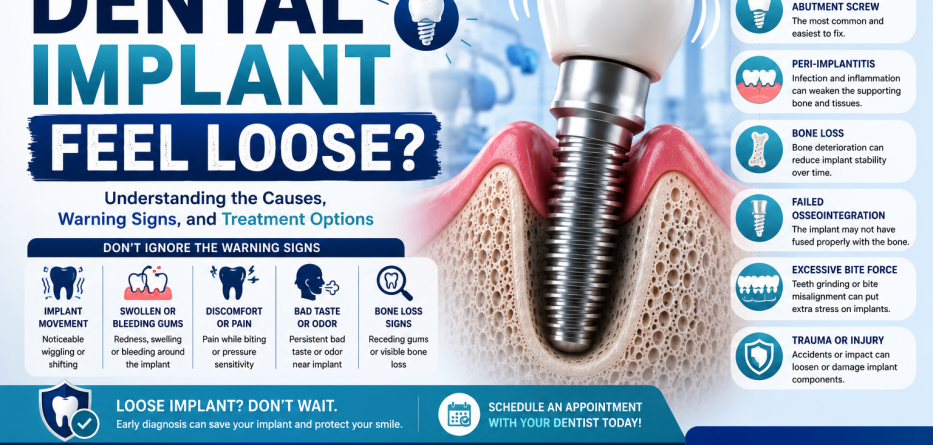
Dental implants are designed to be a stable, long-lasting solution for missing teeth. Once properly integrated with the jawbone, they should feel just as secure as natural teeth. That’s why it can be alarming when a dental implant suddenly feels loose.
A loose dental implant is not something you should ignore. While the implant itself may not always be the source of the problem, looseness can indicate issues ranging from a simple loose crown to more serious concerns such as bone loss or implant failure.
In this article, we’ll explore the most common reasons a dental implant feels loose, how dentists diagnose the problem, available treatment options, and when you should seek professional care.
Should a Dental Implant Ever Feel Loose?
Quick Answer
No. A healthy dental implant should not move or feel loose.
Unlike natural teeth, implants are fused directly to the jawbone through a process called osseointegration. Once healing is complete, the implant should remain stable during chewing, speaking, and everyday activities.
If movement occurs, it usually indicates a problem that requires professional evaluation.
Understanding the Parts of a Dental Implant
Before identifying the cause, it’s important to understand that a dental implant consists of three separate components:
Implant Post
The titanium screw placed inside the jawbone.
Abutment
The connector that joins the implant to the restoration.
Crown
The visible replacement tooth attached to the implant.
In many cases, what feels like a loose implant is actually a loose crown or abutment rather than the implant itself.
Common Reasons a Dental Implant Feels Loose
1. Loose Implant Crown
One of the most common causes is a crown that has become loose.
Symptoms
- Crown wiggles slightly
- No pain
- Implant beneath feels stable
- Difficulty chewing
Causes
- Normal wear and tear
- Cement failure
- Screw loosening
Treatment
Your dentist can often tighten or replace the crown quickly.
2. Loose Abutment Screw
The abutment connects the crown to the implant.
Over time, the small screw holding the abutment in place may loosen.
Symptoms
- Slight movement
- Clicking sensation
- Crown appears unstable
Treatment
The dentist can usually tighten or replace the abutment screw.
This is often a straightforward repair.
3. Peri-Implantitis (Implant Infection)
Peri-implantitis is an inflammatory disease affecting the tissues around a dental implant.
It is similar to gum disease around natural teeth.
Symptoms
- Swollen gums
- Bleeding around implant
- Bad taste in the mouth
- Bone loss
- Implant mobility
Causes
- Poor oral hygiene
- Smoking
- Uncontrolled diabetes
- Untreated gum disease
Why It’s Serious
Peri-implantitis can lead to progressive bone loss and eventual implant failure if left untreated.
4. Bone Loss Around the Implant
Dental implants depend on healthy jawbone support.
If bone loss occurs, the implant may gradually lose stability.
Causes of Bone Loss
- Peri-implantitis
- Gum disease
- Smoking
- Trauma
- Poor oral hygiene
Signs
- Receding gums
- Implant movement
- Discomfort while chewing
Bone loss is one of the most significant causes of implant instability.
5. Failed Osseointegration
Osseointegration is the process in which the implant fuses with the jawbone.
If this process fails, the implant may never achieve proper stability.
Possible Causes
- Insufficient bone density
- Infection
- Smoking
- Excessive pressure during healing
Symptoms
- Implant movement shortly after placement
- Pain during healing
- Delayed recovery
Failed osseointegration often requires implant removal and replacement.
6. Excessive Bite Pressure
Implants experience significant forces during chewing.
Poor bite alignment or teeth grinding can overload the implant.
Risk Factors
- Bruxism (teeth grinding)
- Clenching
- Improper bite adjustment
Consequences
- Component loosening
- Bone stress
- Implant instability
A custom nightguard may help protect the implant.
7. Trauma or Injury
Accidents, falls, or sports injuries can damage implant components.
Signs of Trauma
- Sudden looseness
- Pain when biting
- Visible damage to the crown
Prompt evaluation is necessary to prevent further complications.
How Dentists Diagnose a Loose Dental Implant
A dental examination helps determine whether the implant, crown, or surrounding tissues are affected.
Diagnostic Methods
- Clinical examination
- Digital X-rays
- CBCT scans
- Bite analysis
- Gum health evaluation
Accurate diagnosis is essential before treatment begins.
Treatment Options for a Loose Dental Implant
Treatment depends on the underlying cause.
Loose Crown
Treatment:
- Crown tightening
- Crown replacement
Loose Abutment
Treatment:
- Screw tightening
- Abutment replacement
Perimplantitis
Treatment:
- Deep cleaning
- Antibiotics
- Surgical intervention if necessary
Bone Loss
Treatment:
- Bone grafting
- Regenerative procedures
Implant Failure
Treatment:
- Implant removal
- Bone grafting
- Future implant replacement
When Is a Loose Implant an Emergency?
You should contact your dentist immediately if you notice:
- Implant movement
- Pain around the implant
- Swelling
- Bleeding gums
- Difficulty chewing
- Signs of infection
Early treatment significantly improves the chances of saving the implant.
How to Prevent Dental Implant Loosening
Maintain Excellent Oral Hygiene
- Brush twice daily
- Floss regularly
- Use recommended cleaning tools
Attend Regular Dental Checkups
Routine evaluations allow early detection of potential problems.
Avoid Smoking
Smoking increases the risk of infection and bone loss.
Wear a Nightguard
If you grind your teeth, a nightguard can protect both implants and natural teeth.
Follow Professional Recommendations
Adhering to your dentist’s advice helps ensure long-term implant success.
Frequently Asked Questions
Is a loose dental implant normal?
No. Dental implants should remain stable and should never feel loose.
Can a loose implant be fixed?
Yes. Many cases involve a loose crown or abutment rather than implant failure.
What happens if I ignore a loose implant?
Delaying treatment can lead to worsening bone loss, infection, and possible implant failure.
Can an implant become loose years later?
Yes. Peri-implantitis, bone loss, trauma, or excessive bite forces can cause problems years after placement.
Is a loose implant painful?
Not always. Some patients notice movement before experiencing any pain.
Conclusion
A dental implant should never feel loose. While the cause may be as simple as a loose crown or abutment screw, it can also indicate more serious issues such as peri-implantitis, bone loss, or implant failure.
The good news is that many implant problems can be successfully treated when detected early. If you notice any movement, discomfort, swelling, or changes around your implant, schedule an appointment with your dentist as soon as possible. Prompt care can protect your investment and help preserve your long-term oral health.
