
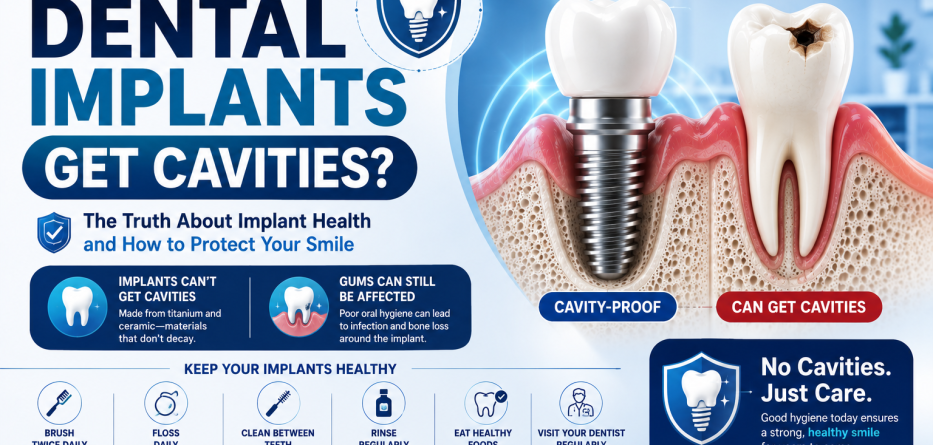
Dental implants are one of the most durable and effective solutions for replacing missing teeth. They look natural, function like real teeth, and can last for decades with proper care. However, many patients considering implants often ask an important question: Can dental implants get cavities?
Since dental implants replace natural teeth, it’s reasonable to wonder whether they are vulnerable to tooth decay. The good news is that dental implants themselves cannot develop cavities. However, that doesn’t mean they are completely maintenance-free.
Understanding how dental implants differ from natural teeth—and what oral health risks still exist—can help you keep your smile healthy and your implant investment protected for years to come.
Can Dental Implants Get Cavities?
Quick Answer
No, dental implants cannot get cavities.
Cavities occur when bacteria produce acids that damage natural tooth enamel. Since dental implants are made from materials such as titanium, zirconia, and porcelain, they cannot decay like natural teeth.
However, while the implant itself cannot develop cavities, the surrounding gums and supporting bone can still become infected if proper oral hygiene is not maintained.
Why Natural Teeth Get Cavities
To understand why implants don’t get cavities, it’s helpful to know how cavities form.
The Cavity Process
- Bacteria accumulate on teeth.
- Sugars and carbohydrates feed bacteria.
- Bacteria produce acids.
- Acids erode tooth enamel.
- Decay progresses into deeper tooth structures.
Because dental implants do not contain enamel or dentin, they are immune to this decay process.
What Are Dental Implants Made Of?
Dental implants are constructed from highly durable, biocompatible materials.
Implant Components
| Component | Material |
|---|---|
| Implant Post | Titanium or Zirconia |
| Abutment | Titanium or Ceramic |
| Crown | Porcelain or Ceramic |
These materials are resistant to decay and corrosion.
If Implants Can’t Get Cavities, Why Is Oral Hygiene Still Important?
Many people mistakenly assume that implants require little maintenance because they can’t decay.
In reality, oral hygiene remains extremely important.
Why?
Although the implant itself is cavity-proof, harmful bacteria can still affect the following:
- Gums
- Jawbone
- Surrounding teeth
- Soft tissues
Poor oral hygiene can lead to serious complications that may threaten implant success.
Understanding Peri-Implant Disease
The biggest threat to dental implants isn’t cavities—it’s infection.
What Is Peri-Implant Disease?
Peri-implant disease is an inflammatory condition affecting the tissues surrounding a dental implant.
There are two main stages:
Peri-Implant Mucositis
This early-stage condition involves inflammation of the gum tissue around the implant.
Symptoms may include:
- Redness
- Swelling
- Bleeding when brushing
The good news is that this stage is often reversible with proper care.
Perimplantitis
If left untreated, inflammation can progress to peri-implantitis.
This more serious condition may cause the following:
- Bone loss
- Gum recession
- Implant loosening
- Implant failure
Early detection and treatment are essential.
Signs of Problems Around Dental Implants
Even though implants can’t get cavities, patients should watch for warning signs.
Common Symptoms
- Bleeding gums
- Swollen tissue
- Persistent bad breath
- Gum recession
- Pain around the implant
- Loose implant restoration
If any of these symptoms occur, contact your dentist promptly.
Can the Crown on a Dental Implant Be Damaged?
While implant crowns cannot develop cavities, they can still experience wear and damage.
Possible Problems
- Chipping
- Cracking
- Fractures
- Staining
- Wear over time
Fortunately, damaged crowns can often be repaired or replaced without removing the implant itself.
Can Nearby Natural Teeth Get Cavities?
Yes.
If you have a dental implant alongside natural teeth, those natural teeth remain vulnerable to decay.
Poor oral hygiene can lead to:
- Cavities
- Gum disease
- Root decay
- Tooth loss
Maintaining overall oral health is important for protecting both implants and natural teeth.
How to Keep Dental Implants Healthy
Proper maintenance helps ensure long-term implant success.
Daily Care Tips
Brush Twice Daily
Use a soft-bristled toothbrush and non-abrasive toothpaste.
Floss Every Day
Clean around the implant to remove plaque and food debris.
Use interdental brushes.
These can help clean hard-to-reach areas around implants.
Rinse When Recommended
Antibacterial mouthwash may help reduce harmful bacteria.
The Importance of Professional Dental Checkups
Routine dental visits are essential even if you have implants.
Benefits of Regular Checkups
- Professional cleaning
- Monitoring implant stability
- Detecting gum inflammation
- Evaluating bone levels
- Identifying potential issues early
Most dentists recommend examinations every six months.
Foods That Help Protect Dental Implants
A healthy diet supports gum health and bone strength.
Beneficial Foods
- Dairy products
- Leafy greens
- Fish rich in vitamin D
- Lean proteins
- Fresh fruits and vegetables
Proper nutrition contributes to long-term implant success.
Habits That Can Harm Dental Implants
Avoid habits that place excessive stress on your implant.
Risk Factors
- Smoking
- Teeth grinding
- Chewing ice
- Opening packages with teeth
- Poor oral hygiene
These behaviors can increase the risk of implant complications.
How Long Do Dental Implants Last?
One reason dental implants are so popular is their longevity.
Average Lifespan
| Component | Lifespan |
|---|---|
| Implant Post | 20+ Years to Lifetime |
| Crown | 10–15 Years |
| Abutment | 15–20 Years |
Proper care significantly improves longevity.
Frequently Asked Questions
Can dental implants ever decay?
No. Dental implants are made from materials that cannot decay or develop cavities.
Why do implants need cleaning if they can’t get cavities?
Cleaning prevents gum disease and peri-implant infections that can lead to implant failure.
Can implant crowns get cavities?
No. Implant crowns are made from porcelain or ceramic materials that do not decay.
What is the biggest threat to dental implants?
Peri-implantitis, a bacterial infection affecting the surrounding gums and bone, is one of the biggest threats.
How often should dental implants be checked?
Most dentists recommend professional examinations and cleanings every six months.
Conclusion
So, can dental implants get cavities?
The answer is no. Dental implants are made from advanced materials such as titanium and porcelain that cannot decay like natural teeth. However, maintaining excellent oral hygiene remains essential because the gums and supporting bone around implants can still become infected.
By brushing, flossing, attending regular dental visits, and following your dentist’s recommendations, you can protect your implants and enjoy a healthy, confident smile for decades to come.
