
Have you recently had a professional dental cleaning and noticed that your teeth feel more sensitive than usual? If so, you’re not alone. Many patients experience temporary tooth sensitivity after a dental cleaning, especially if it’s been a while since their last appointment or if they had significant plaque and tartar buildup removed.
While the sensation can be uncomfortable, it’s usually a normal and temporary side effect of professional dental care. Understanding why your teeth feel sensitive after cleaning can help ease concerns and ensure you know when sensitivity is expected and when it may indicate a more serious issue.
In this article, we’ll explain the common causes of post-cleaning tooth sensitivity, how long it typically lasts, and what you can do to find relief.
Is Tooth Sensitivity After Cleaning Normal?
Quick Answer
Yes. Mild tooth sensitivity after a professional dental cleaning is common and usually temporary.
During a cleaning, your dentist or dental hygienist removes plaque, tartar, and bacteria from areas that may not have been cleaned thoroughly for months. This process can expose parts of the teeth that were previously covered, making them temporarily more sensitive to hot, cold, sweet, or acidic foods and drinks.
Most patients notice improvement within a few days.
What Causes Tooth Sensitivity After a Dental Cleaning?
Several factors can contribute to temporary discomfort following a cleaning.
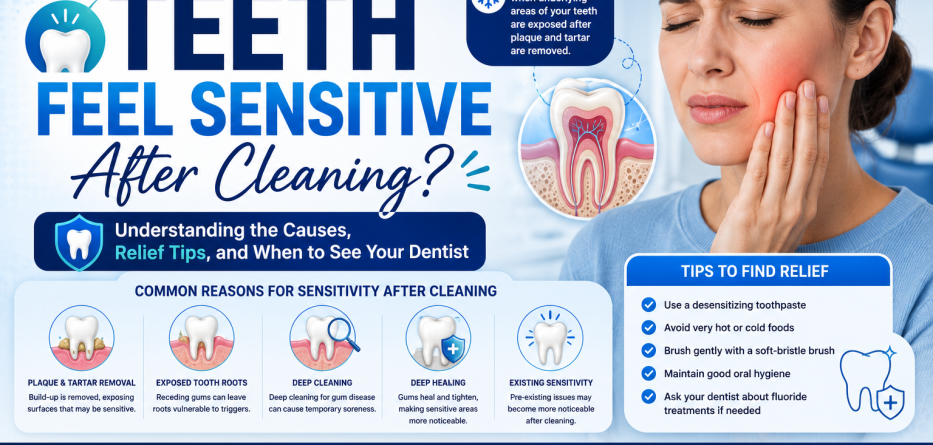
1. Removal of Plaque and Tartar
Plaque and tartar can build up on the surfaces of your teeth over time.
While this buildup is harmful to oral health, it can sometimes act as a barrier that covers sensitive areas of the tooth.
When your hygienist removes these deposits:
- Tooth surfaces become exposed
- Nerve endings may become more responsive
- Temperature sensitivity can increase temporarily
This is one of the most common reasons for post-cleaning sensitivity.
2. Exposure of Tooth Roots
Healthy gums normally cover the roots of your teeth.
However, gum recession can expose the root surface, which lacks the protective enamel found on the crown of the tooth.
During cleaning, these exposed root surfaces may become more noticeable and sensitive.
Common triggers include:
- Cold drinks
- Hot beverages
- Sweet foods
- Cold air
3. Deep Cleaning Procedures
Patients with gum disease may require a more extensive cleaning known as scaling and root planing.
This treatment removes bacteria and tartar from below the gumline.
Because the procedure cleans deeper areas, patients may experience the following:
- Increased sensitivity
- Mild soreness
- Temporary gum tenderness
These symptoms typically improve as the gums heal.
4. Gum Inflammation and Healing
Before a cleaning, inflamed gums may be swollen and cover portions of the tooth surface.
After bacteria and tartar are removed, the gums begin healing and tightening around the teeth.
During this healing process:
- Previously hidden tooth surfaces may become exposed
- Sensitivity may temporarily increase
- Gum tenderness may occur
This is often a sign that the gums are recovering.
5. Existing Tooth Sensitivity
Some patients already have sensitive teeth before their dental appointment.
Common causes include:
- Thin enamel
- Teeth grinding
- Gum recession
- Cracked teeth
- Acid erosion
A cleaning may temporarily make existing sensitivity more noticeable.
How Long Does Tooth Sensitivity Last After Cleaning?
For most patients, sensitivity is short-lived.
Typical Timeline
| Type of Cleaning | Sensitivity Duration |
|---|---|
| Routine Cleaning | 1–3 Days |
| Moderate Cleaning | 3–7 Days |
| Deep Cleaning (Scaling & Root Planing) | 1–2 Weeks |
If discomfort persists beyond two weeks, contact your dentist for an evaluation.
Signs That Sensitivity Is Normal
Post-cleaning sensitivity is usually considered normal if:
- It improves each day
- It only occurs with hot or cold foods
- It is mild to moderate
- There is no severe pain
- There is no swelling or infection
These symptoms typically resolve without additional treatment.
When Should You Be Concerned?
Although rare, persistent or severe sensitivity may indicate an underlying issue.
Contact your dentist if you experience:
- Sharp, severe pain
- Sensitivity lasting more than two weeks
- Swelling of the gums
- Fever
- Pain when biting down
- Visible tooth damage
These symptoms could indicate cavities, infections, cracked teeth, or other dental problems.
How to Reduce Tooth Sensitivity After Cleaning
Fortunately, there are several ways to manage discomfort.
Use a desensitizing toothpaste.
Specialized toothpaste can help block pain signals from reaching the nerves inside the teeth.
Look for products designed specifically for sensitive teeth.
Avoid Extreme Temperatures
For a few days after cleaning:
Avoid:
- Ice-cold drinks
- Hot coffee
- Extremely hot soups
Choose lukewarm foods and beverages whenever possible.
Use a soft-bristled toothbrush.
Aggressive brushing can worsen sensitivity.
A soft-bristled toothbrush helps protect the following:
- Enamel
- Gums
- Exposed root surfaces
Gentle brushing supports faster recovery.
Maintain Good Oral Hygiene
Keeping your mouth clean prevents further irritation.
Recommended habits include:
- Brushing twice daily
- Flossing regularly
- Using fluoride toothpaste
- Following your dentist’s instructions
Healthy gums and teeth recover more quickly.
Consider fluoride treatments.
Dentists may recommend professional fluoride applications for patients with persistent sensitivity.
Fluoride helps:
- Strengthen enamel
- Reduce nerve sensitivity
- Improve comfort
Many patients experience noticeable relief after treatment.
Can Regular Dental Cleanings Prevent Sensitivity?
Surprisingly, yes.
Patients who maintain regular six-month dental cleanings often experience less sensitivity because:
- Tartar buildup remains minimal
- Gums stay healthier
- Deep cleanings are less likely to be needed
- Oral problems are detected earlier
Routine preventive care is one of the best ways to maintain comfortable, healthy teeth.
Benefits of Professional Dental Cleanings
Despite temporary sensitivity, professional cleanings offer significant advantages.
Benefits Include
- Plaque removal
- Tartar removal
- Fresher breath
- Reduced risk of gum disease
- Lower cavity risk
- Improved oral health
- Early detection of dental problems
The long-term benefits far outweigh temporary discomfort.
Frequently Asked Questions
Is tooth sensitivity after cleaning normal?
Yes. Mild sensitivity is a common and temporary response to professional dental cleaning.
How long does sensitivity last after a dental cleaning?
Most patients notice improvement within a few days. Deep cleanings may cause sensitivity for up to two weeks.
Why do my teeth hurt more after tartar removal?
Removing tartar can expose areas of the tooth that were previously covered, making them temporarily more sensitive.
Can I eat after a dental cleaning?
Yes. However, it’s often best to avoid extremely hot, cold, or acidic foods if your teeth feel sensitive.
Should I be worried if my teeth remain sensitive?
If sensitivity lasts longer than two weeks or becomes severe, consult your dentist.
Conclusion
If you’ve been wondering, “Why do teeth feel sensitive after cleaning?” the answer is usually simple: your teeth and gums are adjusting after the removal of plaque, tartar, and bacteria. Temporary sensitivity is a normal part of the healing process and typically resolves within a few days.
By maintaining good oral hygiene, attending regular dental appointments, and following your dentist’s recommendations, you can minimize discomfort and enjoy the long-term benefits of a cleaner, healthier smile.
