
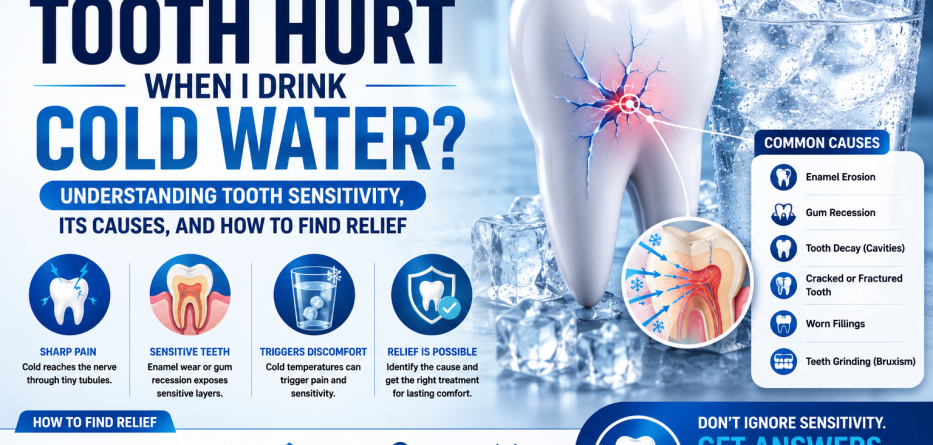
Have you ever taken a sip of cold water and felt a sudden, sharp pain in your tooth? If so, you’re not alone. Tooth sensitivity to cold temperatures is a common dental complaint that affects millions of people worldwide.
While occasional sensitivity may not always indicate a serious problem, persistent pain when drinking cold water can be a sign of an underlying dental issue that requires attention. Understanding the causes of tooth sensitivity can help you find relief and protect your oral health.
In this article, we’ll explain why your tooth may hurt when you drink cold water, the most common causes, available treatments, and when it’s time to see a dentist.
Why Does Cold Water Cause Tooth Pain?
Your teeth are made up of several layers.
Tooth Structure
- Enamel (outer protective layer)
- Dentin (middle layer)
- Pulp (contains nerves and blood vessels)
When enamel wears down or gums recede, the dentin becomes exposed. Dentin contains tiny tubules that connect directly to the tooth’s nerve center.
Cold water can travel through these tubules and stimulate the nerves, causing a sudden sharp sensation or pain.
Quick Answer
Your tooth may hurt when drinking cold water because the protective layers of your tooth have been compromised, exposing sensitive areas that react to temperature changes.
Common Causes of Tooth Sensitivity to Cold Water
1. Tooth Enamel Erosion
Enamel is the hard outer surface that protects your teeth.
Over time, enamel can wear away due to:
- Acidic foods and drinks
- Frequent soda consumption
- Acid reflux
- Aggressive brushing
As enamel thins, the underlying dentin becomes more vulnerable to cold temperatures.
Signs of Enamel Erosion
- Increased sensitivity
- Yellowing teeth
- Rounded tooth edges
- Transparent tooth tips
2. Gum Recession
Healthy gums cover and protect tooth roots.
When gums recede, the roots become exposed.
Unlike enamel-covered crowns, tooth roots have less protection and are highly sensitive to temperature changes.
Common Causes of Gum Recession
- Gum disease
- Aggressive brushing
- Tobacco use
- Aging
- Teeth grinding
3. Tooth Decay (Cavities)
A cavity can create openings in the enamel, allowing cold water to reach the sensitive inner layers of the tooth.
Symptoms may include:
- Sensitivity to cold
- Toothache
- Visible holes
- Dark spots on teeth
Early treatment can prevent further damage and discomfort.
4. Cracked or Fractured Teeth
A small crack in a tooth can expose dentin and nerve tissue.
Cold liquids can enter these microscopic openings and trigger pain.
Possible Causes
- Biting hard foods
- Accidents
- Sports injuries
- Teeth grinding
Even tiny cracks can cause significant sensitivity.
5. Worn Dental Fillings
Old or damaged fillings may lose their seal over time.
This can allow cold temperatures to affect the tooth beneath the restoration.
Signs include:
- Sensitivity around a filled tooth
- Sharp pain when eating or drinking
- Visible filling damage
Your dentist may recommend replacing the filling.
6. Recent Dental Procedures
Temporary sensitivity after dental treatment is relatively common.
Procedures that may cause temporary sensitivity include:
- Teeth whitening
- Fillings
- Crowns
- Deep cleanings
In most cases, this discomfort improves within a few days or weeks.
7. Teeth Grinding (Bruxism)
Grinding your teeth can gradually wear down enamel.
Over time, this exposes the dentin and increases tooth sensitivity.
Common signs of bruxism include:
- Jaw pain
- Morning headaches
- Flattened teeth
- Tooth sensitivity
A custom nightguard may help protect your teeth.
8. Gum Disease
Periodontal disease can damage gum tissue and supporting bone structures.
As gums pull away from the teeth, sensitive root surfaces become exposed.
Additional symptoms may include:
- Bleeding gums
- Bad breath
- Swollen gums
- Loose teeth
Prompt treatment is essential to prevent further damage.
When Should You See a Dentist?
Occasional mild sensitivity may not require urgent treatment.
However, you should schedule a dental appointment if:
- Pain persists for more than a few days
- Sensitivity is severe
- Pain occurs frequently
- You notice visible tooth damage
- You experience swelling or infection
A dentist can identify the underlying cause and recommend appropriate treatment.
How Dentists Diagnose Tooth Sensitivity
Your dentist may perform the following:
Visual Examination
Checking for cavities, cracks, and gum recession.
Dental X-Rays
Used to identify:
- Tooth decay
- Hidden fractures
- Infection
- Bone loss
Sensitivity Testing
Cold air or temperature testing may help pinpoint the affected tooth.
Treatment Options for Sensitive Teeth
The best treatment depends on the cause.
Desensitizing Toothpaste
Special formulations help block pain signals from reaching the nerve.
Fluoride Treatments
Professional fluoride applications strengthen enamel and reduce sensitivity.
Dental Fillings
Used to repair cavities and exposed areas.
Bonding Procedures
A protective resin may be applied to exposed root surfaces.
Gum Grafting
For severe gum recession, gum tissue may be surgically restored.
Root Canal Therapy
In cases involving nerve damage or severe infection, root canal treatment may be necessary.
Home Remedies for Temporary Relief
While professional evaluation is recommended, you may find temporary relief through:
- Using sensitivity toothpaste
- Brushing with a soft-bristled toothbrush
- Avoiding acidic foods and beverages
- Limiting extremely cold foods and drinks
- Maintaining good oral hygiene
Avoid aggressive brushing, which can worsen sensitivity.
How to Prevent Tooth Sensitivity
Protect Your Enamel
- Limit acidic foods and drinks
- Use fluoride toothpaste
- Avoid excessive whitening treatments
Maintain Healthy Gums
- Brush gently
- Floss daily
- Attend regular dental checkups
Manage Teeth Grinding
If you grind your teeth, ask your dentist about a custom nightguard.
Address Dental Problems Early
Treating cavities and gum disease promptly can prevent sensitivity from developing.
Frequently Asked Questions
Is it normal for teeth to hurt when drinking cold water?
Occasional mild sensitivity can be normal, but persistent pain may indicate an underlying dental issue.
Can sensitive teeth heal on their own?
Minor sensitivity may improve, but ongoing symptoms should be evaluated by a dentist.
Does a cavity cause sensitivity to cold water?
Yes. Cavities often expose deeper tooth layers, leading to cold sensitivity.
Why does only one tooth hurt when I drink cold water?
A single sensitive tooth may have a cavity, crack, worn filling, or gum recession affecting that specific area.
Can a sensitive tooth mean I need a root canal?
In some cases, severe or prolonged sensitivity may indicate nerve damage that requires root canal treatment.
Conclusion
If your tooth hurts when you drink cold water, it’s usually a sign that the sensitive inner layers of your tooth have become exposed. Common causes include enamel erosion, gum recession, cavities, cracked teeth, and worn dental restorations.
While some cases of sensitivity are minor, persistent or severe discomfort should never be ignored. Early diagnosis and treatment can prevent more serious dental problems and help restore your comfort.
If cold drinks consistently trigger tooth pain, schedule a dental examination to determine the cause and find the most effective solution for long-term relief.
