
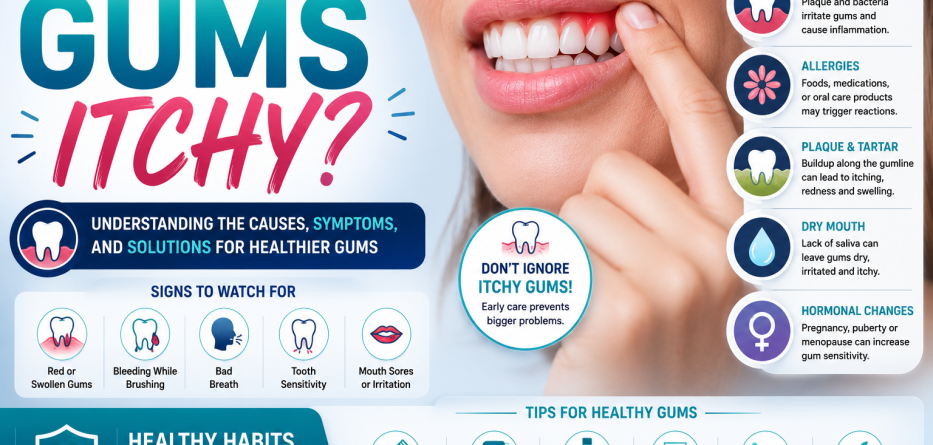
Itchy gums can be annoying, uncomfortable, and sometimes even concerning. While many people associate oral health problems with pain or bleeding, itching in the gums is also a symptom that shouldn’t be ignored. In some cases, itchy gums may be caused by something minor, such as food allergies or irritation. In other situations, they could indicate an underlying dental problem like gum disease.
Understanding why your gums feel itchy can help you identify the cause and seek the right treatment before the condition worsens.
In this article, we’ll explore the common causes of itchy gums, symptoms to watch for, treatment options, and tips to keep your gums healthy.
What Are Itchy Gums?
Itchy gums refer to a tingling, irritating, or uncomfortable sensation in the gum tissue surrounding your teeth. The itching may affect a small area or your entire mouth and can range from mild to severe.
Quick Answer
Itchy gums are often caused by allergies, gum disease, plaque buildup, dry mouth, hormonal changes, or irritation from dental appliances. Proper diagnosis is important to determine the exact cause.
Common Causes of Itchy Gums
1. Gum Disease (Gingivitis)
One of the most common causes of itchy gums is gingivitis, the earliest stage of gum disease.
When plaque accumulates along the gumline, bacteria can irritate the gums and cause inflammation.
Symptoms of Gingivitis
- Itchy gums
- Red or swollen gums
- Bleeding when brushing
- Bad breath
- Gum tenderness
If left untreated, gingivitis can progress to more serious periodontal disease.
2. Allergic Reactions
Certain foods, medications, or oral care products can trigger allergic reactions that affect the gums.
Common Triggers
- Nuts
- Fruits
- Seafood
- Toothpaste ingredients
- Mouthwash
- Dental materials
Allergic reactions often cause itching shortly after exposure to the trigger.
3. Plaque and Tartar Buildup
Poor oral hygiene allows plaque and tartar to accumulate around the teeth and gums.
This buildup can irritate gum tissue and lead to the following:
- Itching
- Inflammation
- Bleeding
- Gum sensitivity
Professional dental cleanings help remove hardened tartar that cannot be removed by brushing alone.
4. Healing After Dental Procedures
Itching may occur as part of the natural healing process after dental treatment.
Common procedures that may cause temporary itching include:
- Deep cleanings
- Tooth extractions
- Gum treatments
- Dental implant placement
Mild itching during healing is often normal, but persistent discomfort should be evaluated by a dentist.
5. Dry Mouth (Xerostomia)
Saliva helps protect the gums and oral tissues.
When saliva production decreases, the gums may become
- Dry
- Irritated
- Itchy
- Sensitive
Causes of Dry Mouth
- Medications
- Dehydration
- Smoking
- Certain medical conditions
Drinking plenty of water and addressing the underlying cause can help relieve symptoms.
6. Hormonal Changes
Hormonal fluctuations can affect gum sensitivity and increase inflammation.
This is common during:
- Pregnancy
- Puberty
- Menopause
- Menstrual cycles
Some individuals experience itchy or swollen gums due to hormonal changes affecting blood flow to the gum tissue.
7. Food Particles Trapped Between Teeth
Food debris lodged between teeth can irritate the gums and create an itchy sensation.
Common culprits include the following:
- Popcorn kernels
- Meat fibers
- Seeds
- Nuts
Flossing carefully can often provide immediate relief.
8. Smoking and Tobacco Use
Smoking reduces blood flow to the gums and increases the risk of irritation and gum disease.
Tobacco users may experience:
- Itchy gums
- Gum inflammation
- Delayed healing
- Increased plaque buildup
Quitting tobacco products can significantly improve gum health.
9. Oral Thrush
Oral thrush is a fungal infection caused by an overgrowth of Candida yeast.
Symptoms Include
- White patches
- Itchy gums
- Burning sensation
- Altered taste
Antifungal treatment may be necessary to eliminate the infection.
Symptoms That May Accompany Itchy Gums
Depending on the cause, itchy gums may occur alongside the following:
- Bleeding gums
- Swollen gums
- Redness
- Bad breath
- Tooth sensitivity
- Dry mouth
- Gum recession
- Mouth sores
Persistent symptoms should be evaluated by a dental professional.
How to Treat Itchy Gums
Improve Oral Hygiene
Maintaining excellent oral hygiene is often the first step toward relief.
Recommended Routine
- Brush twice daily
- Floss once daily
- Use an antibacterial mouthwash
- Replace your toothbrush regularly
Schedule a Professional Dental Cleaning
Dental cleanings remove plaque and tartar buildup that may contribute to gum irritation.
Regular checkups also help identify gum disease in its early stages.
Stay Hydrated
Drinking water throughout the day helps prevent dry mouth and keeps gum tissues healthy.
Avoid Allergens
If an allergy is suspected:
- Identify potential triggers
- Switch oral care products if needed
- Consult a healthcare provider
Use saltwater rinses.
A warm saltwater rinse may help reduce inflammation and soothe irritated gums.
How to Make a Saltwater Rinse
- Mix ½ teaspoon of salt in a glass of warm water.
- Swish for 30 seconds.
- Spit out and repeat as needed.
When Should You See a Dentist?
You should schedule a dental visit if:
- Itching lasts more than a few days
- Gums bleed frequently
- Swelling develops
- You experience pain
- Bad breath persists
- Teeth feel loose
Early diagnosis can prevent more serious oral health problems.
How to Prevent Itchy Gums
Prevention Tips
- Brush and floss daily
- Attend regular dental checkups
- Avoid tobacco products
- Maintain a balanced diet
- Stay hydrated
- Address allergies promptly
- Replace worn toothbrushes
Good preventive care is the best defense against gum irritation.
Frequently Asked Questions
Are itchy gums a sign of gum disease?
Yes. Itchy gums can be an early symptom of gingivitis or periodontal disease.
Can allergies cause itchy gums?
Absolutely. Food allergies and reactions to oral care products are common causes.
Why do my gums itch after flossing?
This may occur if your gums are inflamed due to plaque buildup or if you’re flossing too aggressively.
Can stress cause itchy gums?
Stress may indirectly contribute by weakening the immune system and increasing susceptibility to gum problems.
Should I worry about itchy gums?
Occasional itching is usually not serious, but persistent symptoms should be evaluated by a dentist.
Conclusion
If you’ve ever wondered, “Why are my gums itchy?” the answer can range from simple irritation to early signs of gum disease. Common causes include plaque buildup, allergies, dry mouth, hormonal changes, and infections.
Fortunately, most cases can be managed through good oral hygiene, professional dental care, and addressing the underlying cause. If symptoms persist or worsen, seeking prompt dental evaluation can help protect your oral health and prevent future complications.
Healthy gums are the foundation of a healthy smile, so don’t ignore persistent itching or discomfort.
