
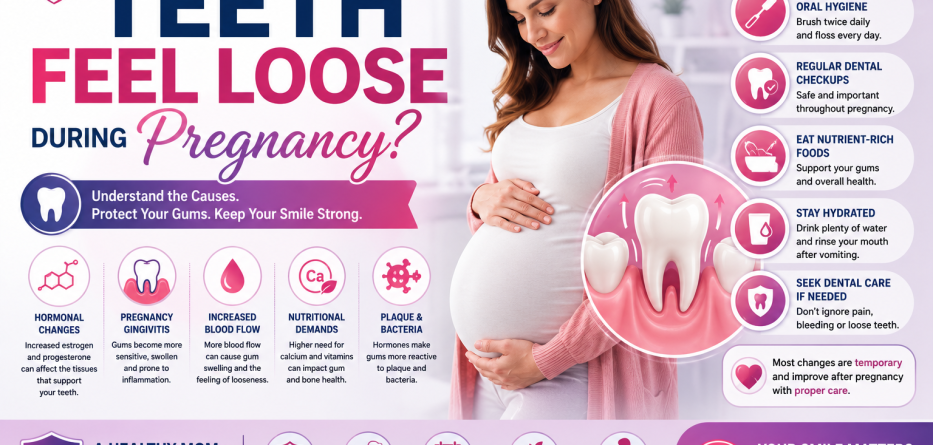
Pregnancy brings many changes to the body, from hormonal fluctuations and morning sickness to increased sensitivity and swelling. While most expectant mothers are aware of these common symptoms, many are surprised when they notice that their teeth feel slightly loose during pregnancy.
Although this sensation can be alarming, it is often linked to hormonal changes that affect the gums, ligaments, and supporting structures around the teeth. In most cases, the feeling is temporary and resolves after childbirth. However, loose teeth can sometimes indicate underlying dental issues that require professional attention.
In this article, we’ll explain why teeth may feel loose during pregnancy, the role hormones play in oral health, when to seek dental care, and how to protect your smile throughout pregnancy.
Can Pregnancy Make Your Teeth Feel Loose?
Quick Answer
Yes. Pregnancy hormones can temporarily affect the tissues and ligaments that support your teeth, making them feel slightly loose even when there is no permanent damage.
The increased levels of estrogen and progesterone can alter how the body responds to bacteria and inflammation, affecting the gums and periodontal ligaments that hold teeth in place.
While mild looseness is usually temporary, it should never be ignored.
Why Do Teeth Feel Loose During Pregnancy?
Several factors can contribute to this sensation.
1. Hormonal Changes
Pregnancy causes a significant increase in the following:
- Estrogen
- Progesterone
These hormones can affect the periodontal ligaments, which help anchor teeth to the jawbone.
As a result:
- Ligaments may become more flexible
- Teeth may feel slightly mobile
- Gums may become more sensitive
This is one of the most common reasons for temporary tooth looseness during pregnancy.
2. Pregnancy Gingivitis
Pregnancy gingivitis affects a large percentage of pregnant women.
Common Symptoms
- Red gums
- Swollen gums
- Bleeding during brushing
- Gum tenderness
- Mild tooth mobility
Hormonal changes make gums more reactive to plaque, increasing the likelihood of inflammation.
Without treatment, gingivitis can progress to more serious gum disease.
3. Increased Blood Flow to the Gums
During pregnancy, blood volume increases significantly.
This increased circulation can cause the following:
- Swollen gums
- Gum sensitivity
- Pressure around teeth
Some women describe the sensation as feeling like their teeth are “moving” or “shifting.”
4. Periodontal Disease
In some cases, loose teeth may indicate periodontal (gum) disease.
Periodontal disease affects the tissues and bone supporting the teeth.
Symptoms Include
- Persistent bad breath
- Receding gums
- Gum bleeding
- Tooth mobility
- Bone loss
Unlike temporary hormone-related changes, periodontal disease requires professional treatment.
5. Nutritional Changes
Pregnancy increases the body’s demand for essential nutrients.
Deficiencies in nutrients such as:
- Calcium
- Vitamin D
- Phosphorus
may affect bone and gum health.
While pregnancy does not directly cause teeth to lose calcium, poor nutrition can contribute to oral health problems.
Is It Normal for Teeth to Feel Loose During Pregnancy?
Mild looseness or increased awareness of tooth movement can occur during pregnancy and is often temporary.
However, significant looseness is not considered normal.
You should contact your dentist if:
- A tooth visibly moves
- Pain develops
- Gums bleed excessively
- Swelling becomes severe
- Chewing becomes difficult
Early evaluation helps identify potential problems before they worsen.
Pregnancy and Gum Health
Healthy gums play a critical role in keeping teeth stable.
Pregnancy Increases the Risk of
- Gingivitis
- Gum swelling
- Plaque accumulation
- Periodontal disease
Studies have shown that hormonal changes can exaggerate the body’s inflammatory response to dental plaque.
This is why maintaining excellent oral hygiene during pregnancy is especially important.
Can Loose Teeth During Pregnancy Become Permanent?
In most cases, hormone-related looseness improves after delivery when hormone levels return to normal.
However, untreated gum disease can lead to permanent damage.
Potential complications include the following:
- Bone loss
- Gum recession
- Tooth loss
Prompt dental care helps prevent long-term issues.
How to Protect Your Teeth During Pregnancy
Brush and Floss Daily
Maintain a strong oral hygiene routine.
Recommendations include:
- Brush twice daily
- Use fluoride toothpaste
- Floss every day
This helps reduce plaque and gum inflammation.
Schedule Regular Dental Checkups
Dental visits during pregnancy are safe and encouraged.
Routine examinations help identify:
- Gum disease
- Cavities
- Oral infections
- Early signs of tooth mobility
Most preventive and restorative dental treatments can be performed safely during pregnancy.
Maintain a Healthy Diet
Choose foods rich in:
- Calcium
- Vitamin D
- Protein
- Phosphorus
Examples include:
- Dairy products
- Leafy greens
- Fish
- Eggs
- Nuts
Proper nutrition supports both maternal and oral health.
Stay Hydrated
Drinking water helps:
- Wash away bacteria
- Reduce dry mouth
- Support healthy gum tissues
Adequate hydration is important throughout pregnancy.
Manage Morning Sickness
Frequent vomiting exposes teeth to stomach acids.
To protect enamel:
- Rinse with water afterward
- Avoid brushing immediately after vomiting
- Use fluoride mouth rinses if recommended
This helps reduce acid-related damage.
Are Dental Treatments Safe During Pregnancy?
Yes.
Most routine dental care is considered safe during pregnancy.
Safe Dental Procedures
- Professional cleanings
- Dental examinations
- Fillings
- Emergency treatment
The second trimester is often considered the ideal time for non-urgent procedures.
Always inform your dentist about your pregnancy and any medications you are taking.
When Should You Call a Dentist?
Contact your dentist if you experience:
- Noticeable tooth movement
- Severe gum swelling
- Persistent bleeding
- Tooth pain
- Pus around the gums
- Difficulty chewing
These symptoms may indicate an underlying dental problem that requires treatment.
Frequently Asked Questions
Is it normal for teeth to feel loose during pregnancy?
Mild looseness can occur due to hormonal changes, but significant mobility should be evaluated by a dentist.
Will my teeth tighten again after pregnancy?
In many cases, hormone-related looseness resolves after childbirth.
Can pregnancy cause tooth loss?
Pregnancy itself does not cause tooth loss, but untreated gum disease can increase the risk.
Is it safe to visit the dentist while pregnant?
Yes. Regular dental care is safe and recommended during pregnancy.
How can I prevent gum problems during pregnancy?
Good oral hygiene, regular dental visits, healthy nutrition, and plaque control can help prevent gum disease.
Conclusion
If your teeth feel loose during pregnancy, you’re not alone. Hormonal changes, increased blood flow, and pregnancy-related gum inflammation can temporarily affect the tissues supporting your teeth. Fortunately, most cases improve after delivery.
However, loose teeth should never be ignored. Maintaining excellent oral hygiene, attending regular dental checkups, and addressing gum problems early can help protect your smile throughout pregnancy and beyond. By taking proactive steps, expectant mothers can enjoy better oral health and reduce the risk of long-term dental complications.
