
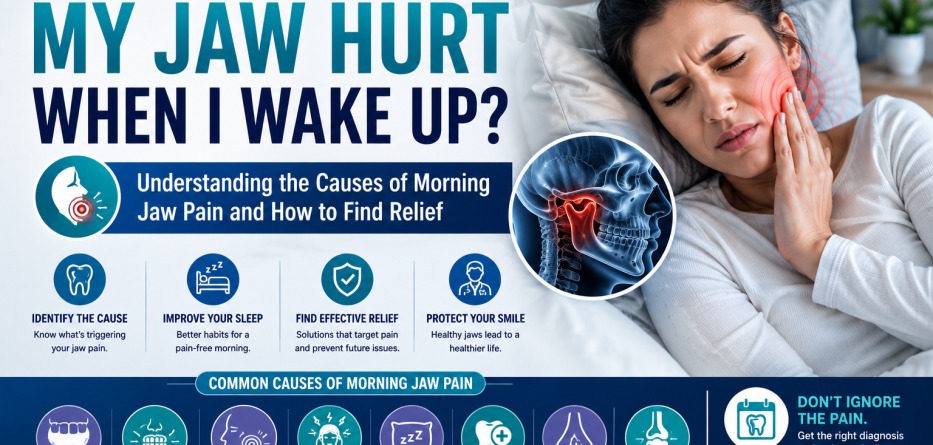
Waking up with jaw pain can be frustrating, uncomfortable, and sometimes alarming. Whether it’s a dull ache, stiffness, clicking sounds, or difficulty opening your mouth, morning jaw pain often indicates an underlying issue that shouldn’t be ignored.
Many people experience jaw discomfort upon waking due to habits or conditions that occur while they sleep, such as teeth grinding, jaw clenching, or temporomandibular joint (TMJ) disorders. In some cases, the pain may be linked to stress, poor sleep posture, dental problems, or even sinus issues.
Understanding the possible causes of morning jaw pain can help you find relief and prevent long-term complications. In this article, we’ll explore why your jaw may hurt when you wake up, common symptoms to watch for, treatment options, and when to see a dentist.
Why Does My Jaw Hurt When I Wake Up?
Morning jaw pain is often caused by excessive pressure on the jaw muscles, joints, or teeth during sleep.
Common causes include:
- Teeth grinding (bruxism)
- Jaw clenching
- TMJ disorders
- Stress and anxiety
- Poor sleep posture
- Dental problems
- Sinus infections
- Arthritis
Identifying the root cause is the first step toward effective treatment.
1. Teeth Grinding (Bruxism)
One of the most common causes of waking up with jaw pain is bruxism.
Bruxism occurs when you unconsciously grind, gnash, or clench your teeth during sleep.
Common Symptoms
- Jaw soreness
- Tooth sensitivity
- Headaches
- Worn or chipped teeth
- Facial muscle fatigue
Why It Causes Pain
Grinding places excessive force on the jaw muscles and temporomandibular joints, leading to inflammation and soreness by morning.
2. Jaw Clenching During Sleep
Some people don’t grind their teeth but still clench their jaws tightly while sleeping.
This constant muscle tension can result in:
- Morning jaw stiffness
- Facial pain
- Ear discomfort
- Limited jaw movement
Clenching is often linked to stress and anxiety.
3. Temporomandibular Joint (TMJ) Disorders
The temporomandibular joints connect your jawbone to your skull.
When these joints become irritated or dysfunctional, they can cause significant discomfort.
Signs of TMJ Disorder
- Jaw pain
- Clicking or popping sounds
- Difficulty chewing
- Jaw locking
- Ear pain
Symptoms are often more noticeable in the morning due to nighttime clenching or grinding.
4. Stress and Anxiety
Stress doesn’t just affect your mind—it can also impact your oral health.
Many people respond to stress by:
- Clenching their jaw
- Grinding their teeth
- Tightening facial muscles
This unconscious tension frequently occurs during sleep, leading to morning discomfort.
Additional Symptoms
- Tension headaches
- Neck pain
- Shoulder tightness
- Fatigue
Managing stress can often reduce jaw-related symptoms.
5. Poor Sleeping Position
Your sleeping posture may contribute to jaw pain.
Sleeping on your stomach or pressing your jaw against a pillow can place unnecessary strain on the jaw joints and surrounding muscles.
Better Sleeping Positions
- Sleeping on your back
- Using supportive pillows
- Maintaining proper neck alignment
Small adjustments may significantly reduce discomfort.
6. Dental Problems
Several dental issues can cause jaw pain, including:
- Tooth infections
- Impacted wisdom teeth
- Misaligned bite
- Gum disease
- Untreated cavities
Pain from these conditions may worsen overnight and become more noticeable when you wake up.
Regular dental checkups can help identify and treat these problems early.
7. Sinus Infections and Congestion
The maxillary sinuses are located near the upper jaw.
When sinus pressure builds up due to infection or allergies, it can create discomfort that feels like jaw pain.
Common Symptoms
- Facial pressure
- Nasal congestion
- Headache
- Upper jaw soreness
Sinus-related jaw pain often improves once the underlying infection resolves.
8. Arthritis of the Jaw Joint
Arthritis can affect the temporomandibular joints just like other joints in the body.
This may lead to:
- Morning stiffness
- Joint tenderness
- Reduced jaw movement
- Pain while chewing
Older adults are more likely to experience arthritis-related jaw discomfort.
Symptoms That May Accompany Jaw Pain
Depending on the underlying cause, you may also experience:
- Headaches
- Earaches
- Neck pain
- Shoulder tension
- Tooth sensitivity
- Clicking or popping sounds
- Difficulty opening the mouth
- Facial soreness
Tracking your symptoms can help your dentist determine the cause.
How Dentists Diagnose Morning Jaw Pain
A dental examination may include:
Oral Examination
Checking teeth for wear, damage, and bite alignment issues.
TMJ Assessment
Evaluating jaw movement, clicking, and joint tenderness.
Dental X-Rays
Identifying hidden dental problems or joint abnormalities.
Sleep and Lifestyle Review
Discussing stress levels, sleep habits, and symptoms.
An accurate diagnosis is essential for effective treatment.
Treatment Options for Jaw Pain
Treatment depends on the underlying cause.
Nightguards
Custom nightguards help protect teeth and reduce grinding-related stress on the jaw.
Stress Management
Relaxation techniques may include:
- Meditation
- Deep breathing exercises
- Exercise
- Counseling
Physical Therapy
Jaw exercises can improve flexibility and reduce tension.
Dental Treatment
If tooth decay, infection, or bite problems are present, your dentist may recommend corrective treatment.
Medications
In some cases, anti-inflammatory medications or muscle relaxants may be prescribed.
Home Remedies for Jaw Pain Relief
You may find temporary relief through:
Warm Compresses
Applying heat can relax jaw muscles and reduce stiffness.
Gentle Jaw Exercises
Stretching exercises may improve mobility.
Soft Foods
Avoid hard, chewy foods during painful episodes.
Hydration
Staying hydrated supports muscle function.
Improved Sleep Position
Sleeping on your back may reduce jaw strain.
When Should You See a Dentist?
Schedule an appointment if:
- Jaw pain persists for more than a few days
- Symptoms worsen
- You experience jaw locking
- You have difficulty chewing
- You notice damaged teeth
- Pain interferes with daily activities
Early treatment often prevents more serious complications.
How to Prevent Morning Jaw Pain
Prevention strategies include:
- Wear a nightguard if recommended.
- Manage stress effectively.
- Avoid chewing ice and hard objects.
- Maintain good posture during sleep.
- Schedule regular dental checkups.
- Address bite alignment issues promptly.
These habits can significantly reduce jaw-related discomfort.
Frequently Asked Questions
Why does my jaw hurt only in the morning?
Morning jaw pain is often caused by nighttime teeth grinding, clenching, or TMJ disorders that occur while you sleep.
Can stress cause jaw pain?
Yes. Stress can lead to jaw clenching and muscle tension, which may result in pain and stiffness.
Is jaw pain a sign of TMJ disorder?
It can be. TMJ disorders are a common cause of jaw pain, clicking, and limited jaw movement.
Can a nightguard help?
Yes. Custom nightguards are often effective for reducing damage caused by teeth grinding and clenching.
Should I worry about persistent jaw pain?
Persistent or worsening jaw pain should be evaluated by a dentist to determine the underlying cause.
Conclusion
If you’re wondering, “Why does my jaw hurt when I wake up?” the answer often lies in habits or conditions that occur during sleep. Teeth grinding, jaw clenching, TMJ disorders, stress, poor sleeping posture, and dental problems are among the most common causes.
Fortunately, many cases of morning jaw pain can be successfully treated through professional dental care, lifestyle adjustments, stress management, and protective appliances like nightguards. If symptoms persist, seeking a professional evaluation can help identify the cause and provide lasting relief.
