
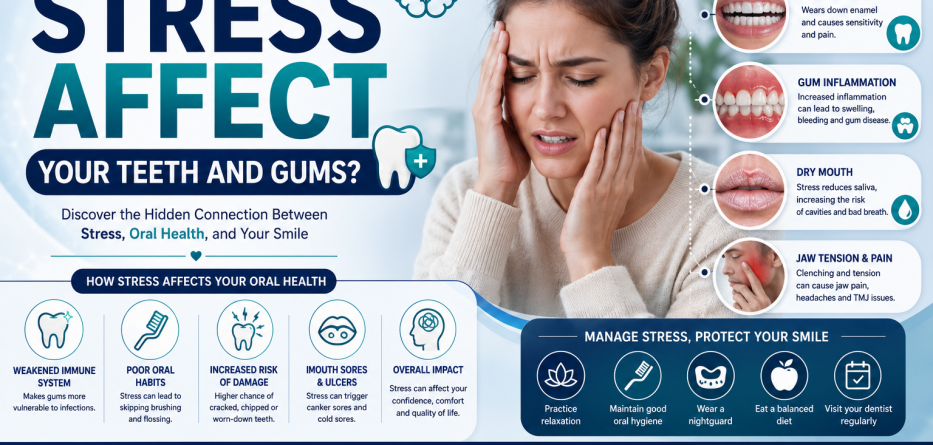
Most people associate stress with headaches, fatigue, anxiety, and difficulty sleeping. However, many are surprised to learn that stress can also have a significant impact on oral health. Chronic stress can affect your teeth, gums, jaw muscles, and even your body’s ability to fight infection.
From teeth grinding and jaw pain to gum disease and dry mouth, stress-related dental problems are more common than many people realize. Understanding the connection between mental health and oral health can help you take proactive steps to protect your smile.
In this article, we’ll explore how stress affects your teeth and gums, the warning signs to watch for, and practical ways to reduce its impact on your oral health.
Can Stress Really Affect Oral Health?
Quick Answer
Yes. Stress can directly and indirectly affect your teeth and gums. It may contribute to teeth grinding, jaw clenching, gum inflammation, dry mouth, poor oral hygiene habits, and an increased risk of gum disease.
When the body experiences prolonged stress, it releases hormones such as cortisol and adrenaline, which can weaken the immune system and increase inflammation throughout the body—including the mouth.
How Stress Affects Your Teeth
1. Teeth Grinding (Bruxism)
One of the most common stress-related dental problems is bruxism, or teeth grinding.
Many people grind their teeth unconsciously during sleep or periods of anxiety.
Signs of Teeth Grinding
- Worn tooth surfaces
- Chipped or cracked teeth
- Tooth sensitivity
- Jaw soreness
- Morning headaches
If left untreated, chronic grinding can cause significant tooth damage and may require restorative dental treatment.
2. Jaw Clenching and TMJ Disorders
Stress often causes people to clench their jaw muscles throughout the day.
Over time, this can place excessive pressure on the temporomandibular joint (TMJ), which connects the jaw to the skull.
Symptoms of TMJ Problems
- Jaw pain
- Clicking or popping sounds
- Difficulty opening the mouth
- Facial muscle tension
- Ear pain
Reducing stress and wearing a custom nightguard may help relieve symptoms.
3. Increased Risk of Tooth Fractures
Constant grinding and clenching place tremendous force on the teeth.
This can lead to:
- Cracked teeth
- Broken fillings
- Damaged crowns
- Tooth fractures
Patients under chronic stress may experience dental emergencies more frequently due to excessive biting forces.
How Stress Affects Your Gums
1. Increased Risk of Gum Disease
Stress can weaken the immune system, making it harder for the body to fight harmful bacteria in the mouth.
As a result, stressed individuals may be more susceptible to:
- Gingivitis
- Periodontitis
- Gum inflammation
- Gum bleeding
Research suggests that chronic stress may increase the severity and progression of periodontal disease.
2. Delayed Healing
Stress can slow the body’s natural healing response.
This may affect recovery following:
- Tooth extractions
- Dental implant surgery
- Gum treatments
- Oral surgeries
Patients experiencing high levels of stress may take longer to heal after dental procedures.
3. Increased Inflammation
Stress hormones contribute to inflammation throughout the body.
In the mouth, inflammation may lead to the following:
- Swollen gums
- Tender gum tissue
- Increased bleeding
- Periodontal complications
Managing stress can support healthier gums and improve overall oral health.
Stress and Dry Mouth
Stress and anxiety can reduce saliva production.
Why Saliva Matters
Saliva helps:
- Wash away bacteria
- Neutralize acids
- Protect tooth enamel
- Prevent bad breath
When saliva levels decrease, the risk of the following increases:
- Cavities
- Gum disease
- Oral infections
- Bad breath
may increase significantly.
Symptoms of Dry Mouth
- Sticky feeling in the mouth
- Difficulty swallowing
- Dry throat
- Increased thirst
Staying hydrated and discussing symptoms with your dentist can help manage dry mouth effectively.
Stress Can Lead to Poor Oral Hygiene Habits
When people are overwhelmed or anxious, daily routines often suffer.
Stress may cause individuals to:
- Skip brushing
- Forget flossing
- Delay dental visits
- Consume more sugary foods
- Increase tobacco or alcohol use
These behaviors can contribute to:
- Tooth decay
- Gum disease
- Plaque buildup
- Oral infections
Maintaining consistent oral care routines is especially important during stressful periods.
The Connection Between Stress and Mouth Sores
Stress has been linked to certain oral conditions, including the following:
Canker Sores
These small painful ulcers may become more frequent during periods of emotional stress.
Cold Sores
Stress can trigger outbreaks of the herpes simplex virus in susceptible individuals.
Although stress does not directly cause these conditions, it can contribute to flare-ups.
Warning Signs Stress Is Affecting Your Oral Health
Watch for the following symptoms:
- Frequent headaches
- Jaw pain
- Tooth sensitivity
- Worn teeth
- Cracked teeth
- Bleeding gums
- Dry mouth
- Mouth sores
- Bad breath
If you notice these signs, consult your dentist for an evaluation.
How to Protect Your Teeth and Gums from Stress
1. Practice Stress Management
Effective stress-reduction techniques include:
- Exercise
- Meditation
- Yoga
- Deep breathing exercises
- Adequate sleep
- Mindfulness practices
Reducing stress benefits both oral and overall health.
2. Wear a nightguard.
If you grind your teeth at night, your dentist may recommend a custom-made nightguard.
Benefits include:
- Reduced tooth wear
- Less jaw strain
- Protection from fractures
- Improved comfort
3. Maintain Excellent Oral Hygiene
Daily oral care should include:
- Brushing twice daily
- Flossing every day
- Using fluoride toothpaste
- Regular dental cleanings
Good oral hygiene helps counteract many stress-related dental risks.
4. Stay Hydrated
Drinking water throughout the day can help in the following ways:
- Combat dry mouth
- Support saliva production
- Reduce cavity risk
Sugar-free gum may also stimulate saliva flow.
5. Visit Your Dentist Regularly
Routine dental visits allow early detection of the following:
- Grinding damage
- Gum disease
- Tooth fractures
- Oral infections
Early treatment can prevent more serious complications.
Frequently Asked Questions
Can stress cause tooth pain?
Yes. Teeth grinding, jaw clenching, and inflammation associated with stress can contribute to tooth discomfort and sensitivity.
Can stress make gum disease worse?
Yes. Stress can weaken the immune system and increase inflammation, making gum disease more likely to develop or progress.
Does anxiety cause teeth grinding?
Many people with anxiety experience bruxism, particularly during sleep.
Can stress cause dry mouth?
Yes. Stress and certain anxiety medications can reduce saliva production.
How do I stop stress-related teeth grinding?
Stress management techniques, custom nightguards, and professional dental guidance can help reduce grinding-related damage.
Conclusion
Stress affects far more than just your mental well-being—it can also have a significant impact on your teeth and gums. From teeth grinding and jaw pain to gum disease and dry mouth, chronic stress can contribute to a wide range of oral health problems.
Fortunately, recognizing the warning signs early and taking proactive steps to manage stress can help protect your smile. By maintaining good oral hygiene, visiting your dentist regularly, and adopting healthy stress-management habits, you can reduce the effects of stress on your oral health and preserve your teeth and gums for years to come.
