
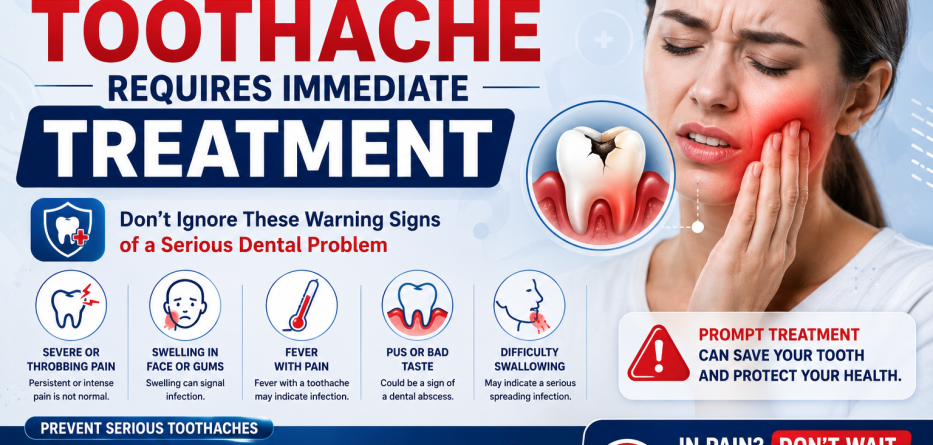
A toothache is one of the most common dental problems people experience. While some toothaches may be caused by minor issues that can wait for a routine dental appointment, others can signal serious underlying conditions that require immediate treatment.
Ignoring severe dental pain can lead to infections, tooth loss, and even health complications that extend beyond the mouth. Knowing when a toothache is an emergency can help you seek timely treatment and protect your oral health.
In this guide, we’ll discuss the warning signs that your toothache requires immediate attention, common causes of severe tooth pain, and what you should do while waiting to see a dentist.
What Causes a Toothache?
A toothache can develop for many reasons, including:
- Tooth decay
- Dental abscess
- Gum disease
- Cracked or broken tooth
- Impacted wisdom teeth
- Loose fillings or crowns
- Teeth grinding
- Dental trauma
Some causes are minor, while others require urgent professional treatment.
When Is a Toothache a Dental Emergency?
A toothache becomes an emergency when it is accompanied by symptoms that indicate infection, significant damage, or risk to your overall health.
Seek Immediate Treatment If You Experience the Following:
- Severe, persistent pain
- Facial swelling
- Fever
- Difficulty swallowing
- Difficulty breathing
- Pus or discharge around a tooth
- A knocked-out or damaged tooth
- Pain following dental trauma
These symptoms may indicate a serious dental condition that should not be ignored.
1. Severe or Throbbing Tooth Pain
Pain that is intense, constant, or throbbing often indicates a deeper problem.
Possible causes include the following:
- Advanced tooth decay
- Tooth nerve infection
- Dental abscess
- Severe inflammation
Warning Signs
- Pain that wakes you up at night
- Pain that worsens over time
- Pain that doesn’t improve with medication
Persistent severe pain should be evaluated by a dentist as soon as possible.
2. Swelling Around the Tooth, Gums, or Face
Swelling is one of the most important signs that a toothache may require urgent treatment.
Swelling can indicate:
- Dental infection
- Abscess formation
- Gum infection
Emergency Symptoms
- Swollen cheek
- Puffy gums
- Jaw swelling
- Facial asymmetry
Untreated infections can spread to surrounding tissues and become dangerous.
3. Fever Accompanied by Tooth Pain
A fever combined with a toothache often suggests infection.
Symptoms may include:
- Elevated temperature
- Chills
- Fatigue
- Swollen lymph nodes
A dental infection that causes fever should be treated promptly to prevent complications.
4. Difficulty Swallowing or Breathing
This is one of the most serious warning signs.
A spreading dental infection can affect the throat and airway.
Seek Emergency Care Immediately If You Have:
- Difficulty swallowing
- Difficulty breathing
- Tightness in the throat
- Rapidly increasing swelling
These symptoms require immediate medical attention.
5. Pus or Bad-Tasting Discharge
The presence of pus usually indicates a dental abscess.
Signs include:
- White or yellow discharge
- Persistent bad taste
- Foul breath
- Gum swelling
A dental abscess requires professional treatment and often cannot resolve on its own.
6. Sensitivity That Lasts After Eating or Drinking
Temporary sensitivity is common.
However, prolonged sensitivity may indicate:
- Deep decay
- Exposed tooth roots
- Damaged fillings
- Nerve involvement
Warning Sign
If pain continues for more than 30 seconds after exposure to hot or cold foods, schedule a dental evaluation promptly.
7. Pain When Biting or Chewing
Pain during chewing often signals structural damage.
Potential causes include the following:
- Cracked tooth
- Abscess
- Loose restoration
- Advanced decay
Ignoring bite-related pain may allow the condition to worsen.
8. Toothache Following an Injury
Dental trauma should never be ignored.
Examples include:
- Sports injuries
- Falls
- Vehicle accidents
- Direct impact to the mouth
Even if the tooth appears intact, hidden damage may exist beneath the surface.
Seek professional evaluation as soon as possible.
9. Gum Swelling Near a Painful Tooth
Localized swelling around a specific tooth often indicates infection.
Common signs include:
- Red gums
- Tenderness
- Small pimple-like bump on the gums
- Pain when touched
These symptoms frequently occur with dental abscesses.
10. A Cracked, Broken, or Loose Tooth
A damaged tooth can expose sensitive nerves and increase the risk of infection.
Seek Immediate Care If:
- Part of the tooth breaks off
- The tooth becomes loose
- Sharp edges cause discomfort
- Pain develops after the fracture
Early treatment may save the tooth and prevent further complications.
Common Conditions That Cause Emergency Toothaches
Dental Abscess
A bacterial infection that forms a pocket of pus around a tooth.
Advanced Tooth Decay
Untreated cavities can reach the tooth pulp and cause severe pain.
Cracked Tooth Syndrome
Small fractures can expose nerves and create significant discomfort.
Impacted Wisdom Teeth
Partially erupted wisdom teeth may become infected and painful.
Periodontal Disease
Advanced gum disease can affect tooth stability and cause pain.
What to Do While Waiting for Your Dental Appointment
Helpful Steps
- Rinse your mouth with warm saltwater.
- Use a cold compress to reduce swelling.
- Take over-the-counter pain medication as directed.
- Keep the affected area clean.
- Stay hydrated.
Avoid
- Placing aspirin directly on gums
- Using extremely hot or cold foods
- Ignoring worsening symptoms
These measures provide temporary relief but do not replace professional treatment.
How Dentists Diagnose Serious Toothaches
Your dentist may use:
- Clinical examination
- Dental X-rays
- Digital imaging
- Percussion testing
- Bite analysis
These tools help identify the source of pain and determine the most appropriate treatment.
How to Prevent Serious Toothaches
Prevention is always better than emergency treatment.
Prevention Tips
- Brush twice daily
- Floss regularly
- Visit your dentist every six months
- Treat cavities early
- Wear a mouthguard during sports
- Avoid chewing hard objects
Routine dental care can significantly reduce the risk of painful emergencies.
Frequently Asked Questions
How do I know if my toothache is serious?
Severe pain, swelling, fever, pus, or difficulty swallowing are strong indicators that immediate treatment is needed.
Can a tooth infection go away on its own?
No. Most dental infections require professional treatment and often antibiotics or drainage.
Should I go to the emergency room for a toothache?
Visit the ER if you have difficulty breathing, swallowing, severe swelling, or signs of a spreading infection.
What is the most common cause of severe tooth pain?
Advanced tooth decay and dental abscesses are among the most common causes.
How quickly should I see a dentist for a toothache?
If pain is severe or accompanied by swelling, fever, or trauma, seek care immediately.
Conclusion
A toothache is your body’s way of signaling that something is wrong. While minor discomfort may not always require urgent care, certain symptoms should never be ignored. Severe pain, swelling, fever, pus, difficulty swallowing, and trauma are all signs that your toothache requires immediate treatment.
Prompt dental care can prevent complications, relieve pain, and potentially save your tooth. If you’re experiencing any of these warning signs, contact your dentist as soon as possible to protect your oral health and overall well-being.
