
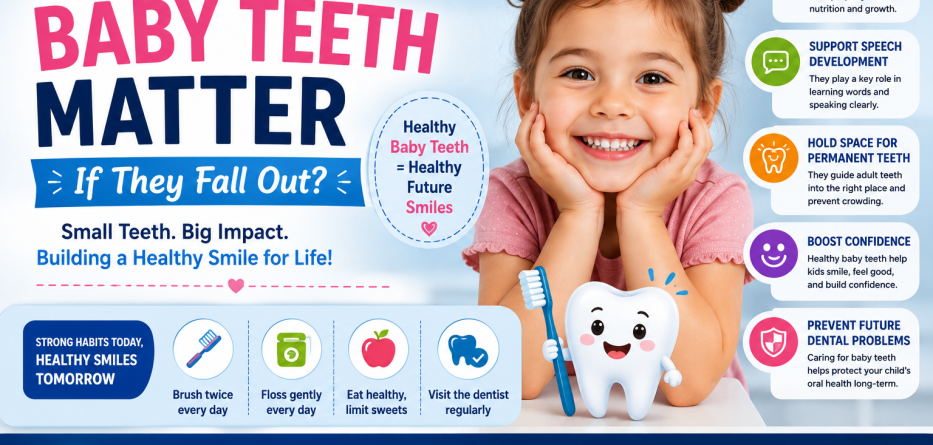
Many parents assume that baby teeth aren’t important because they eventually fall out. After all, permanent teeth will replace them, right? While it’s true that baby teeth are temporary, they play a critical role in a child’s oral health, development, and overall well-being.
Healthy baby teeth help children eat, speak, smile confidently, and guide permanent teeth into their proper positions. Neglecting baby teeth can lead to pain, infections, alignment issues, and even problems with adult teeth later in life.
In this article, we’ll explore why baby teeth matter, the important functions they serve, and how parents can protect their child’s smile from an early age.
What Are Baby Teeth?
Baby teeth, also known as primary teeth, are the first set of teeth that develop in children.
Most children have:
- 20 baby teeth
- First tooth appearing around 6 months of age
- Full set by age 3
- Gradual replacement by permanent teeth between ages 6 and 12
Although temporary, these teeth serve essential purposes during childhood development.
Why Are Baby Teeth Important?
Baby teeth do much more than simply hold space until adult teeth arrive.
Key Functions of Baby Teeth
- Help children chew and eat properly
- Support speech development
- Guide permanent teeth into place
- Maintain facial structure
- Boost self-confidence
- Promote healthy jaw development
Each baby tooth plays an important role in a child’s growth and oral health.
Baby Teeth Help Children Eat Properly
Healthy teeth allow children to chew a variety of nutritious foods.
Without properly functioning baby teeth, children may struggle to eat:
- Fruits
- Vegetables
- Meats
- Whole grains
Difficulty chewing can lead to poor nutrition and impact overall growth and development.
Baby Teeth Support Speech Development
Many speech sounds require proper tooth positioning.
Baby teeth help children learn to pronounce words correctly and develop clear speech patterns.
Missing or damaged teeth may affect sounds such as:
- S
- F
- V
- TH
- Z
Proper dental health supports effective communication during critical developmental years.
Baby Teeth Guide Permanent Teeth
One of the most important functions of baby teeth is acting as natural placeholders for permanent teeth.
How It Works
Baby teeth:
- Reserve space for adult teeth
- Guide eruption pathways
- Help maintain proper alignment
If a baby tooth is lost too early, neighboring teeth may drift into the empty space, causing crowding and orthodontic problems later.
Healthy Baby Teeth Promote Proper Jaw Development
Chewing stimulates healthy growth of the jawbones and facial muscles.
Benefits include:
- Balanced facial growth
- Strong jaw development
- Improved bite alignment
- Better support for permanent teeth
Healthy teeth contribute to proper oral function throughout childhood.
Baby Teeth Affect Self-Confidence
Children are often aware of their appearance from an early age.
Healthy teeth can help children:
- Smile confidently
- Participate socially
- Feel comfortable speaking
- Build positive self-esteem
Dental pain, discoloration, or missing teeth may affect confidence and emotional well-being.
What Happens If Baby Teeth Get Cavities?
Many parents mistakenly believe cavities in baby teeth aren’t a concern because those teeth will eventually fall out.
However, untreated decay can lead to serious complications.
Potential Problems
- Tooth pain
- Difficulty eating
- Infection
- Abscess formation
- Premature tooth loss
- Damage to developing permanent teeth
Treating cavities early helps prevent long-term oral health issues.
Can Tooth Decay Affect Permanent Teeth?
Yes.
Severe infections in baby teeth can sometimes spread to the developing permanent teeth beneath them.
Possible consequences include the following:
- Enamel defects
- Discoloration
- Delayed eruption
- Misalignment
Maintaining healthy baby teeth helps protect future adult teeth.
What Happens If a Baby Tooth Is Lost Too Early?
Premature tooth loss can create spacing issues.
Common causes include:
- Cavities
- Trauma
- Infection
Potential Effects
- Teeth shifting into empty spaces
- Crowding
- Bite problems
- Orthodontic complications
Dentists may recommend space maintainers to preserve proper alignment until permanent teeth emerge.
When Should Children Visit the Dentist?
The American Academy of Pediatric Dentistry recommends scheduling a child’s first dental visit by:
- Age 1
- Within six months of the first tooth appearing
Early dental visits help
- Monitor development
- Prevent cavities
- Educate parents
- Establish healthy habits
Regular checkups allow dentists to identify and address problems early.
How to Care for Baby Teeth
Good oral hygiene should begin as soon as the first tooth erupts.
Daily Care Tips
- Brush twice daily with fluoride toothpaste.
- Use an age-appropriate toothbrush.
- Limit sugary snacks and drinks.
- Encourage healthy eating habits.
- Schedule regular dental visits.
- Supervise brushing until children develop proper technique.
Consistent care helps maintain healthy teeth and gums.
Common Myths About Baby Teeth
Myth 1: Baby Teeth Don’t Matter
Fact: Baby teeth are essential for eating, speaking, and guiding permanent teeth.
Myth 2: Cavities in Baby Teeth Don’t Need Treatment
Fact: Untreated cavities can cause pain, infection, and damage to adult teeth.
Myth 3: Children Don’t Need a Dentist Until Permanent Teeth Appear
Fact: Early dental visits are crucial for prevention and education.
Myth 4: Losing Baby Teeth Early Is Not a Problem
Fact: Premature tooth loss can lead to alignment and spacing issues.
Signs Your Child May Have a Dental Problem
Parents should watch for:
- Tooth pain
- Sensitivity
- Swollen gums
- White or brown spots on teeth
- Difficulty chewing
- Persistent bad breath
Prompt evaluation can prevent more serious complications.
Benefits of Protecting Baby Teeth
Maintaining healthy primary teeth provides numerous advantages:
- Better oral health
- Proper nutrition
- Clear speech development
- Healthy jaw growth
- Improved self-confidence
- Reduced orthodontic issues
- Healthier permanent teeth
Investing in early dental care can benefit children for a lifetime.
Frequently Asked Questions
Why do baby teeth matter if they fall out?
Baby teeth help children eat, speak, and guide permanent teeth into their proper positions.
Can cavities in baby teeth affect adult teeth?
Yes. Untreated infections can potentially damage developing permanent teeth.
What happens if a child loses a baby tooth too early?
Early tooth loss may cause spacing issues and increase the need for orthodontic treatment.
When should my child first visit the dentist?
Children should have their first dental visit by age one or within six months of their first tooth erupting.
How can I prevent cavities in baby teeth?
Brush regularly, limit sugary foods, use fluoride toothpaste, and schedule routine dental checkups.
Conclusion
Although baby teeth eventually fall out, they play a vital role in a child’s oral health and development. They help children chew properly, speak clearly, maintain confidence, and guide permanent teeth into their correct positions.
Ignoring baby teeth can lead to cavities, infections, alignment issues, and future dental complications. By prioritizing good oral hygiene, healthy habits, and regular dental visits, parents can help ensure their children enjoy strong, healthy smiles that last a lifetime.
