
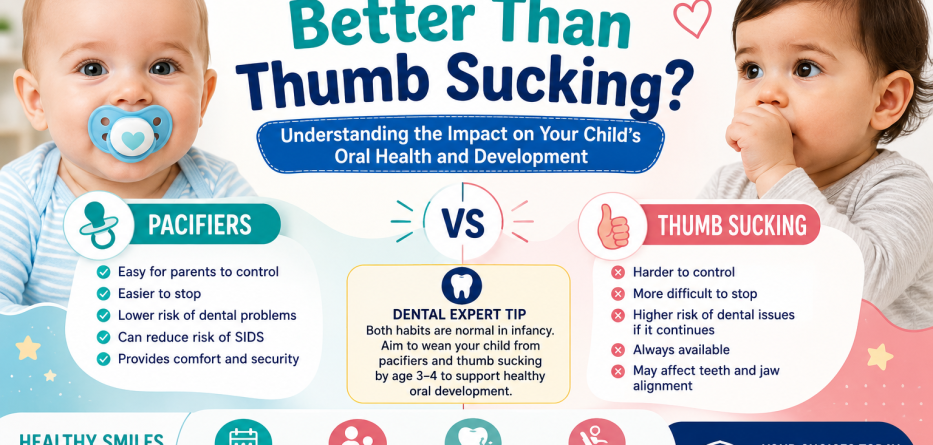
Many parents face an important question during their child’s early years: Are pacifiers better than thumb sucking? Both habits are common self-soothing behaviors that help babies feel secure, calm, and comfortable. While both can provide emotional benefits, they can also affect a child’s oral development if they continue for too long.
Understanding the differences between pacifier use and thumb sucking can help parents make informed decisions that support healthy dental growth and reduce the risk of future orthodontic problems.
In this guide, we’ll compare pacifiers and thumb sucking, explore their impact on oral health, and discuss when and how to break these habits.
Why Do Babies Suck Their Thumbs or Use Pacifiers?
Sucking is a natural reflex that begins before birth. It helps infants:
- Feel secure and comforted
- Fall asleep more easily
- Reduce stress and anxiety
- Self-soothe during unfamiliar situations
- Satisfy their natural sucking instinct
Both pacifiers and thumb sucking serve similar emotional and developmental purposes during infancy.
Quick Answer: Are Pacifiers Better Than Thumb Sucking?
Yes, in most cases.
Many pediatric dentists and orthodontists consider pacifiers a better option than thumb sucking because parents can control pacifier use and gradually eliminate the habit when necessary.
Thumb sucking can be more difficult to stop because a child’s thumb is always available.
Pacifiers vs Thumb Sucking: Key Differences
| Factor | Pacifiers | Thumb Sucking |
|---|---|---|
| Easy to Control | Yes | No |
| Easier to Stop | Yes | Often Difficult |
| Always Available | No | Yes |
| Risk of Dental Problems | Moderate | Higher if prolonged |
| Hygiene Control | Easier | More Difficult |
| Comfort for Child | High | High |
For long-term oral health, pacifiers often provide more flexibility for parents.
Benefits of Pacifier Use
1. Easier Habit Management
Parents can gradually reduce pacifier use by:
- Limiting use to bedtime
- Removing it during the day
- Using positive reinforcement
Eventually, the pacifier can be completely removed.
2. Reduced Risk of SIDS
Research suggests that pacifier use during sleep may help reduce the risk of Sudden Infant Death Syndrome (SIDS) in infants.
3. Provides Comfort
Pacifiers help soothe babies during:
- Teething
- Vaccinations
- Travel
- Sleep transitions
4. Temporary Soothing Tool
Unlike thumb sucking, pacifiers can be removed permanently when the time is right.
Benefits of Thumb Sucking
Thumb sucking also offers some advantages.
Natural and Convenient
Children always have access to their thumb without needing a separate object.
Self-Regulation
Thumb sucking allows children to comfort themselves independently.
No Cleaning Required
Unlike pacifiers, thumbs cannot be lost or misplaced.
However, these advantages can become disadvantages when the habit continues for an extended period.
How Thumb Sucking Affects Oral Health
Occasional thumb sucking during infancy is generally harmless.
Problems may develop when thumb sucking continues beyond age 3 or 4.
Possible Dental Effects
- Protruding front teeth
- Open bite
- Misaligned teeth
- Narrow upper jaw
- Speech difficulties
The intensity and duration of thumb sucking significantly influence its impact on oral development.
How Pacifiers Affect Oral Health
Prolonged pacifier use can also affect dental development.
Potential issues include the following:
- Bite problems
- Changes in jaw growth
- Misaligned teeth
- Increased orthodontic needs
However, because pacifiers can be removed, these effects are often easier to prevent.
When Should Children Stop Using Pacifiers?
Most pediatric dental professionals recommend:
Ideal Timeline
- Before age 2: Minimal concern
- Ages 2–3: Begin reducing use
- By age 4: Discontinue completely
Many children naturally stop earlier with parental guidance.
When Should Thumb Sucking Stop?
Thumb sucking should ideally stop before permanent teeth begin emerging.
Recommended Age
Most experts recommend stopping thumb sucking by age 4.
Continued thumb sucking beyond this age increases the likelihood of orthodontic problems.
Which Habit Causes More Dental Problems?
In general, thumb sucking tends to create greater long-term concerns.
Why?
- Harder to control
- More difficult to eliminate
- Often continues longer
- Stronger sucking pressure
Pacifiers are usually easier to manage and discontinue, making them the preferred option from a dental perspective.
Tips for Stopping Pacifier Use
Gradual Reduction
Reduce pacifier use over several weeks.
Create New Comfort Routines
Offer:
- Favorite blanket
- Stuffed animal
- Bedtime story
Positive Reinforcement
Reward progress with praise and encouragement.
Avoid Punishment
Gentle support is more effective than criticism.
Tips for Stopping Thumb Sucking
Identify Triggers
Children often suck their thumbs when:
- Tired
- Anxious
- Bored
- Upset
Offer Alternatives
Provide:
- Stress balls
- Comfort toys
- Distraction activities
Use Positive Encouragement
Celebrate success rather than focusing on setbacks.
Consult a Pediatric Dentist
Professional guidance may help if the habit persists.
Signs Your Child May Need Dental Evaluation
Schedule a dental visit if you notice:
- Teeth moving forward
- Bite changes
- Difficulty chewing
- Speech issues
- Persistent sucking habits after age 4
Early intervention can help prevent more serious orthodontic problems.
Frequently Asked Questions
Are pacifiers safer than thumb sucking?
Generally, yes. Pacifiers are easier for parents to control and eliminate.
At what age should pacifier use stop?
Most dentists recommend discontinuing pacifier use by age 3 to 4.
Does thumb sucking always cause crooked teeth?
Not always. The risk increases with prolonged and intense thumb sucking.
Can pacifiers damage teeth?
Yes, if used for too long. However, their effects are usually easier to manage than thumb sucking.
Should I worry if my toddler still uses a pacifier?
Not necessarily. However, parents should begin reducing use after age 2 and aim to stop by age 4.
Conclusion
So, are pacifiers better than thumb sucking?
For most children, the answer is yes. Both habits provide comfort and emotional security during infancy, but pacifiers offer a significant advantage because parents can control their use and eventually remove them altogether. Thumb sucking, while natural, is often more difficult to stop and may pose a greater risk to dental development if it continues beyond the preschool years.
By understanding the effects of both habits and encouraging healthy oral development early, parents can help their children maintain a beautiful smile and reduce the need for future orthodontic treatment.
