
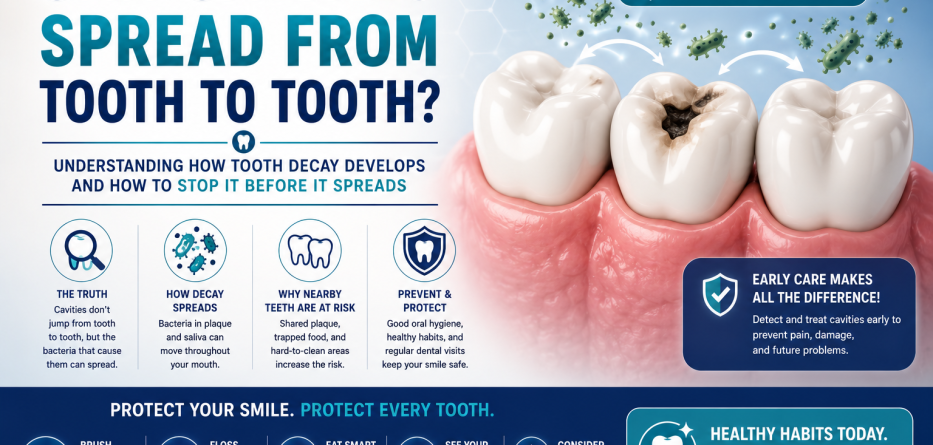
Cavities are one of the most common dental problems affecting people of all ages. When patients discover a cavity, they often wonder, can cavities spread from tooth to tooth?
The answer is both yes and no. A cavity itself does not physically jump from one tooth to another like a contagious disease. However, the bacteria responsible for tooth decay can spread throughout the mouth, increasing the risk of cavities developing on neighboring teeth.
Understanding how cavities form, how decay-causing bacteria spread, and what steps you can take to prevent further damage is essential for maintaining a healthy smile.
In this article, we’ll explain the science behind cavities, whether they can spread, and how to protect your teeth from future decay.
What Is a Cavity?
A cavity is a permanently damaged area in the hard surface of a tooth that develops into a small hole or opening.
Cavities occur when bacteria in the mouth produce acids that gradually erode tooth enamel.
Common Causes of Cavities
- Poor oral hygiene
- Frequent consumption of sugary foods
- Acidic beverages
- Dry mouth
- Plaque buildup
- Inadequate fluoride exposure
If left untreated, cavities can grow larger and affect deeper layers of the tooth.
Can Cavities Spread from Tooth to Tooth?
Quick Answer
A cavity itself cannot physically spread from one tooth to another. However, the bacteria that cause cavities can spread throughout the mouth and create favorable conditions for decay on adjacent teeth.
In other words:
✅ Tooth decay bacteria can spread.
❌ The actual cavity hole cannot move from one tooth to another.
How Tooth Decay Develops
To understand how cavities can affect nearby teeth, it’s important to know how decay forms.
Step 1: Plaque Formation
A sticky film called plaque forms on the teeth after eating and drinking.
Step 2: Bacterial Activity
Bacteria feed on sugars and carbohydrates.
Step 3: Acid Production
The bacteria produce acids that attack tooth enamel.
Step 4: Enamel Breakdown
Repeated acid attacks weaken and dissolve enamel.
Step 5: Cavity Formation
A cavity develops when the enamel is permanently damaged.
Without treatment, this process can occur on multiple teeth simultaneously.
How Bacteria Spread Throughout the Mouth
The bacteria associated with cavities naturally move through saliva and dental plaque.
These bacteria can:
- Accumulate between teeth
- Gather along the gumline
- Spread to hard-to-clean areas
- Increase plaque buildup
As a result, nearby teeth become more vulnerable to developing their own cavities.
Why Adjacent Teeth Are Often Affected
Dentists frequently see cavities develop between neighboring teeth.
Reasons Include:
- Shared plaque accumulation
- Difficult-to-clean contact points
- Food particles trapped between teeth
- Inadequate flossing
When one tooth develops decay, the adjacent tooth may already be exposed to the same harmful environment.
Can Cavities Spread Under Dental Fillings?
In some cases, decay can develop around or underneath existing fillings.
This is known as recurrent or secondary decay.
Possible causes include the following:
- Worn fillings
- Cracked restorations
- Poor oral hygiene
- Bacterial leakage
Regular dental checkups help identify these problems early.
Signs a Cavity May Be Getting Worse
Early cavities may not cause symptoms.
As decay progresses, you may experience:
- Tooth sensitivity
- Pain when eating sweets
- Discomfort from hot or cold foods
- Visible holes in teeth
- Toothache
- Dark spots on the tooth
Prompt treatment can prevent further damage.
What Happens If Cavities Are Left Untreated?
Untreated cavities can continue spreading deeper into the affected tooth.
Potential Complications
- Severe tooth pain
- Infection
- Dental abscess
- Tooth fractures
- Root canal treatment
- Tooth loss
The longer treatment is delayed, the more extensive and expensive treatment may become.
Are Cavities Contagious?
This is a common question.
The Truth
The bacteria that contribute to cavities can be transmitted between people through saliva.
Examples include:
- Sharing utensils
- Sharing drinks
- Kissing
However, simply acquiring cavity-causing bacteria does not guarantee tooth decay.
Good oral hygiene and healthy habits help control bacterial growth.
How to Prevent Cavities from Affecting Other Teeth
The good news is that cavities are largely preventable.
1. Brush Twice Daily
Use fluoride toothpaste to remove plaque and strengthen enamel.
2. Floss Every Day
Flossing removes bacteria and food particles between teeth where cavities commonly develop.
3. Limit Sugary Foods and Drinks
Reducing sugar intake decreases acid production.
4. Visit Your Dentist Regularly
Routine exams allow dentists to detect cavities early.
5. Consider Dental Sealants
Sealants provide additional protection against decay.
6. Stay Hydrated
Saliva helps neutralize harmful acids and wash away bacteria.
How Dentists Treat Cavities
Treatment depends on the severity of decay.
Early Stage
- Fluoride treatments
- Improved oral hygiene
Moderate Decay
- Dental fillings
Advanced Decay
- Dental crowns
- Root canal treatment
Severe Damage
- Tooth extraction
- Dental implants or bridges
Early treatment is always the least invasive option.
Can One Cavity Lead to Multiple Cavities?
Indirectly, yes.
A cavity often indicates that conditions in the mouth favor bacterial growth and enamel damage.
If these conditions are not corrected:
- Additional cavities may form
- Existing decay may worsen
- Multiple teeth can become affected
This is why dentists emphasize treating cavities promptly and improving oral hygiene habits.
Frequently Asked Questions
Can cavities spread to nearby teeth?
The cavity itself cannot spread, but the bacteria that cause tooth decay can increase the risk of cavities on neighboring teeth.
How long does it take for a cavity to spread?
The progression varies depending on oral hygiene, diet, fluoride exposure, and individual risk factors.
Can brushing stop a cavity from spreading?
Brushing helps prevent new decay and may slow early-stage demineralization, but established cavities typically require professional treatment.
Are cavities contagious?
The bacteria that contribute to cavities can be transmitted through saliva, but cavities themselves are not contagious.
Should I treat a small cavity immediately?
Yes. Early treatment is often simpler, less expensive, and more effective than waiting for decay to worsen.
Conclusion
So, can cavities spread from tooth to tooth?
While a cavity cannot physically move from one tooth to another, the bacteria responsible for tooth decay can spread throughout the mouth and increase the risk of additional cavities. This is especially true for neighboring teeth where plaque and food particles often accumulate.
The best way to protect your smile is through excellent oral hygiene, regular dental checkups, a healthy diet, and prompt treatment of any existing cavities. By addressing decay early, you can prevent more serious dental problems and maintain a healthy, cavity-free smile for years to come.
