
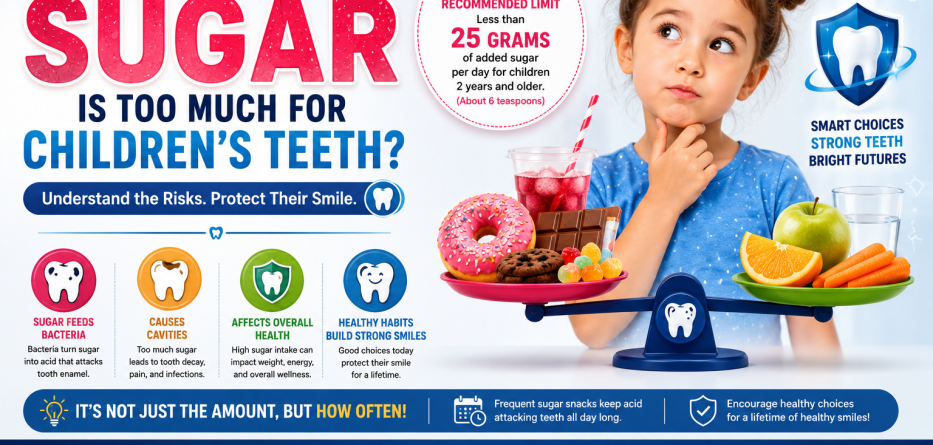
Sugar is a favorite treat for many children, but too much of it can have serious consequences for their oral health. From candies and cookies to fruit juices and sugary cereals, hidden sugars are found in many foods children consume every day. While an occasional sweet snack is unlikely to cause major problems, excessive sugar intake significantly increases the risk of tooth decay and cavities.
Parents often wonder, how much sugar is too much for children’s teeth? Understanding the connection between sugar and dental health can help families make smarter dietary choices and protect growing smiles.
In this article, we’ll explore how sugar affects children’s teeth, recommended daily sugar limits, common sources of hidden sugars, and practical tips for preventing cavities.
Why Sugar Is Harmful to Children’s Teeth
Sugar itself does not directly damage teeth. The problem begins when bacteria in the mouth feed on sugar and produce acids.
These acids attack tooth enamel, leading to:
- Tooth decay
- Cavities
- Enamel erosion
- Tooth sensitivity
- Gum irritation
Children are particularly vulnerable because their developing teeth have softer enamel compared to adult teeth.
How Cavities Form
The cavity process happens in several stages:
Step 1: Sugar Consumption
Children eat or drink sugary foods and beverages.
Step 2: Bacteria Feed on Sugar
Oral bacteria break down the sugar.
Step 3: Acid Production
The bacteria produce acids that attack tooth enamel.
Step 4: Enamel Breakdown
Repeated acid attacks weaken enamel.
Step 5: Cavity Formation
Small holes develop in the teeth, eventually becoming cavities.
The more frequently children consume sugary foods, the greater the risk of tooth decay.
How Much Sugar Is Too Much?
Health experts recommend limiting added sugar intake for children.
Recommended Daily Sugar Limits
| Age Group | Recommended Maximum Added Sugar |
|---|---|
| Under 2 Years | No Added Sugar |
| 2–18 Years | Less Than 25 Grams Per Day |
| 2–18 Years | About 6 Teaspoons Daily |
For perspective:
- One can of soda may contain over 35 grams of sugar.
- A single candy bar can contain 20–30 grams of sugar.
- Some flavored yogurts contain more than 15 grams of added sugar.
Many children exceed these recommendations without realizing it.
Hidden Sources of Sugar
Parents often focus on candy and desserts, but many everyday foods contain surprising amounts of sugar.
Common Hidden Sugar Sources
- Fruit juices
- Sports drinks
- Flavored milk
- Breakfast cereals
- Yogurt
- Granola bars
- Ketchup
- Packaged snacks
- Dried fruit
- Smoothies
Reading nutrition labels can help identify hidden sugars.
Sugary Drinks: A Major Cause of Tooth Decay
Sugary beverages are among the biggest threats to children’s oral health.
Drinks That Can Harm Teeth
- Soda
- Energy drinks
- Sports drinks
- Sweetened tea
- Juice cocktails
- Flavored waters
These beverages expose teeth to sugar and acid simultaneously.
Better Alternatives
- Water
- Plain milk
- Unsweetened milk alternatives
- Water infused with fresh fruit
Water remains the best beverage for healthy teeth.
Why Frequent Snacking Is a Problem
It’s not just the amount of sugar that matters—frequency matters too.
Every time a child consumes sugar, acids attack the teeth for approximately 20 to 30 minutes.
Frequent Snacking Causes
- More acid attacks
- Less time for enamel recovery
- Higher cavity risk
Instead of constant grazing, offer structured meals and snacks.
Signs Your Child May Be Consuming Too Much Sugar
Watch for these warning signs:
Oral Health Signs
- White spots on teeth
- Tooth sensitivity
- Frequent cavities
- Bad breath
- Visible tooth decay
General Health Signs
- Increased cravings for sweets
- Energy crashes
- Weight gain
- Poor dietary habits
Regular dental checkups can help identify problems early.
How Sugar Affects Baby Teeth
Some parents mistakenly believe baby teeth are not important because they eventually fall out.
In reality, healthy baby teeth are essential for:
- Proper chewing
- Speech development
- Jaw growth
- Guiding permanent teeth into place
Untreated decay in baby teeth can cause pain, infection, and future dental complications.
The Importance of Fluoride
Fluoride helps strengthen enamel and protect teeth from acid attacks.
Sources include:
- Fluoridated toothpaste
- Professional fluoride treatments
- Fluoridated drinking water
Fluoride is one of the most effective tools for cavity prevention.
Tips to Reduce Sugar and Protect Your Child’s Teeth
1. Offer Water Instead of Sugary Drinks
Water helps rinse away food particles and bacteria.
2. Read Nutrition Labels
Look for hidden sugars such as:
- Corn syrup
- Sucrose
- Fructose
- Dextrose
- Maltose
3. Limit Sticky Sweets
Foods that cling to teeth increase cavity risk.
Examples include:
- Gummies
- Caramel
- Toffee
- Dried fruit
4. Encourage Brushing Twice Daily
Use fluoride toothpaste appropriate for your child’s age.
5. Schedule Regular Dental Visits
Professional examinations can detect early signs of decay.
6. Choose Tooth-Friendly Snacks
Healthy alternatives include:
- Cheese
- Yogurt (low sugar)
- Apples
- Carrots
- Cucumbers
- Nuts (age appropriate)
Best and Worst Foods for Children’s Teeth
| Best Choices | Foods to Limit |
|---|---|
| Water | Soda |
| Milk | Candy |
| Cheese | Sticky sweets |
| Fresh fruits | Sugary cereals |
| Vegetables | Sports drinks |
| Nuts | Cookies |
| Plain yogurt | Energy drinks |
Balanced nutrition supports both oral and overall health.
Frequently Asked Questions
How much sugar should a child have daily?
Most children should consume less than 25 grams (6 teaspoons) of added sugar per day.
Is fruit sugar bad for teeth?
Whole fruits are generally healthier because they contain fiber and nutrients. However, frequent exposure to fruit juice can contribute to tooth decay.
Are sugar-free products safe for teeth?
Many sugar-free products are less harmful than sugary alternatives, but some may still contain acids that affect enamel.
What is the biggest cause of cavities in children?
Frequent consumption of sugary foods and drinks combined with poor oral hygiene is a leading cause.
Can brushing remove sugar from teeth?
Brushing helps remove plaque and food particles, reducing the risk of acid attacks and cavities.
Conclusion
So, how much sugar is too much for children’s teeth? Experts recommend limiting added sugar to less than 25 grams per day for most children and avoiding added sugars entirely for children under two years old.
While occasional treats are part of a balanced lifestyle, excessive sugar consumption can significantly increase the risk of cavities, enamel erosion, and long-term oral health problems. By monitoring sugar intake, encouraging healthy eating habits, promoting good oral hygiene, and scheduling regular dental visits, parents can help their children maintain strong, healthy smiles for years to come.
