
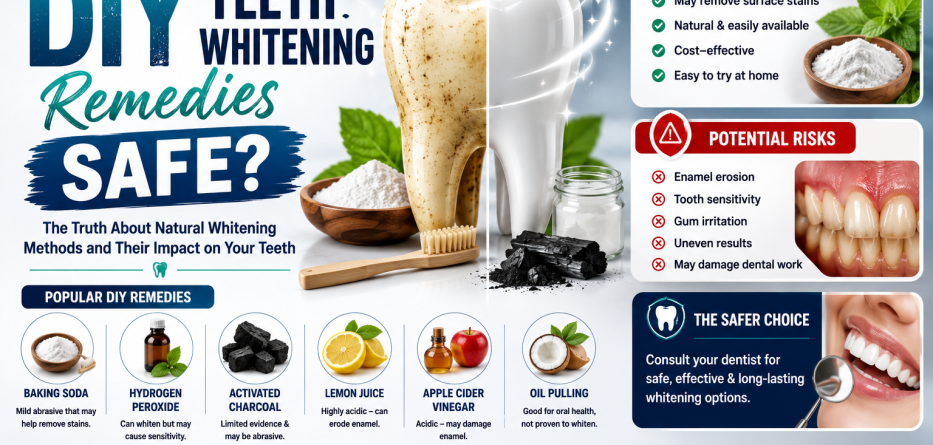
A brighter smile is one of the most sought-after cosmetic dental goals, and it’s easy to see why. White teeth are often associated with confidence, health, and attractiveness. With countless DIY teeth whitening remedies circulating on social media and home remedy websites, many people are tempted to skip professional treatments and try natural whitening solutions at home.
But are DIY teeth whitening remedies safe?
While some home whitening methods may offer minor improvements, others can damage tooth enamel, irritate gums, and lead to long-term oral health problems. Understanding the risks and benefits of DIY whitening techniques can help you make informed decisions about your smile.
In this article, we’ll explore the most popular DIY teeth whitening remedies, their effectiveness, potential dangers, and safer alternatives recommended by dental professionals.
What Causes Teeth Staining?
Before discussing whitening remedies, it’s important to understand why teeth become discolored.
Common Causes of Tooth Stains
- Coffee and tea consumption
- Red wine
- Tobacco use
- Poor oral hygiene
- Aging
- Certain medications
- Genetics
- Excessive fluoride exposure
Some stains occur on the surface of teeth, while others develop deeper within the tooth structure.
Why DIY Teeth Whitening Is So Popular
Many people choose home remedies because they are
- Inexpensive
- Easily accessible
- Marketed as “natural”
- Widely promoted on social media
- Convenient to use
However, popularity does not always equal safety or effectiveness.
Common DIY Teeth Whitening Remedies
1. Baking Soda
Baking soda is one of the most frequently recommended DIY whitening agents.
How It Works
Baking soda acts as a mild abrasive that can help remove some surface stains.
Potential Benefits
- Low cost
- Readily available
- Mild stain removal
Risks
- Excessive use can wear down enamel
- May increase tooth sensitivity
- Not effective for deep stains
Occasional use is generally considered safer than daily application.
2. Hydrogen Peroxide
Hydrogen peroxide is a common ingredient in many professional whitening products.
How It Works
It helps break down stain molecules within the tooth structure.
Potential Risks
- Gum irritation
- Tooth sensitivity
- Soft tissue burns if improperly used
- Enamel damage at high concentrations
Using non-dental-grade peroxide products is not recommended.
3. Activated Charcoal
Activated charcoal has become a popular social media whitening trend.
Claims
Supporters claim charcoal absorbs stains and toxins from teeth.
Scientific Reality
Current research provides limited evidence that charcoal significantly whitens teeth.
Risks
- Enamel abrasion
- Increased sensitivity
- Gum irritation
- Potential staining of dental restorations
Most dentists do not recommend charcoal as a long-term whitening solution.
4. Lemon Juice and Baking Soda
This combination is often promoted as a natural whitening treatment.
Why It Can Be Dangerous
Lemon juice is highly acidic.
Repeated exposure may cause:
- Enamel erosion
- Increased sensitivity
- Higher cavity risk
- Permanent tooth damage
This is one of the least recommended DIY whitening methods.
5. Apple Cider Vinegar
Apple cider vinegar is another acidic substance commonly used in home whitening remedies.
Potential Problems
- Enamel erosion
- Gum irritation
- Increased sensitivity
- Weakened tooth structure
Any whitening benefit is often outweighed by the risk of enamel damage.
6. Coconut Oil Pulling
Oil pulling involves swishing coconut oil in the mouth for several minutes.
Potential Benefits
- Improved oral hygiene
- Reduced plaque buildup
- Fresher breath
Whitening Effectiveness
Scientific evidence supporting significant whitening effects remains limited.
However, oil pulling is generally safer than abrasive or acidic remedies.
Are DIY Teeth Whitening Remedies Effective?
The effectiveness of DIY whitening remedies varies significantly.
| Method | Whitening Ability | Safety Level |
|---|---|---|
| Baking Soda | Mild | Moderate |
| Hydrogen Peroxide | Moderate | Moderate |
| Activated Charcoal | Limited | Low-Moderate |
| Lemon Juice | Limited | Low |
| Apple Cider Vinegar | Limited | Low |
| Coconut Oil Pulling | Minimal | High |
Most DIY methods primarily remove surface stains rather than change the natural color of teeth.
Potential Risks of DIY Teeth Whitening
Enamel Damage
Tooth enamel does not regenerate once lost.
Aggressive whitening methods may permanently weaken teeth.
Increased Tooth Sensitivity
Overuse of abrasive or acidic substances can expose sensitive tooth structures.
Gum Irritation
Improper application may irritate soft tissues and cause discomfort.
Uneven Whitening Results
DIY treatments often produce inconsistent results.
Damage to Dental Work
Whitening remedies may affect:
- Crowns
- Veneers
- Fillings
- Bonding materials
Professional Teeth Whitening vs DIY Remedies
Professional Whitening Benefits
- Supervised treatment
- Safer whitening agents
- Faster results
- Customized treatment plans
- Reduced risk of complications
Comparison Table
| Feature | DIY Remedies | Professional Whitening |
|---|---|---|
| Safety | Variable | High |
| Effectiveness | Limited | Excellent |
| Speed | Slow | Fast |
| Customization | None | Personalized |
| Risk of Damage | Higher | Lower |
Professional treatments typically provide more predictable and longer-lasting results.
Safe Ways to Maintain White Teeth
Instead of relying on risky DIY remedies, consider these safer options:
Good Oral Hygiene
- Brush twice daily
- Floss regularly
- Use fluoride toothpaste
Limit Staining Foods and Drinks
Reduce consumption of:
- Coffee
- Tea
- Red wine
- Dark sodas
Drink Through a Straw
Using a straw can reduce contact between staining beverages and teeth.
Schedule Regular Dental Cleanings
Professional cleanings help remove plaque and surface stains.
Consider professional whitening.
Dentist-supervised whitening remains the safest and most effective approach.
When Should You See a Dentist?
Consult a dentist if you experience:
- Persistent tooth sensitivity
- Gum irritation
- Uneven discoloration
- Deep stains
- Concerns about whitening safety
A dental evaluation can help identify the cause of staining and determine the best treatment option.
Frequently Asked Questions
Are DIY teeth whitening remedies safe?
Some are relatively safe when used occasionally, but many carry risks such as enamel damage, gum irritation, and tooth sensitivity.
Is baking soda safe for teeth whitening?
Occasional use may help remove surface stains, but excessive use can wear down enamel.
Does activated charcoal whiten teeth?
Scientific evidence supporting charcoal whitening is limited, and it may increase enamel wear.
Can lemon juice whiten teeth safely?
No. Lemon juice is highly acidic and can permanently damage enamel.
What is the safest way to whiten teeth?
Professional whitening supervised by a dentist is generally considered the safest and most effective option.
Conclusion
So, are DIY teeth whitening remedies safe?
The answer depends on the method used. While some remedies may offer mild whitening benefits, others can cause significant damage to tooth enamel and gum tissue. Popular trends such as lemon juice, apple cider vinegar, and excessive charcoal use often carry risks that outweigh their benefits.
For patients seeking a brighter smile, maintaining good oral hygiene and consulting a dental professional for safe whitening options remains the best approach. Protecting your oral health should always be a higher priority than achieving quick cosmetic results.
