
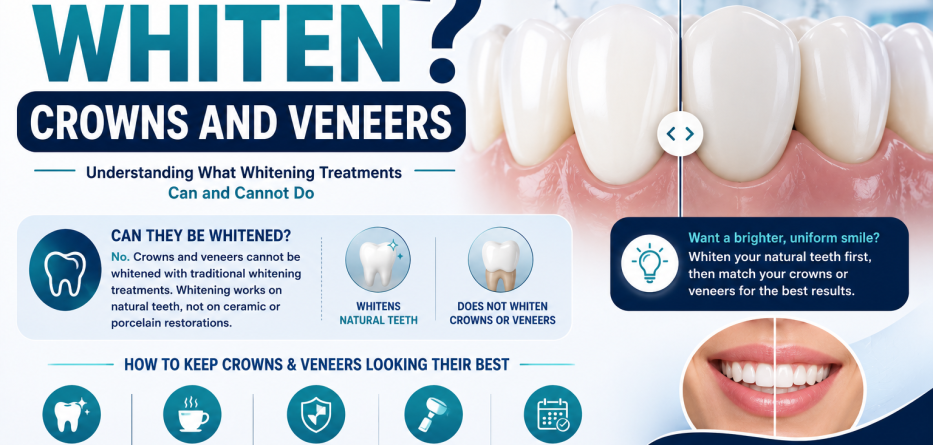
A bright, white smile is one of the most sought-after cosmetic dental goals. Many people turn to teeth whitening treatments to remove stains and improve the appearance of their teeth. However, if you have dental crowns or veneers, you may wonder the following: Can crowns and veneers be whitened like natural teeth?
The answer is not as straightforward as many patients expect. While professional whitening treatments can effectively lighten natural tooth enamel, they do not work the same way on dental restorations such as crowns and veneers.
Understanding how crowns and veneers respond to whitening treatments can help you make informed decisions about maintaining a beautiful and uniform smile. In this guide, we’ll explain whether crowns and veneers can be whitened, why they react differently, and what options are available if your restorations no longer match your natural teeth.
Quick Answer: Can Crowns and Veneers Be Whitened?
Short Answer
No. Dental crowns and veneers cannot be whitened using traditional teeth whitening products or professional bleaching treatments.
Unlike natural teeth, crowns and veneers are made from materials such as porcelain, ceramic, or composite resin. These materials do not respond to whitening agents like hydrogen peroxide or carbamide peroxide.
If a crown or veneer becomes discolored or no longer matches surrounding teeth, replacement may be necessary to achieve a brighter smile.
What Are Dental Crowns and Veneers?
Dental Crowns
A dental crown is a custom-made cap that covers and protects a damaged or weakened tooth.
Crowns are commonly used for:
- Broken teeth
- Root canal-treated teeth
- Large fillings
- Dental implants
Dental Veneers
Veneers are thin shells bonded to the front surface of teeth to improve appearance.
They are often used to correct:
- Tooth discoloration
- Minor chips
- Gaps between teeth
- Uneven tooth shapes
Both crowns and veneers are designed to mimic the appearance of natural teeth.
Why Don’t Crowns and Veneers Whiten?
Natural teeth contain microscopic pores that allow whitening agents to penetrate and break down stain molecules.
Porcelain and ceramic restorations are different.
Key Reasons
- Non-porous surfaces
- Stain-resistant materials
- Artificial construction
- No enamel structure
Because whitening products cannot penetrate these materials, the color remains unchanged.
Can Crowns and Veneers Become Stained?
Yes, but not in the same way as natural teeth.
Porcelain Crowns and Veneers
High-quality porcelain is highly resistant to staining.
However, surface stains may develop from:
- Coffee
- Tea
- Red wine
- Tobacco products
Composite Veneers
Composite materials are more porous and may stain more easily over time.
Common causes include:
- Smoking
- Dark-colored beverages
- Poor oral hygiene
Professional polishing can often remove surface stains from composite restorations.
What Happens If You Whiten Natural Teeth?
Many patients whiten their natural teeth after receiving crowns or veneers.
This can create a noticeable color mismatch.
Example
If your crown was matched to a natural tooth shade years ago and your natural teeth are later whitened, the restoration may appear darker compared to surrounding teeth.
This is one of the most common cosmetic concerns after whitening treatment.
How to Make Crowns and Veneers Look Whiter
Although whitening treatments won’t change restoration color, several options can improve appearance.
Professional Cleaning
A professional dental cleaning can remove:
- Surface stains
- Plaque
- Tartar buildup
This often restores some of the original brightness of crowns and veneers.
Professional Polishing
Dentists can polish porcelain and composite restorations to improve shine and remove superficial discoloration.
Benefits include:
- Smoother surfaces
- Improved aesthetics
- Enhanced stain resistance
Restoration Replacement
If a crown or veneer no longer matches your smile, replacement may be the best solution.
Many patients choose to:
- Whiten natural teeth first.
- Wait for the final shade to stabilize.
- Replace crowns or veneers to match the new color.
This approach creates the most natural and uniform result.
Should You Whiten Before Getting Crowns or Veneers?
In most cosmetic cases, yes.
Many dentists recommend whitening natural teeth before placing crowns or veneers.
Benefits
- Better color matching
- More predictable results
- Longer-lasting smile aesthetics
- Reduced need for future replacement
Once restorations are placed, their shade remains fixed.
Can Whitening Toothpaste Whiten Crowns?
Whitening toothpaste cannot actually whiten crowns or veneers.
However, it may help remove:
- Surface stains
- Food residue
- Plaque buildup
This can improve the appearance of restorations without changing their actual color.
Avoid highly abrasive whitening products, as they may damage the polished surface over time.
How to Keep Crowns and Veneers Looking Bright
Proper maintenance is essential.
Daily Care Tips
- Brush twice daily
- Floss regularly
- Use non-abrasive toothpaste
- Avoid tobacco products
- Limit stain-causing beverages
Professional Care
Schedule regular dental visits for:
- Cleanings
- Examinations
- Polishing
- Restoration evaluation
Consistent care helps maintain long-term aesthetics.
Common Mistakes to Avoid
Using Over-the-Counter Whitening Kits
Many whitening products promise dramatic results but have no effect on crowns or veneers.
Ignoring Color Changes
A darkening crown may indicate the following:
- Wear
- Damage
- Aging restoration
Professional evaluation is recommended.
Choosing Restorations Without Future Planning
Patients who expect future whitening should discuss long-term cosmetic goals with their dentist before treatment.
Crowns vs Veneers and Whitening Comparison
| Feature | Natural Teeth | Crowns | Veneers |
|---|---|---|---|
| Can Be Whitened | Yes | No | No |
| Responds to Bleaching | Yes | No | No |
| May Develop Surface Stains | Yes | Yes | Yes |
| Can Be Professionally Polished | Limited | Yes | Yes |
| May Require Replacement for Color Changes | No | Yes | Yes |
Frequently Asked Questions
Can I whiten porcelain veneers?
No. Porcelain veneers do not respond to whitening treatments.
Can dentists whiten crowns?
No. Crowns cannot be chemically whitened. However, dentists may polish them or recommend replacement.
Why does my crown look darker after teeth whitening?
Your natural teeth have become lighter, while the crown remained the same shade.
Can surface stains be removed from veneers?
Yes. Professional cleaning and polishing may remove surface stains.
Should I whiten before getting veneers?
In most cases, yes. Whitening first allows veneers to be matched to your preferred tooth shade.
How long do crowns and veneers stay white?
High-quality porcelain restorations can maintain their appearance for many years with proper care.
Conclusion
So, can you whiten crowns and veneers?
Unfortunately, traditional teeth whitening treatments do not work on crowns, veneers, or other dental restorations. While these materials are highly resistant to stains, they cannot be lightened using bleaching agents.
The best approach is to whiten your natural teeth before receiving cosmetic restorations or consider replacing older crowns and veneers if they no longer match your smile. Regular dental cleanings, proper oral hygiene, and professional polishing can help keep your restorations looking bright and attractive for years to come.
