
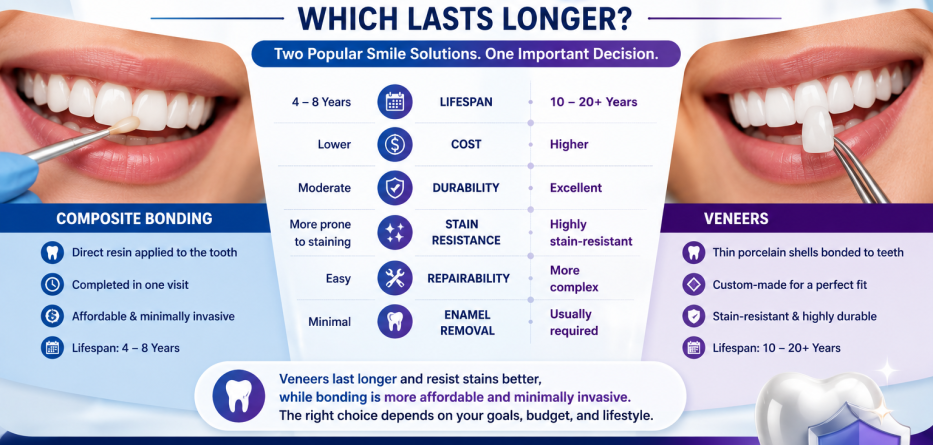
If you’re looking to improve your smile, you’ve likely come across two popular cosmetic dentistry treatments: composite bonding and dental veneers. Both can enhance the appearance of chipped, stained, uneven, or gapped teeth, but many patients have one important question before making a decision:
Which lasts longer—composite bonding or veneers?
While both treatments can produce beautiful results, they differ significantly in durability, maintenance, cost, and longevity. Understanding these differences can help you choose the option that best fits your goals, budget, and lifestyle.
In this guide, we’ll compare composite bonding and veneers, explain how long each treatment lasts, and help you determine which option offers the best long-term value.
What Is Composite Bonding?
Composite bonding is a cosmetic dental procedure that uses tooth-colored composite resin to improve the appearance of teeth.
The resin is carefully applied, shaped, and polished to match your natural teeth.
Composite Bonding Can Fix:
- Chipped teeth
- Small gaps
- Minor cracks
- Tooth discoloration
- Uneven tooth shapes
Advantages
- Minimally invasive
- Affordable
- Usually completed in one visit
- Little or no enamel removal
What Are Dental Veneers?
Dental veneers are thin shells custom-made to cover the front surface of teeth.
They are typically made from porcelain or ceramic and are permanently bonded to the tooth.
Veneers can correct:
- Severe discoloration
- Worn teeth
- Gaps
- Misaligned appearance
- Irregular tooth shapes
Advantages
- Highly aesthetic
- Stain-resistant
- Long-lasting
- Natural appearance
Composite Bonding vs Veneers: Quick Comparison
| Feature | Composite Bonding | Porcelain Veneers |
|---|---|---|
| Lifespan | 4–8 Years | 10–20 Years |
| Cost | Lower | Higher |
| Procedure Time | One Visit | Multiple Visits |
| Stain Resistance | Moderate | Excellent |
| Durability | Good | Excellent |
| Repairability | Easy | More Complex |
| Enamel Removal | Minimal | Usually Required |
| Appearance | Natural | Highly Natural |
Which Lasts Longer?
Winner: Veneers
Porcelain veneers generally last significantly longer than composite bonding.
Average Lifespan
| Treatment | Typical Lifespan |
|---|---|
| Composite Bonding | 4–8 Years |
| Porcelain Veneers | 10–20 Years |
With proper care, some veneers can last even longer than 20 years.
Composite bonding, while durable, is more susceptible to:
- Chipping
- Staining
- Wear
- Discoloration
As a result, it often requires touch-ups or replacement sooner.
Why Veneers Last Longer
Several factors contribute to the superior longevity of veneers.
Stronger Materials
Porcelain is significantly stronger than composite resin.
Benefits include:
- Greater durability
- Better resistance to daily wear
- Improved fracture resistance
Better Stain Resistance
Porcelain is non-porous, making it highly resistant to stains.
Veneers maintain their color despite exposure to:
- Coffee
- Tea
- Red wine
- Tobacco
Composite bonding can gradually discolor over time.
Superior Surface Strength
Veneers are designed to withstand normal chewing forces for many years.
The polished porcelain surface is less likely to:
- Scratch
- Stain
- Wear down
Factors That Affect Longevity
Regardless of which option you choose, several factors influence how long the results last.
Oral Hygiene
Good oral care helps protect both veneers and bonded teeth.
Recommendations include:
- Brushing twice daily
- Flossing regularly
- Routine dental visits
Teeth Grinding (Bruxism)
Grinding can shorten the lifespan of both treatments.
Potential damage includes:
- Cracks
- Chips
- Surface wear
Dentists often recommend nightguards for patients with bruxism.
Diet and Habits
Certain habits can increase the risk of damage.
Avoid:
- Chewing ice
- Biting fingernails
- Opening packages with teeth
- Hard candies
Quality of Dental Work
The experience and skill of the cosmetic dentist play a major role in treatment success and longevity.
Proper placement improves:
- Appearance
- Comfort
- Durability
Composite Bonding: Pros and Cons
Pros
- Lower cost
- Fast treatment
- Conservative procedure
- Easily repaired
Cons
- Shorter lifespan
- More prone to staining
- Less durable
- May require periodic maintenance
Veneers: Pros and Cons
Pros
- Long-lasting
- Highly stain-resistant
- Superior aesthetics
- Durable material
Cons
- Higher initial cost
- Usually requires enamel removal
- Replacement can be more expensive
Which Option Offers Better Value?
At first glance, composite bonding appears more affordable.
However, because bonding may need replacement every few years, long-term costs can add up.
Example
| Treatment | Initial Cost | Long-Term Maintenance |
|---|---|---|
| Composite Bonding | Lower | Higher Over Time |
| Veneers | Higher | Lower Long-Term Replacement Frequency |
Many patients find veneers provide better long-term value despite the higher upfront investment.
Who Should Choose Composite Bonding?
Composite bonding may be ideal for patients who:
- Have minor cosmetic concerns
- Want a budget-friendly solution
- Prefer a minimally invasive procedure
- Need quick treatment
Who Should Choose Veneers?
Veneers are often recommended for patients who:
- Want maximum longevity
- Desire dramatic smile improvements
- Have significant discoloration
- Want superior stain resistance
- Prefer long-term cosmetic results
Frequently Asked Questions
How long does composite bonding last?
Most composite bonding treatments last between 4 and 8 years with proper care.
How long do porcelain veneers last?
Porcelain veneers typically last 10 to 20 years and sometimes longer.
Do veneers stain?
Porcelain veneers are highly stain-resistant and maintain their appearance for many years.
Is composite bonding cheaper than veneers?
Yes. Composite bonding generally costs significantly less upfront.
Can composite bonding be repaired?
Yes. One of the advantages of bonding is that repairs are often quick and straightforward.
Are veneers worth the extra cost?
For many patients seeking long-term durability and aesthetics, veneers provide excellent value.
Conclusion
When comparing composite bonding vs veneers, veneers clearly last longer. While composite bonding typically lasts 4–8 years, porcelain veneers often remain beautiful and functional for 10–20 years or more.
However, longevity isn’t the only consideration. Composite bonding offers affordability, convenience, and minimal tooth preparation, making it an excellent option for minor cosmetic improvements. Veneers, on the other hand, provide superior durability, stain resistance, and long-term value.
The best choice ultimately depends on your cosmetic goals, budget, oral health, and expectations. Consulting with an experienced cosmetic dentist can help you determine which treatment is right for your smile.
