
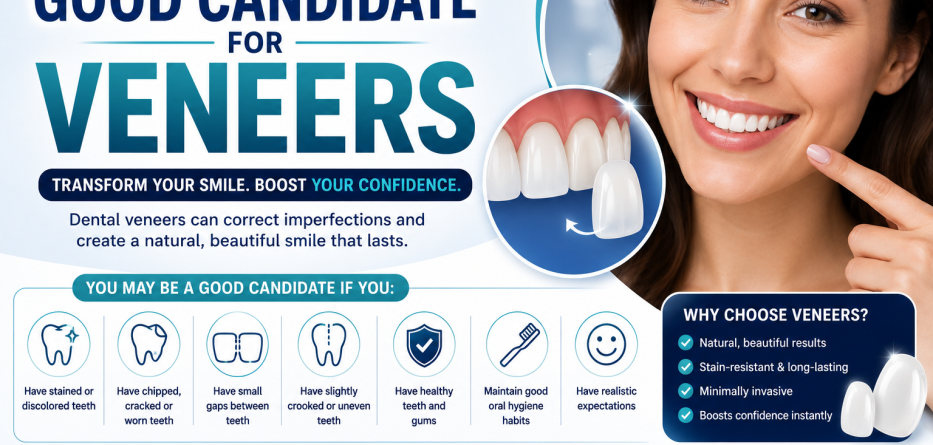
A beautiful smile can boost confidence, improve first impressions, and enhance overall appearance. If you’re unhappy with chipped, stained, uneven, or slightly misaligned teeth, dental veneers may be the solution you’ve been looking for.
Veneers have become one of the most popular cosmetic dentistry treatments because they can dramatically transform a smile while maintaining a natural appearance. However, veneers are not suitable for everyone. Understanding whether you’re a good candidate can help you make an informed decision before beginning treatment.
In this guide, we’ll explore the key signs that indicate you may be an ideal candidate for veneers, the benefits of treatment, and what to expect during the process.
What Are Dental Veneers?
Dental veneers are thin, custom-made shells typically crafted from porcelain or composite resin. They are bonded to the front surface of teeth to improve their appearance.
Veneers can correct:
- Discolored teeth
- Chipped teeth
- Minor gaps
- Uneven teeth
- Worn enamel
- Slightly crooked teeth
The result is a brighter, more symmetrical, and attractive smile.
What Makes Someone a Good Candidate for Veneers?
Not everyone is an ideal candidate for veneers. Dentists evaluate several factors before recommending treatment.
Generally, good candidates have:
- Healthy teeth and gums
- Realistic expectations
- Cosmetic concerns rather than major dental problems
- Good oral hygiene habits
Let’s explore the specific signs in more detail.
Sign #1: You Have Stained or Discolored Teeth
One of the most common reasons patients choose veneers is to improve tooth color.
Some stains do not respond well to professional whitening treatments.
Examples include:
- Tetracycline staining
- Fluorosis
- Internal tooth discoloration
- Age-related darkening
Porcelain veneers provide a long-lasting, bright appearance that resists future staining.
Benefits
- Whiter smile
- Consistent tooth color
- Long-lasting results
Sign #2: You Have Chipped or Cracked Teeth
Minor chips and cracks can affect both appearance and confidence.
Veneers can effectively cover:
- Small fractures
- Chipped edges
- Surface imperfections
They restore a smoother and more balanced smile while protecting the tooth surface.
Sign #3: You Have Small Gaps Between Teeth
If you have minor spaces between teeth, veneers may provide a faster alternative to orthodontic treatment.
Veneers can:
- Close small gaps
- Improve symmetry
- Create a more uniform appearance
For larger spacing issues, orthodontics may still be recommended.
Sign #4: Your Teeth Are Slightly Crooked
Veneers are sometimes referred to as “instant orthodontics.”
They can improve the appearance of:
- Mild crowding
- Slight rotations
- Minor alignment issues
However, severe misalignment typically requires braces or clear aligners.
Sign #5: You Have Worn or Uneven Teeth
Teeth naturally wear down over time due to:
- Aging
- Teeth grinding
- Acid erosion
- Everyday use
Veneers can restore:
- Tooth length
- Shape
- Symmetry
- Smile balance
Many patients choose veneers to achieve a younger-looking smile.
Sign #6: You Have Healthy Teeth and Gums
Good oral health is essential before veneer placement.
Ideal candidates should have:
- Healthy gums
- No active decay
- No untreated gum disease
- Adequate enamel structure
Existing dental issues should be treated before cosmetic procedures begin.
Sign #7: You Have Sufficient Tooth Enamel
Veneers require a small amount of enamel removal for proper placement.
Patients with adequate enamel are generally better candidates because veneers bond most effectively to healthy tooth surfaces.
Your dentist will evaluate enamel thickness during the consultation.
Sign #8: You Practice Good Oral Hygiene
Maintaining veneers requires ongoing care.
Good candidates typically:
- Brush twice daily
- Floss regularly
- Visit the dentist routinely
- Follow preventive dental care recommendations
Healthy habits contribute to longer-lasting results.
Sign #9: You Do Not Grind Your Teeth Excessively
Chronic teeth grinding (bruxism) can place excessive stress on veneers.
If you grind your teeth:
- Veneers may chip or crack
- Additional protection may be needed
Many patients can still receive veneers if they wear a custom nightguard.
Sign #10: You Have Realistic Expectations
Veneers can dramatically improve your smile, but they are not a perfect solution for every dental problem.
Good candidates understand:
- Veneers improve appearance
- Results vary by individual
- Proper maintenance is required
- Veneers may eventually need replacement
A realistic outlook leads to higher satisfaction with treatment outcomes.
Who May Not Be a Good Candidate for Veneers?
Some patients may require alternative treatments first.
Examples include:
Severe Tooth Decay
Cavities should be treated before veneers are considered.
Advanced Gum Disease
Healthy gums are essential for long-term veneer success.
Significant Misalignment
Orthodontic treatment may be more appropriate.
Insufficient Enamel
Alternative restorative treatments may be recommended.
A dental evaluation can determine the best approach.
Benefits of Dental Veneers
Patients often choose veneers because they offer:
Natural Appearance
Modern porcelain veneers closely mimic natural tooth enamel.
Stain Resistance
Porcelain resists staining from coffee, tea, and other foods.
Quick Smile Transformation
Many patients achieve dramatic results within a few appointments.
Long-Lasting Results
With proper care, veneers often last 10–15 years or longer.
What to Expect During the Veneer Process
Step 1: Consultation
Your dentist evaluates your oral health and smile goals.
Step 2: Treatment Planning
Digital imaging and impressions help design your new smile.
Step 3: Tooth Preparation
A small amount of enamel is removed.
Step 4: Veneer Fabrication
Custom veneers are created to match your desired appearance.
Step 5: Bonding
The veneers are permanently attached to your teeth.
The result is a brighter, more balanced smile.
How to Care for Veneers
To maximize longevity:
- Brush twice daily
- Floss regularly
- Avoid chewing hard objects
- Wear a nightguard if necessary
- Attend regular dental checkups
Proper maintenance helps protect your investment.
Frequently Asked Questions
How long do veneers last?
Porcelain veneers typically last between 10 and 15 years, and often longer with excellent care.
Are veneers permanent?
Because a small amount of enamel is removed, veneers are generally considered an irreversible treatment.
Do veneers look natural?
Yes. Modern veneers are designed to closely resemble natural teeth.
Can veneers fix crooked teeth?
Veneers can improve the appearance of mild misalignment but are not a substitute for orthodontics in severe cases.
Are veneers painful?
Most patients experience little to no discomfort during the procedure.
Conclusion
Dental veneers can be an excellent solution for improving the appearance of stained, chipped, uneven, or slightly misaligned teeth. If you have healthy teeth and gums, sufficient enamel, good oral hygiene habits, and realistic expectations, you may be an ideal candidate for veneers.
A consultation with an experienced cosmetic dentist is the best way to determine whether veneers are right for your smile goals. With proper planning and care, veneers can provide a beautiful, confident smile that lasts for many years.
