
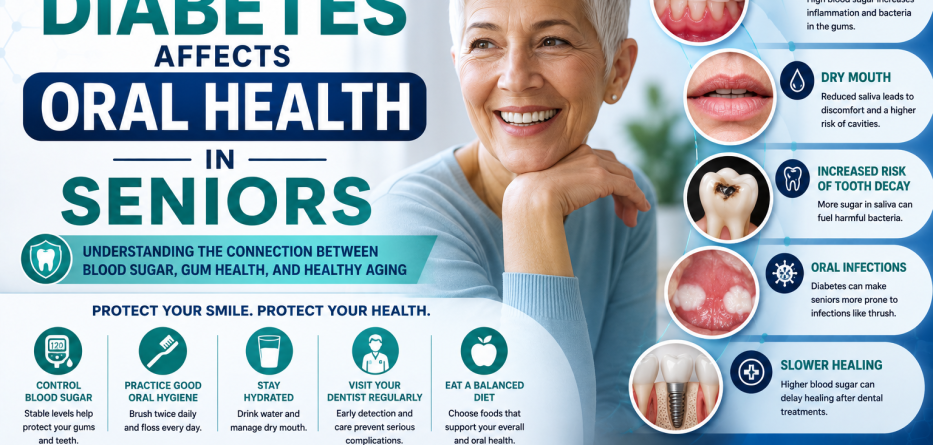
Diabetes is one of the most common chronic health conditions affecting older adults worldwide. While many seniors understand the impact diabetes can have on their heart, kidneys, eyes, and nerves, fewer realize how significantly it can affect their oral health.
High blood sugar levels can increase the risk of gum disease, tooth loss, dry mouth, oral infections, and delayed healing after dental procedures. For seniors, these oral health complications can negatively affect nutrition, speech, comfort, and overall quality of life.
Understanding the connection between diabetes and oral health is essential for maintaining a healthy smile and preventing serious dental problems. In this article, we’ll explore how diabetes affects oral health in seniors, common warning signs, preventive strategies, and the importance of regular dental care.
Understanding the Link Between Diabetes and Oral Health
Diabetes affects the body’s ability to regulate blood sugar levels. When blood glucose remains elevated for extended periods, it can impact blood vessels, immune function, and healing processes throughout the body—including the mouth.
How High Blood Sugar Affects the Mouth
- Increases bacteria growth
- Promotes plaque buildup
- Reduces saliva production
- Weakens the immune system
- Slows tissue healing
These changes make seniors with diabetes more vulnerable to oral health complications.
Why Seniors Are at Greater Risk
Older adults often face additional challenges that increase their risk of dental problems.
Risk Factors Include
- Aging immune systems
- Reduced saliva production
- Existing gum disease
- Multiple medications
- Difficulty maintaining oral hygiene
- Chronic health conditions
When combined with diabetes, these factors can significantly impact oral health.
Common Oral Health Problems Linked to Diabetes
1. Gum Disease (Periodontal Disease)
Gum disease is one of the most common oral health complications associated with diabetes.
High blood sugar levels create an environment where harmful bacteria thrive, increasing inflammation in the gums.
Symptoms
- Red or swollen gums
- Bleeding during brushing
- Gum recession
- Persistent bad breath
- Loose teeth
Studies have shown that people with diabetes are significantly more likely to develop severe gum disease than those without diabetes.
2. Dry Mouth (Xerostomia)
Many seniors with diabetes experience dry mouth due to elevated blood sugar levels and medication side effects.
Symptoms
- Sticky feeling in the mouth
- Difficulty swallowing
- Cracked lips
- Sore throat
- Increased thirst
Why It Matters
Saliva helps:
- Neutralize acids
- Wash away food particles
- Protect against bacteria
Reduced saliva increases the risk of cavities and oral infections.
3. Increased Risk of Tooth Decay
Higher glucose levels in saliva provide additional fuel for harmful bacteria.
This can increase the likelihood of:
- Cavities
- Enamel erosion
- Tooth sensitivity
- Tooth loss
Maintaining blood sugar control helps reduce this risk.
4. Oral Thrush and Fungal Infections
Diabetes can increase susceptibility to fungal infections such as oral thrush.
Symptoms of Oral Thrush
- White patches inside the mouth
- Redness
- Burning sensation
- Difficulty swallowing
- Loss of taste
Seniors who wear dentures may be especially vulnerable.
5. Slow Healing After Dental Procedures
Diabetes can impair blood circulation and reduce the body’s healing ability.
This may affect recovery after:
- Tooth extractions
- Dental implant placement
- Gum surgery
- Other oral procedures
Good blood sugar management can improve healing outcomes.
6. Tooth Loss
Untreated gum disease remains one of the leading causes of tooth loss among seniors.
Because diabetes increases the severity of periodontal disease, it also raises the risk of losing teeth.
Consequences of tooth loss include:
- Difficulty eating
- Poor nutrition
- Speech problems
- Reduced confidence
Preventive dental care is essential.
The Two-Way Relationship Between Diabetes and Gum Disease
The relationship between diabetes and gum disease works both ways.
Diabetes Increases the Risk of Gum Disease
High blood sugar promotes bacterial growth and inflammation.
Gum Disease Can Worsen Diabetes
Chronic gum infections may increase inflammation throughout the body, making blood sugar levels harder to control.
This creates a cycle that can negatively affect both oral and overall health.
Warning Signs Seniors Should Never Ignore
Seek dental evaluation if you experience:
- Bleeding gums
- Loose teeth
- Persistent bad breath
- Mouth sores
- Dry mouth
- Tooth sensitivity
- Swollen gums
- Difficulty chewing
Early intervention often prevents more serious complications.
How Seniors with Diabetes Can Protect Their Oral Health
Maintain Good Blood Sugar Control
Managing diabetes effectively is one of the best ways to protect oral health.
Benefits include:
- Reduced inflammation
- Better healing
- Lower infection risk
- Healthier gums
Brush and Floss Daily
Recommended routine:
- Brush twice daily using fluoride toothpaste
- Floss once daily
- Clean dentures properly if worn
Consistent oral hygiene reduces plaque and bacteria buildup.
Stay Hydrated
Drinking water regularly can help combat dry mouth and improve oral comfort.
Sugar-free gum may also stimulate saliva production.
Schedule Regular Dental Checkups
Dental visits every six months allow professionals to:
- Monitor gum health
- Detect early signs of disease
- Remove plaque and tartar
- Provide preventive care
Patients with diabetes may require more frequent visits.
Avoid Tobacco Products
Smoking significantly increases the risk of:
- Gum disease
- Tooth loss
- Oral cancer
- Delayed healing
Quitting tobacco improves both oral and overall health.
The Importance of Nutrition
Healthy eating supports both diabetes management and oral health.
Recommended Foods
- Leafy vegetables
- Lean proteins
- Whole grains
- Low-sugar fruits
- Dairy products
Limit
- Sugary snacks
- Sweetened beverages
- Processed foods
A balanced diet benefits the entire body, including the mouth.
Frequently Asked Questions
Can diabetes cause tooth loss?
Yes. Diabetes increases the risk of gum disease, which can eventually lead to tooth loss if left untreated.
Why do diabetics experience dry mouth?
High blood sugar levels and certain medications can reduce saliva production.
Is gum disease more common in seniors with diabetes?
Yes. Diabetes weakens the body’s ability to fight infections, increasing susceptibility to gum disease.
Can dental treatment help improve diabetes control?
Research suggests that treating gum disease may contribute to better blood sugar management.
How often should seniors with diabetes visit the dentist?
Most should visit every six months, although some may benefit from more frequent appointments.
Conclusion
Diabetes can have a significant impact on oral health, especially among seniors. From gum disease and dry mouth to tooth loss and delayed healing, elevated blood sugar levels create challenges that require proactive care.
The good news is that many diabetes-related dental problems can be prevented through proper blood sugar control, good oral hygiene, healthy lifestyle choices, and regular dental visits. By understanding the connection between diabetes and oral health, seniors can take important steps toward preserving their smile and improving their overall well-being.
