
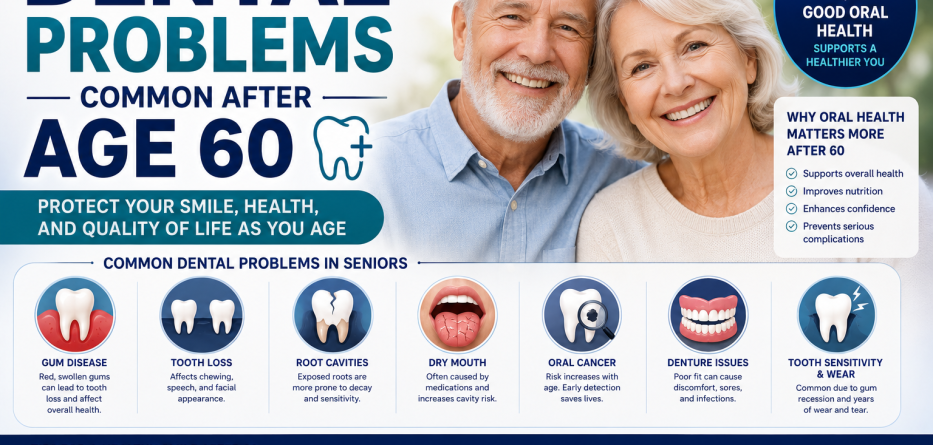
As we age, maintaining good oral health becomes increasingly important. While advances in dental care have helped more people keep their natural teeth longer, adults over 60 are still more susceptible to certain dental problems. Age-related changes, medications, chronic health conditions, and years of wear and tear can all affect oral health.
Ignoring dental issues can impact not only your smile but also your overall health, nutrition, and quality of life. Fortunately, many common dental problems after age 60 can be prevented or treated with proper care and regular dental visits.
In this guide, we’ll explore the most common dental problems seniors face, their causes, symptoms, and practical ways to maintain a healthy smile as you age.
Why Oral Health Changes After Age 60
Aging itself doesn’t cause dental disease, but several factors increase the risk of oral health problems.
These include:
- Natural wear and tear on teeth
- Reduced saliva production
- Chronic health conditions
- Prescription medications
- Gum recession
- Decreased immune function
Understanding these changes helps seniors take proactive steps to protect their oral health.
1. Gum Disease (Periodontal Disease)
Gum disease is one of the most common dental problems among older adults.
It develops when plaque and bacteria accumulate along the gumline, causing inflammation and infection.
Symptoms
- Red or swollen gums
- Bleeding while brushing
- Persistent bad breath
- Gum recession
- Loose teeth
Why It’s Serious
Advanced gum disease can lead to tooth loss and has been linked to:
- Heart disease
- Diabetes complications
- Respiratory infections
Prevention Tips
- Brush twice daily
- Floss regularly
- Schedule professional cleanings
- Avoid smoking
2. Tooth Loss
Although tooth loss is less common today than in previous generations, it remains a significant concern for many seniors.
Common Causes
- Advanced gum disease
- Severe tooth decay
- Dental trauma
- Chronic health conditions
Consequences of Missing Teeth
- Difficulty chewing
- Speech problems
- Bone loss
- Facial sagging
- Reduced self-confidence
Modern solutions such as dental implants and implant-supported dentures can effectively restore function and appearance.
3. Dry Mouth (Xerostomia)
Dry mouth affects millions of older adults and is often caused by medications.
Common Medication Categories
- Blood pressure medications
- Antidepressants
- Allergy medications
- Diuretics
Symptoms
- Sticky feeling in the mouth
- Difficulty swallowing
- Increased thirst
- Bad breath
- Mouth sores
Risks
Saliva helps protect teeth from decay. Reduced saliva increases the risk of cavities and oral infections.
Management Tips
- Drink water frequently
- Use sugar-free gum
- Avoid tobacco and alcohol
- Discuss medication alternatives with your doctor
4. Root Cavities
As gums recede with age, tooth roots become exposed.
Unlike enamel, root surfaces are softer and more vulnerable to decay.
Risk Factors
- Dry mouth
- Poor oral hygiene
- Gum recession
- High-sugar diet
Prevention
- Fluoride toothpaste
- Professional fluoride treatments
- Regular dental exams
- Proper brushing techniques
5. Tooth Sensitivity
Many seniors experience increased sensitivity to hot, cold, sweet, or acidic foods.
Causes
- Gum recession
- Worn enamel
- Tooth fractures
- Root exposure
Treatment Options
- Desensitizing toothpaste
- Fluoride treatments
- Dental bonding
- Gum grafting procedures
Persistent sensitivity should always be evaluated by a dentist.
6. Oral Cancer
The risk of oral cancer increases with age, particularly after 60.
Warning Signs
- Persistent mouth sores
- Red or white patches
- Difficulty swallowing
- Chronic hoarseness
- Unexplained lumps
Risk Factors
- Tobacco use
- Alcohol consumption
- HPV infection
- Excessive sun exposure (lip cancer)
Regular dental examinations play a critical role in early detection.
7. Denture Problems
Many older adults wear full or partial dentures.
Common issues include:
- Poor fit
- Gum irritation
- Difficulty eating
- Sore spots
- Denture-related infections
Solutions
- Regular denture adjustments
- Professional cleanings
- Implant-supported dentures
- Proper denture hygiene
Well-fitting dentures improve comfort and quality of life.
8. Tooth Wear and Fractures
Decades of chewing can gradually wear down teeth.
Common Causes
- Teeth grinding (bruxism)
- Acid erosion
- Aging restorations
- Accidental trauma
Symptoms
- Flattened teeth
- Cracks
- Sensitivity
- Pain while chewing
Early treatment can prevent more extensive damage.
9. Oral Infections
Older adults may have a higher risk of oral infections due to reduced immune function and dry mouth.
Common Infections
- Oral thrush
- Gum infections
- Abscesses
Symptoms
- White patches
- Swelling
- Pain
- Difficulty eating
Prompt treatment helps prevent complications.
10. Difficulty Chewing and Nutrition Issues
Oral health problems can affect nutrition by making it difficult to chew healthy foods.
This may lead to reduced intake of:
- Fruits
- Vegetables
- Lean proteins
Poor nutrition can negatively affect overall health and healing.
Maintaining functional teeth supports better dietary choices and overall wellness.
How to Maintain Good Oral Health After Age 60
Daily Oral Care Routine
- Brush twice daily using fluoride toothpaste.
- Floss once per day.
- Clean dentures properly.
- Use antimicrobial mouthwash if recommended.
- Stay hydrated.
Professional Dental Care
Regular dental visits allow early detection of:
- Cavities
- Gum disease
- Oral cancer
- Denture issues
Most seniors benefit from dental checkups every six months.
The Connection Between Oral Health and Overall Health
Research continues to demonstrate the link between oral health and systemic health.
Poor oral health has been associated with:
- Cardiovascular disease
- Diabetes
- Pneumonia
- Cognitive decline
Maintaining healthy teeth and gums contributes to better overall well-being and quality of life.
Frequently Asked Questions
What is the most common dental problem after age 60?
Gum disease is one of the most common oral health issues affecting older adults.
Why do seniors experience dry mouth?
Dry mouth is often caused by medications, medical conditions, or reduced saliva production.
Can older adults get dental implants?
Yes. Many healthy seniors are excellent candidates for dental implants.
How often should seniors visit the dentist?
Most dentists recommend checkups every six months, although some patients may require more frequent visits.
Is tooth loss a normal part of aging?
No. Tooth loss is usually the result of disease, injury, or neglect rather than aging itself.
Conclusion
While aging brings unique oral health challenges, many common dental problems after age 60 can be prevented or successfully managed with proper care. Gum disease, dry mouth, root cavities, tooth loss, and oral cancer are among the most frequently encountered concerns, but regular dental visits and good oral hygiene can significantly reduce risks.
By staying proactive and prioritizing oral health, seniors can maintain strong teeth, healthy gums, improved nutrition, and a confident smile well into their later years.
