

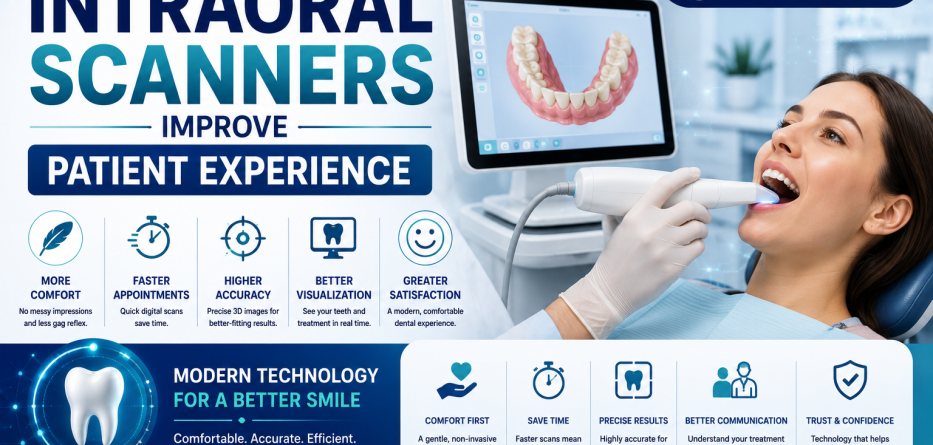
Technology has transformed nearly every aspect of modern dentistry, and one of the most significant innovations is the intraoral scanner. Traditional dental impressions often involved uncomfortable trays filled with impression material, causing gagging, discomfort, and longer appointment times. Today, intraoral scanners provide a faster, more accurate, and more comfortable alternative.
Intraoral scanning technology allows dentists to create highly detailed digital impressions of a patient’s teeth and gums in minutes. Beyond improving clinical accuracy, these scanners significantly enhance the overall patient experience.
In this article, we’ll explore how intraoral scanners work, their benefits, and why patients increasingly prefer digital impressions over traditional methods.
What Is an Intraoral Scanner?
An intraoral scanner is a handheld digital device used to capture highly detailed 3D images of the teeth, gums, and oral structures.
Instead of using traditional impression materials, the scanner takes thousands of images per second and combines them into a precise digital model.
Key Features
- High-resolution imaging
- Real-time digital impressions
- Fast scanning process
- Enhanced diagnostic capabilities
- Improved treatment planning
The resulting digital model can be used for crowns, bridges, veneers, orthodontics, implants, and other dental treatments.
How Do Intraoral Scanners Work?
The scanner is moved gently around the patient’s mouth while capturing images.
The Process
- The dentist scans the teeth and gums.
- Images are collected instantly.
- Specialized software creates a 3D digital model.
- The model appears on a computer screen in real time.
- The data is used for diagnosis and treatment planning.
The entire process typically takes only a few minutes.
Why Patient Experience Matters in Dentistry
Many patients feel anxious about dental visits.
Common concerns include:
- Discomfort
- Gag reflexes
- Long appointments
- Fear of procedures
- Uncertainty about treatment
Modern dental technology aims to reduce these concerns and create a more comfortable experience.
Intraoral scanners play a major role in achieving this goal.
1. Greater Comfort During Dental Visits
One of the biggest advantages of intraoral scanners is patient comfort.
Traditional impressions often require bulky trays filled with impression material that remain in the mouth for several minutes.
This can cause:
- Gagging
- Claustrophobic feelings
- Breathing discomfort
- Anxiety
Benefits of Digital Scanning
- No messy impression materials
- Minimal discomfort
- Faster procedure
- More pleasant experience
Patients who previously disliked dental impressions often prefer digital scanning.
2. Reduced Gag Reflex
Many individuals struggle with a strong gag reflex during conventional impressions.
Intraoral scanners significantly reduce this issue because:
- No large trays are inserted
- Scanning is completed in sections
- The process is quicker
- Less material touches the throat
This makes treatment more comfortable for sensitive patients.
3. Faster Appointments
Time is valuable for both patients and dental professionals.
Traditional impressions may require:
- Tray preparation
- Impression material mixing
- Setting time
- Potential retakes
Digital impressions eliminate many of these steps.
Time-Saving Benefits
- Faster data capture
- Instant image generation
- Fewer retakes
- Streamlined workflow
Shorter appointments often lead to a better patient experience.
4. Improved Accuracy
Accuracy is essential for successful dental restorations.
Intraoral scanners capture highly detailed images that reduce the risk of errors.
Benefits of Greater Accuracy
- Better-fitting crowns
- Improved veneers
- More precise aligners
- Enhanced implant planning
Improved accuracy often means fewer adjustments and follow-up visits.
5. Better Communication Between Dentist and Patient
One of the most valuable features of digital scanning is visualization.
Patients can see detailed images of their teeth and oral structures on a screen.
This Helps Patients
- Understand dental problems
- Visualize treatment plans
- Ask informed questions
- Feel more involved in care decisions
Greater transparency builds trust and confidence.
6. Enhanced Treatment Planning
Digital scans provide dentists with comprehensive information.
Applications include:
- Dental implants
- Orthodontics
- Veneers
- Crowns and bridges
- Smile makeovers
The ability to analyze detailed 3D images helps improve treatment outcomes.
7. Fewer Impression Retakes
Traditional impressions sometimes fail due to:
- Air bubbles
- Distortion
- Patient movement
- Material issues
When problems occur, impressions must be repeated.
Digital scanners allow dentists to identify missing data immediately and rescan only specific areas.
This reduces frustration for patients.
8. Improved Dental Implant Experience
Intraoral scanners are particularly beneficial for implant dentistry.
Advantages for Implant Patients
- Accurate implant planning
- Better prosthetic design
- Improved crown fit
- More predictable results
Digital workflows contribute to higher patient satisfaction and treatment efficiency.
9. Eco-Friendly and Cleaner Process
Traditional impressions generate waste from:
- Plastic trays
- Impression materials
- Shipping materials
Digital impressions reduce environmental impact by minimizing disposable materials.
Patients also appreciate the cleaner and less messy process.
10. Better Outcomes for Cosmetic Dentistry
Cosmetic treatments require exceptional precision.
Intraoral scanners improve the planning and design of:
- Veneers
- Smile makeovers
- Cosmetic crowns
- Clear aligners
Patients benefit from improved aesthetics and more predictable results.
Intraoral Scanners vs Traditional Impressions
| Feature | Intraoral Scanners | Traditional Impressions |
|---|---|---|
| Comfort | Excellent | Moderate |
| Accuracy | High | Good |
| Gag Reflex Issues | Minimal | Common |
| Speed | Fast | Slower |
| Visualization | Real-Time | Limited |
| Retakes | Less Frequent | More Frequent |
| Patient Satisfaction | High | Moderate |
This comparison highlights why digital scanning is becoming the preferred option in modern dentistry.
Are Intraoral Scanners Safe?
Yes.
Intraoral scanners are non-invasive and use light-based technology to capture images.
They:
- Do not involve radiation
- Do not require impression materials
- Are safe for adults and children
- Cause minimal discomfort
The procedure is considered extremely safe.
The Future of Digital Dentistry
Intraoral scanners are becoming increasingly integrated with:
- Artificial intelligence
- CAD/CAM systems
- 3D printing
- Digital smile design
- Guided implant surgery
These technologies continue to improve patient care and treatment efficiency.
Frequently Asked Questions
What is an intraoral scanner?
An intraoral scanner is a handheld device that creates digital 3D impressions of teeth and gums.
Are digital impressions more accurate?
Yes. Digital scans often provide greater precision than traditional impressions.
Do intraoral scanners hurt?
No. The procedure is painless and non-invasive.
Can intraoral scanners replace traditional impressions?
In many cases, yes. Digital impressions are now widely used for restorative, cosmetic, and orthodontic treatments.
How long does an intraoral scan take?
Most scans are completed within a few minutes.
Conclusion
Intraoral scanners have revolutionized the dental experience by making procedures faster, more comfortable, and more accurate. From reducing gag reflexes and appointment times to improving treatment planning and patient communication, digital scanning technology offers significant advantages over traditional impressions.
As digital dentistry continues to advance, intraoral scanners will play an increasingly important role in delivering high-quality care and enhancing patient satisfaction. For many patients, they represent a major step toward a more comfortable and stress-free dental visit.

