

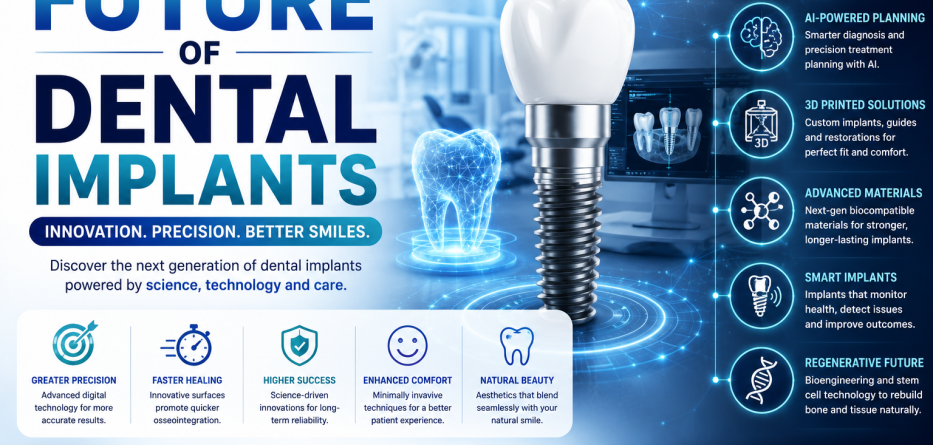
Dental implants have already transformed modern dentistry by providing a durable, natural-looking solution for missing teeth. With success rates exceeding 95% and the ability to restore both function and confidence, implants have become the gold standard for tooth replacement. But the field of implant dentistry continues to evolve.
Advancements in digital technology, artificial intelligence, biomaterials, and regenerative medicine are reshaping the future of dental implants. These innovations aim to improve treatment precision, reduce healing times, enhance patient comfort, and increase long-term success rates.
In this article, we’ll explore the exciting future of dental implants and the groundbreaking technologies that may soon revolutionize the way missing teeth are replaced.
How Dental Implants Have Evolved
Dental implant technology has come a long way since the discovery of osseointegration in the 1960s.
Major advancements include:
- Titanium implant development
- Improved implant surfaces
- Digital imaging technology
- Computer-guided implant placement
- Immediate-load implants
- Full-arch implant restorations
Today’s innovations are laying the foundation for even more predictable and patient-friendly treatments.
Artificial Intelligence in Implant Dentistry
Artificial Intelligence (AI) is expected to play a major role in the future of dental implant planning.
How AI Can Help
AI-powered systems can analyze the following:
- Bone density
- Jaw anatomy
- Bite alignment
- Implant positioning
- Treatment risks
Benefits
- Greater treatment accuracy
- Faster diagnosis
- Improved surgical planning
- Reduced complications
- Personalized treatment recommendations
AI may soon become an essential tool for implant dentists worldwide.
3D Printing and Custom Dental Implants
One of the most exciting developments in dentistry is 3D printing.
Future Applications
- Custom implant designs
- Surgical guides
- Temporary restorations
- Implant-supported prosthetics
Benefits
- Faster manufacturing
- Improved customization
- Better fit and comfort
- Reduced treatment timelines
Customized implants could provide superior results for patients with unique anatomical needs.
Advanced Implant Materials
Titanium remains the gold standard for dental implants, but researchers are exploring new materials that may offer additional benefits.
Emerging Materials
- Zirconia implants
- Bioactive ceramics
- Nanotechnology-enhanced surfaces
- Hybrid implant materials
Potential Advantages
- Improved aesthetics
- Enhanced tissue compatibility
- Faster healing
- Increased resistance to bacterial buildup
Future implant materials may further improve both function and appearance.
Faster Osseointegration Technologies
Osseointegration is the process that allows implants to bond with the jawbone.
Researchers are developing implant surfaces that encourage faster bone growth.
New Surface Technologies
- Nano-textured coatings
- Bioactive surfaces
- Growth factor applications
- Cellular stimulation technologies
Expected Benefits
- Shorter healing times
- Faster restoration placement
- Improved implant stability
- Higher success rates
Future patients may receive permanent restorations much sooner than today.
Regenerative Dentistry and Tissue Engineering
Regenerative medicine is one of the most promising areas of dental research.
Scientists are exploring ways to regenerate:
- Bone tissue
- Gum tissue
- Periodontal structures
Future Possibilities
- Stem-cell-assisted healing
- Bioengineered bone regeneration
- Improved bone graft materials
- Enhanced tissue repair
These technologies could make implant treatment available to more patients with severe bone loss.
Smart Dental Implants
Imagine dental implants that monitor their own health.
Researchers are investigating smart implant systems that may include:
- Embedded sensors
- Wireless monitoring
- Early infection detection
- Bite-force analysis
Potential Benefits
- Early identification of complications
- Improved maintenance
- Better long-term outcomes
- Remote monitoring capabilities
Smart implants could significantly improve preventive care and implant longevity.
Computer-Guided Implant Surgery
Digital dentistry is already transforming implant placement.
Future improvements may include:
- Real-time navigation systems
- Robotic-assisted surgery
- Enhanced digital workflows
- Virtual reality treatment planning
Advantages
- Greater precision
- Less invasive procedures
- Reduced recovery time
- Improved patient comfort
These technologies will continue making implant procedures safer and more predictable.
Same-Day Dental Implants
Patients increasingly seek faster treatment options.
Advancements in implant design and surgical techniques are expanding the use of:
- Immediate implant placement
- Same-day crowns
- Accelerated healing protocols
Future Outlook
More patients may receive fully functional implant restorations within a single visit.
This could dramatically reduce treatment timelines while maintaining excellent outcomes.
Personalized Implant Dentistry
Future dental implant treatment will likely become highly personalized.
Factors considered may include:
- Genetic information
- Bone quality
- Medical history
- Lifestyle habits
- Individual healing patterns
Customized treatment plans could improve predictability and reduce complications.
Minimally Invasive Implant Procedures
Future surgical approaches will focus on reducing trauma and improving recovery.
Emerging Techniques
- Flapless implant surgery
- Digital-guided placement
- Precision instrumentation
- Enhanced anesthesia methods
Benefits
- Less discomfort
- Faster healing
- Reduced swelling
- Improved patient experience
Minimally invasive techniques are expected to become increasingly common.
The Role of Digital Dentistry
Digital technologies will continue shaping the future of implant treatment.
Key Innovations
- Intraoral scanners
- Digital smile design
- Virtual treatment simulations
- Cloud-based treatment planning
These tools improve communication, accuracy, and treatment outcomes.
Challenges Facing Future Implant Technology
Despite exciting advancements, several challenges remain.
Key Considerations
- Treatment costs
- Accessibility
- Regulatory approval
- Long-term clinical validation
- Technology adoption
Researchers and manufacturers continue working to overcome these obstacles.
What Patients Can Expect in the Next Decade
Over the next ten years, patients may experience:
- Faster implant placement
- Shorter healing periods
- Greater customization
- Improved aesthetics
- More comfortable procedures
- Higher success rates
- Enhanced long-term monitoring
The future of implant dentistry looks exceptionally promising.
Frequently Asked Questions
Will dental implants become more affordable?
As technology advances and manufacturing improves, implant procedures may become more cost-effective over time.
Are zirconia implants the future?
Zirconia implants show promise, particularly for patients seeking metal-free alternatives, although titanium remains the most widely used material today.
Can AI improve dental implant success?
Yes. AI can assist with diagnosis, planning, risk assessment, and treatment optimization.
What are smart dental implants?
Smart implants are experimental devices equipped with sensors that may monitor implant health and detect complications.
Will healing times become shorter?
Emerging implant surface technologies and regenerative treatments may significantly reduce healing periods in the future.
Conclusion
The future of dental implants is being shaped by remarkable advancements in technology, materials science, artificial intelligence, and regenerative medicine. From smart implants and robotic surgery to bioengineered tissues and personalized treatment planning, the next generation of implant dentistry promises to deliver safer, faster, and more effective outcomes.
As research continues to push the boundaries of innovation, patients can look forward to dental implant treatments that are more comfortable, precise, and accessible than ever before. The future of dental implants is not just about replacing missing teeth—it’s about transforming oral healthcare and improving quality of life for millions of people worldwide.

