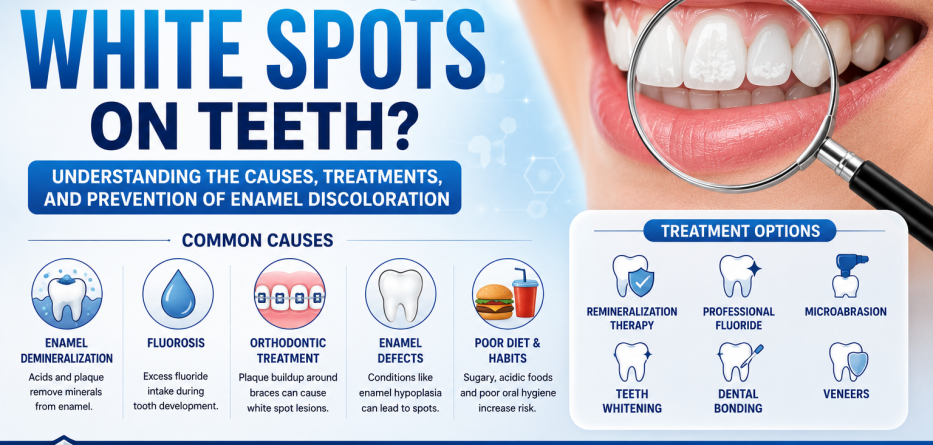
White spots on teeth are a common dental concern that can affect both children and adults. While they may seem like a cosmetic issue at first, these chalky white patches can sometimes indicate underlying problems with tooth enamel or oral health.
The appearance of white spots can result from several factors, including poor oral hygiene, excessive fluoride exposure, enamel defects, dietary habits, or orthodontic treatment. Understanding the cause is essential because treatment options vary depending on the underlying condition.
In this guide, we’ll explore what causes white spots on teeth, how dentists diagnose them, available treatment options, and practical ways to prevent them from developing.
What Are White Spots on Teeth?
White spots are areas of tooth enamel that appear lighter or more opaque than the surrounding tooth surface.
These spots may:
- Appear chalky or cloudy
- Affect one tooth or multiple teeth
- Vary in size and shape
- Occur on front or back teeth
In many cases, white spots indicate changes in enamel mineralization.
Quick Definition
White spots on teeth are areas of weakened or altered enamel caused by factors such as demineralization, fluorosis, enamel defects, or poor oral hygiene.
Common Causes of White Spots on Teeth
1. Enamel Demineralization
One of the most common causes of white spots is enamel demineralization.
This occurs when acids produced by oral bacteria remove essential minerals from tooth enamel.
Risk Factors
- Poor oral hygiene
- Frequent snacking
- Sugary foods and beverages
- Plaque buildup
Early demineralization is often the first stage of tooth decay.
Signs
- Chalky white patches
- Increased tooth sensitivity
- Areas near the gumline
If treated early, the process may be reversible.
2. Fluorosis
Dental fluorosis occurs when excessive fluoride is consumed during childhood while teeth are developing.
Common Sources
- Swallowing toothpaste
- Fluoridated water
- Fluoride supplements
Symptoms
- White streaks
- White spots
- Mild enamel discoloration
Most cases are mild and primarily cosmetic.
3. Poor Oral Hygiene During Orthodontic Treatment
White spots frequently develop around braces.
Brackets and wires create areas where plaque can accumulate.
Why It Happens
Plaque bacteria produce acids that weaken enamel around orthodontic appliances.
Common Locations
- Around brackets
- Near the gumline
- Between teeth
Proper brushing and flossing during orthodontic treatment are essential.
4. Enamel Hypoplasia
Enamel hypoplasia is a developmental condition in which enamel does not form properly.
Possible Causes
- Nutritional deficiencies
- Premature birth
- Childhood illnesses
- Genetic conditions
Symptoms
- White spots
- Grooves in teeth
- Thin enamel
- Increased cavity risk
Affected teeth may require professional treatment.
5. Poor Nutrition
Certain nutrient deficiencies can impact enamel development.
Important nutrients include:
- Calcium
- Vitamin D
- Phosphorus
Inadequate intake during childhood may contribute to enamel defects and white spots.
6. Dry Mouth
Saliva helps protect teeth by neutralizing acids and supplying minerals that strengthen enamel.
Reduced saliva production can increase the risk of:
- Demineralization
- White spot lesions
- Tooth decay
Causes of Dry Mouth
- Medications
- Medical conditions
- Dehydration
Maintaining adequate hydration supports oral health.
7. Acidic Foods and Drinks
Frequent consumption of acidic products can weaken enamel.
Common culprits include the following:
- Soft drinks
- Sports drinks
- Citrus fruits
- Energy drinks
Over time, acid exposure contributes to enamel erosion and mineral loss.
Are White Spots on Teeth Permanent?
Not always.
The answer depends on the underlying cause.
Reversible White Spots
White spots caused by early demineralization may improve through the following:
- Improved oral hygiene
- Fluoride treatments
- Remineralization therapies
Permanent White Spots
White spots caused by fluorosis or enamel hypoplasia may require cosmetic treatment.
A dental examination can determine the best approach.
How Dentists Diagnose White Spots
Your dentist may perform the following:
Visual Examination
The appearance and location of white spots often provide important clues.
Dental X-Rays
X-rays help identify:
- Early decay
- Enamel defects
- Underlying structural issues
Medical and Dental History Review
Information about childhood fluoride exposure and oral habits can aid diagnosis.
Treatment Options for White Spots on Teeth
1. Remineralization Therapy
For early demineralization, dentists may recommend the following:
- Prescription fluoride treatments
- Calcium phosphate products
- Remineralizing toothpaste
These therapies help restore lost minerals.
2. Professional Fluoride Applications
Fluoride strengthens enamel and may reduce the visibility of some white spots.
Benefits include:
- Enhanced enamel protection
- Reduced cavity risk
- Improved mineral balance
3. Microabrasion
Microabrasion removes a thin outer layer of enamel.
This procedure can improve:
- Mild fluorosis
- Surface enamel discoloration
- Cosmetic appearance
4. Teeth Whitening
Professional whitening can help blend white spots with surrounding enamel.
However, whitening alone may not be suitable for all cases.
Your dentist can determine if it’s appropriate.
5. Dental Bonding
Tooth-colored composite resin is applied to mask visible white spots.
Benefits include:
- Immediate improvement
- Conservative treatment
- Natural appearance
6. Veneers
For severe discoloration or enamel defects, veneers may provide the best cosmetic solution.
Veneers:
- Cover the front surface of teeth
- Improve color and shape
- Deliver long-lasting results
How to Prevent White Spots on Teeth
Practice Excellent Oral Hygiene
- Brush twice daily
- Floss every day
- Use fluoride toothpaste
Limit Sugary Foods
Reducing sugar intake helps prevent demineralization.
Stay Hydrated
Adequate saliva production supports enamel health.
Visit Your Dentist Regularly
Routine examinations allow early detection and treatment.
Use Fluoride Properly
Follow age-appropriate fluoride recommendations, especially for children.
White Spots vs. Cavities: What’s the Difference?
| Feature | White Spot Lesions | Cavities |
|---|---|---|
| Appearance | Chalky white areas | Dark holes or pits |
| Stage | Early enamel damage | Advanced decay |
| Pain | Usually none | Often present |
| Reversible | Sometimes | Usually requires treatment |
| Enamel Loss | Minimal | Significant |
White spots may be an early warning sign before cavities develop.
Frequently Asked Questions
Are white spots on teeth harmful?
Some white spots are purely cosmetic, while others may indicate early enamel damage or mineral loss.
Can white spots disappear naturally?
Minor demineralization may improve with proper oral care and remineralization treatments.
Do white spots mean cavities?
Not necessarily, but they can be an early sign of enamel weakening that may eventually lead to cavities.
Can whitening remove white spots?
Whitening may reduce contrast, but it does not always eliminate white spots completely.
Should I see a dentist for white spots?
Yes. A dental examination can determine the cause and appropriate treatment.
Conclusion
White spots on teeth can result from a variety of causes, including enamel demineralization, fluorosis, orthodontic treatment, enamel hypoplasia, and dietary habits. While some cases are purely cosmetic, others may signal early enamel damage that requires professional attention.
The good news is that many white spots can be prevented or treated through proper oral hygiene, regular dental visits, and modern cosmetic dentistry techniques. Understanding the cause of white spots is the first step toward achieving a healthier and more confident smile.