Dental implants are one of the most successful and long-lasting solutions for replacing missing teeth. With proper care, implants can last for decades and provide a natural-looking, fully functional smile. However, several factors can influence implant success, and smoking is among the most significant.
If you’re a smoker considering dental implants, it’s important to understand how tobacco use affects healing, bone health, and long-term implant stability. Numerous studies have shown that smokers face a higher risk of implant complications compared to non-smokers.
In this article, we’ll explore how smoking affects dental implants, the risks involved, and what smokers can do to improve their chances of successful treatment.
Can Smokers Get Dental Implants?
Quick Answer
Yes, smokers can receive dental implants. However, smoking increases the risk of complications, implant failure, and delayed healing.
Many smokers still experience successful outcomes, but they often require closer monitoring and a greater commitment to oral hygiene and post-operative care.
Dentists generally encourage patients to quit smoking before and after implant surgery to maximize treatment success.
Why Smoking Is Harmful to Dental Implant Success
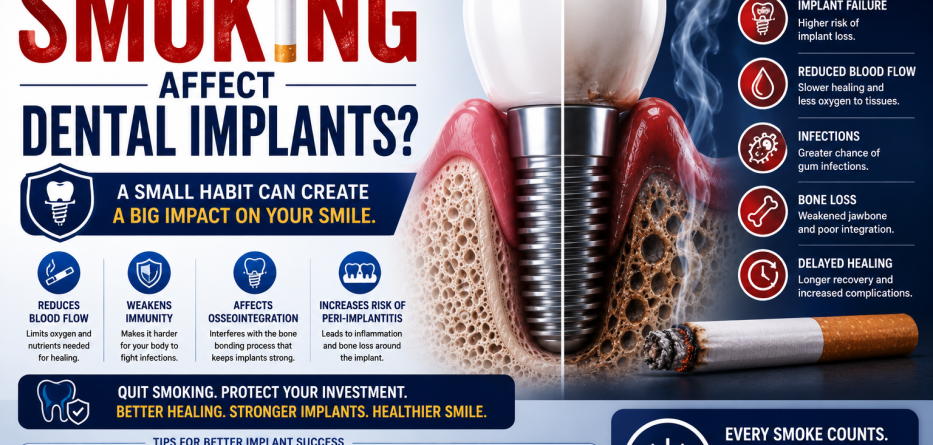
Smoking affects several biological processes that are critical for implant healing and long-term stability.
Tobacco Contains Harmful Chemicals
Cigarette smoke contains thousands of chemicals, including:
- Nicotine
- Carbon monoxide
- Tar
- Toxins that impair healing
These substances can interfere with the body’s natural recovery mechanisms.
Smoking Reduces Blood Flow
One of the most significant effects of smoking is reduced blood circulation.
Nicotine causes blood vessels to constrict, limiting the flow of oxygen and nutrients to healing tissues.
Consequences Include
- Slower healing
- Increased infection risk
- Delayed tissue regeneration
- Poor gum health
Healthy blood flow is essential after implant surgery.
Smoking Interferes with Osseointegration
What Is Osseointegration?
Osseointegration is the process in which the jawbone bonds with the titanium implant.
This biological fusion is the foundation of implant success.
How Smoking Affects It
Smoking can:
- Reduce bone-forming cell activity
- Slow bone regeneration
- Impair implant stability
- Increase the likelihood of implant failure
When osseointegration is compromised, the implant may not properly integrate with the bone.
Increased Risk of Implant Failure
Research consistently shows higher implant failure rates among smokers.
Why Failure Rates Increase
Smoking contributes to:
- Bone loss
- Infection
- Poor healing
- Weakened immune response
Studies suggest that smokers may experience implant failure rates significantly higher than non-smokers.
Smoking and Gum Disease
Healthy gums are essential for supporting dental implants.
Unfortunately, smoking increases the risk of the following:
- Gingivitis
- Periodontitis
- Gum recession
- Peri-implantitis
What Is Peri-Implantitis?
Peri-implantitis is an inflammatory condition affecting the tissues surrounding a dental implant.
Symptoms may include:
- Gum inflammation
- Bleeding
- Bone loss
- Implant mobility
This condition is a leading cause of late implant failure.
Delayed Healing After Implant Surgery
Following implant placement, the body must repair tissue and build new bone around the implant.
Smoking slows this healing process by:
- Limiting oxygen delivery
- Reducing collagen production
- Suppressing immune function
As a result, smokers often experience longer recovery periods.
Does the Number of Cigarettes Matter?
Yes.
Research suggests that the risk of complications generally increases with the amount of tobacco consumed.
Higher Risk Groups
- Heavy smokers
- Long-term smokers
- Patients who continue smoking immediately after surgery
Even reducing tobacco use before treatment may improve outcomes.
Are Vaping and E-Cigarettes Safer for Dental Implants?
Many patients assume vaping is harmless compared to traditional smoking.
However, nicotine-containing e-cigarettes may still:
- Restrict blood flow
- Slow healing
- Affect bone health
- Increase inflammation
While research is ongoing, most implant specialists recommend avoiding all nicotine products during healing.
How Long Should You Stop Smoking Before Implant Surgery?
Many dentists recommend quitting smoking:
Before Surgery
- At least 1–2 weeks before implant placement
After Surgery
- At least 2–8 weeks after surgery
- Longer if possible
The longer a patient remains smoke-free, the better the healing environment becomes.
Benefits of Quitting Smoking Before Dental Implants
Stopping smoking can significantly improve treatment outcomes.
Benefits Include
- Faster healing
- Better blood circulation
- Improved bone regeneration
- Reduced infection risk
- Healthier gums
- Higher implant success rates
Even temporary cessation can positively affect recovery.
Tips for Smokers Considering Dental Implants
1. Be Honest with Your Dentist
Discuss your smoking habits openly so your dentist can develop an appropriate treatment plan.
2. Consider Smoking Cessation Programs
Professional support can improve your chances of quitting successfully.
3. Follow All Post-Operative Instructions
Carefully follow recommendations regarding:
- Medications
- Oral hygiene
- Diet
- Follow-up appointments
4. Maintain Excellent Oral Hygiene
Brush and floss consistently to reduce bacterial buildup.
5. Attend Regular Checkups
Frequent monitoring allows early detection of potential complications.
Can Former Smokers Have Successful Dental Implants?
Absolutely.
Patients who quit smoking before treatment often achieve outcomes similar to non-smokers.
The longer someone remains smoke-free, the greater the improvement in healing and implant stability.
Former smokers are often excellent candidates for implant treatment.
Smoking and Dental Implant Success Rates
| Patient Type | Implant Success Rate |
|---|---|
| Non-Smokers | 95–98% |
| Former Smokers | Similar to Non-Smokers |
| Current Smokers | Lower Success Rates |
Success rates vary based on:
- Smoking frequency
- Overall health
- Bone quality
- Oral hygiene practices
Frequently Asked Questions
Can smokers get dental implants?
Yes. However, smoking increases the risk of complications and implant failure.
Should I quit smoking before implant surgery?
Yes. Quitting before and after surgery significantly improves healing and implant success.
How does smoking affect implant healing?
Smoking reduces blood flow, slows tissue repair, and interferes with bone integration.
Are e-cigarettes safer for dental implants?
Not necessarily. Nicotine-containing vaping products may still impair healing and bone health.
Can a failed implant be replaced?
In many cases, yes. Additional treatment may be required to restore bone and gum health before replacement.
Conclusion
Smoking is one of the most significant risk factors affecting dental implant success. By reducing blood flow, slowing healing, increasing infection risk, and interfering with osseointegration, smoking can compromise both short-term recovery and long-term implant stability.
The good news is that smokers can still achieve successful dental implant outcomes, especially when they work closely with their dentist, follow aftercare instructions, and reduce or eliminate tobacco use. Quitting smoking before treatment remains one of the best steps patients can take to protect their oral health and maximize the lifespan of their dental implants.