
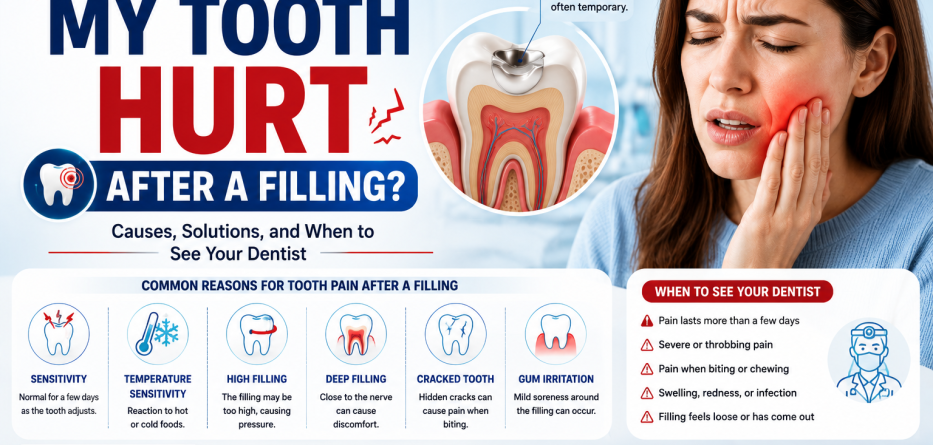
Getting a dental filling is one of the most common dental procedures used to treat cavities and restore damaged teeth. While fillings are generally straightforward and successful, some patients experience tooth sensitivity or discomfort afterward. This often leads to a common question: Why does my tooth hurt after a filling?
In many cases, mild discomfort is completely normal and temporary. However, persistent or severe pain may indicate an underlying issue that requires further evaluation. Understanding the causes of post-filling pain can help you know what to expect and when to contact your dentist.
In this article, we’ll explore the most common reasons a tooth may hurt after a filling, how long the discomfort should last, and what you can do to find relief.
Is Tooth Pain After a Filling Normal?
Quick Answer
Yes. Mild tooth sensitivity or discomfort after a filling is common and usually resolves within a few days or weeks.
The tooth may temporarily react to:
- Cold foods and drinks
- Hot beverages
- Sweet foods
- Air exposure
- Pressure when chewing
These symptoms often improve as the tooth heals and adjusts to the filling.
Common Reasons Your Tooth Hurts After a Filling
1. Normal Post-Treatment Sensitivity
After a cavity is removed, the tooth’s inner tissues can become temporarily irritated.
The tooth may be sensitive to:
- Hot temperatures
- Cold temperatures
- Pressure
- Air
This type of sensitivity is usually mild and gradually improves over time.
How Long Does It Last?
Most cases improve within:
- A few days
- Up to two weeks
- Occasionally several weeks for deeper fillings
2. Deep Filling Near the Nerve
If the cavity were large or deep, the filling may be close to the tooth’s nerve.
As a result, the pulp (the soft tissue inside the tooth) may become inflamed.
Symptoms
- Sharp sensitivity
- Lingering pain after hot or cold foods
- Throbbing discomfort
In many cases, the nerve heals naturally. However, severe inflammation may require additional treatment.
3. High Filling or Bite Misalignment
One of the most common causes of pain after a filling is an improperly adjusted bite.
If the filling is slightly too high, the treated tooth absorbs excessive pressure during chewing.
Symptoms
- Pain when biting down
- Tooth feels “too tall”
- Discomfort while eating
- Jaw soreness
Solution
A simple adjustment by your dentist can often resolve the issue quickly.
4. Tooth Nerve Irritation
The drilling process and removal of decay can sometimes irritate the nerve inside the tooth.
This irritation may cause temporary inflammation known as pulpitis.
Symptoms
- Sensitivity to temperature
- Occasional spontaneous discomfort
- Mild throbbing
Most cases improve without further treatment.
5. Referred Pain
Sometimes the treated tooth may feel painful even though nearby teeth are responsible.
This occurs because dental nerves share pathways.
Common Signs
- Difficulty identifying the exact source of pain
- Sensitivity spreading to neighboring teeth
- Discomfort that moves around the area
Your dentist can determine the actual source during an examination.
6. Allergic Reaction to Filling Materials
Although uncommon, some patients may react to certain filling materials.
Possible Symptoms
- Persistent discomfort
- Gum irritation
- Rash around the mouth
- Unusual sensitivity
Modern dental materials rarely cause allergic reactions, but they remain a possibility.
7. Cracked Tooth Syndrome
Sometimes a crack in the tooth may have existed before the filling procedure and become more noticeable afterward.
Symptoms
- Sharp pain when biting
- Pain that comes and goes
- Sensitivity to temperature
Cracked teeth often require additional treatment depending on the severity.
8. Pulpitis (Inflamed Dental Pulp)
When a cavity reaches close to the nerve, the pulp may become inflamed.
Reversible Pulpitis
The nerve can heal naturally.
Symptoms include:
- Temporary sensitivity
- Mild discomfort
Irreversible Pulpitis
The nerve cannot recover.
Symptoms may include:
- Severe pain
- Persistent throbbing
- Nighttime pain
- Lingering sensitivity
In these cases, root canal treatment may be necessary.
9. Infection Beneath the Filling
Although uncommon, infection may develop if:
- Decay remains beneath the filling
- Bacteria enter the tooth
- The filling becomes compromised
Symptoms
- Severe pain
- Swelling
- Sensitivity to pressure
- Fever
- Bad taste in the mouth
Immediate dental evaluation is recommended.
When Should You Contact Your Dentist?
You should contact your dentist if:
- Pain worsens instead of improving
- Symptoms last longer than two weeks
- You experience swelling
- Biting becomes painful
- The tooth feels excessively high
- You develop fever or signs of infection
Early intervention can prevent more serious complications.
How to Relieve Tooth Pain After a Filling
Avoid Trigger Foods
Reduce consumption of:
- Very hot foods
- Very cold foods
- Sugary snacks
- Acidic beverages
Use Desensitizing Toothpaste
Specialized toothpaste may reduce sensitivity over time.
Take Over-the-Counter Pain Relievers
When appropriate and approved by your healthcare provider.
Chew Carefully
Avoid placing excessive pressure on the treated tooth.
Maintain Good Oral Hygiene
Healthy gums and clean teeth support faster healing.
How Long Should a Filling Hurt?
| Type of Discomfort | Typical Duration |
|---|---|
| Mild Sensitivity | Few Days to 2 Weeks |
| Deep Filling Sensitivity | Several Weeks |
| Bite Adjustment Pain | Until Corrected |
| Nerve Inflammation | Variable |
| Severe Persistent Pain | Requires Evaluation |
If symptoms continue beyond a few weeks, further assessment is recommended.
Can a Filling Fail?
Yes, although fillings are highly successful.
Potential issues include the following:
- Cracks
- Leakage
- Wear and tear
- Recurrent decay
- Material breakdown
Regular dental checkups help identify these problems early.
Frequently Asked Questions
How long is sensitivity normal after a filling?
Most sensitivity improves within a few days to two weeks.
Why does my tooth hurt when I bite down after a filling?
A high filling or bite imbalance is often the cause.
Can a filling cause nerve damage?
Deep cavities and treatment near the nerve may cause temporary irritation. Permanent nerve damage is uncommon.
Should I be worried if my tooth hurts after a filling?
Mild discomfort is usually normal. Severe or persistent pain should be evaluated by a dentist.
Can a filling lead to a root canal?
In some cases, if the nerve becomes severely inflamed or infected, root canal treatment may be necessary.
Tips for Faster Recovery
- Follow your dentist’s instructions.
- Avoid extreme temperatures.
- Brush and floss gently.
- Use sensitivity toothpaste.
- Attend follow-up appointments.
- Report persistent symptoms promptly.
These steps can help reduce discomfort and support healing.
Conclusion
If you’re wondering, “Why does my tooth hurt after a filling?” the good news is that mild sensitivity and discomfort are often normal parts of the healing process. Temporary irritation of the tooth, nerve sensitivity, or bite adjustment issues are among the most common causes.
However, persistent, worsening, or severe pain should never be ignored. Consulting your dentist promptly can identify the underlying cause and ensure your tooth remains healthy and comfortable. With proper care and professional guidance, most post-filling discomfort resolves quickly, allowing you to enjoy the full benefits of your restored tooth.
