
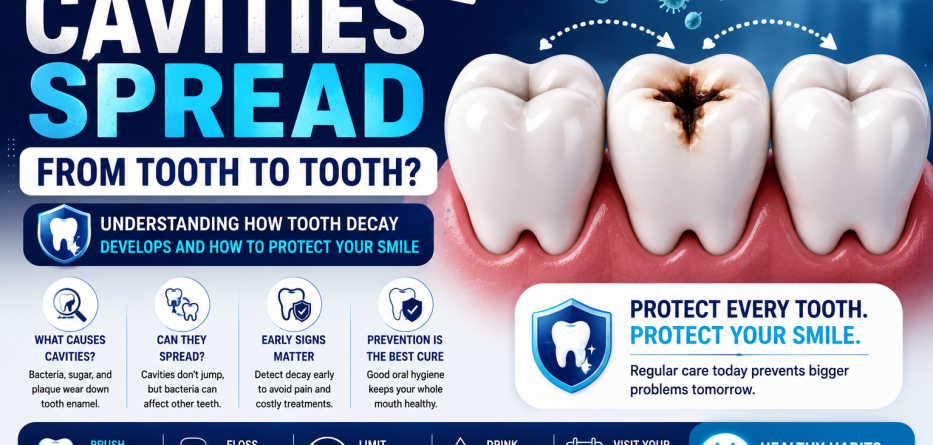
Cavities are one of the most common dental problems worldwide, affecting people of all ages. If you’ve ever been diagnosed with a cavity, you may have wondered whether it can spread to nearby teeth. It’s a common concern among dental patients and an important topic for maintaining good oral health.
The short answer is that a cavity itself does not physically jump from one tooth to another like a contagious disease. However, the bacteria responsible for tooth decay can spread throughout the mouth and create conditions that increase the risk of cavities developing on neighboring teeth.
In this article, we’ll explore how cavities form, whether they can spread, what causes multiple cavities, and how to protect your smile from further decay.
What Is a Cavity?
A cavity, also known as dental caries, is a permanently damaged area in the tooth caused by bacterial activity.
Cavities develop when:
- Oral bacteria feed on sugars and starches.
- The bacteria produce acids.
- These acids attack tooth enamel.
- The enamel weakens and breaks down.
- A hole or cavity forms.
Without treatment, cavities continue to grow deeper into the tooth.
Can Cavities Spread from Tooth to Tooth?
Quick Answer
A cavity itself cannot physically move or spread from one tooth to another. However, the bacteria that cause tooth decay can spread throughout the mouth and increase the likelihood of new cavities developing on nearby teeth.
Think of it this way:
- Cavities are damage to the teeth.
- Bacteria are the cause of that damage.
- Bacteria can affect multiple teeth if conditions allow.
Therefore, while the cavity doesn’t spread, the underlying disease process can.
How Do Cavity-Causing Bacteria Spread?
The mouth contains hundreds of different bacterial species.
Some of the primary bacteria associated with tooth decay include:
- Streptococcus mutans
- Lactobacillus species
These bacteria thrive when:
- Oral hygiene is poor
- Sugar intake is high
- Plaque accumulates on teeth
Once bacteria colonize the mouth, they can easily accumulate between neighboring teeth and around existing cavities.
Why Do Cavities Often Appear on Adjacent Teeth?
Many people notice cavities developing on teeth next to existing decay.
This occurs because:
Shared Plaque Buildup
Plaque often accumulates in hard-to-clean spaces between teeth.
Food Trapping
Food particles frequently become lodged between adjacent teeth.
Bacterial Concentration
The same bacteria causing one cavity may remain active in nearby areas.
Difficulty Cleaning
Crowded teeth and tight spaces can make brushing and flossing less effective.
As a result, neighboring teeth may become vulnerable to decay.
What Happens If a Cavity Is Left Untreated?
Untreated cavities can lead to more serious dental problems.
Progression of Tooth Decay
Stage 1: Enamel Decay
The outer layer of the tooth begins to weaken.
Stage 2: Dentin Involvement
The cavity reaches the softer dentin layer.
Stage 3: Pulp Infection
Bacteria reach the tooth’s nerve and blood supply.
Stage 4: Abscess Formation
A painful infection develops at the root.
At this stage, treatment may require root canal therapy or extraction.
Can Tooth Decay Affect Nearby Teeth?
While the cavity itself does not transfer, untreated decay can indirectly affect neighboring teeth.
Increased Bacterial Activity
More decay means more harmful bacteria in the mouth.
Plaque Retention Areas
Damaged teeth can trap food and plaque.
Gum Inflammation
Advanced decay may contribute to gum disease, which can impact surrounding teeth.
These factors increase the overall risk of developing additional cavities.
Can Cavities Be Contagious?
Surprisingly, cavity-causing bacteria can be transmitted between people.
Common Ways Bacteria Spread
- Sharing utensils
- Sharing drinks
- Kissing
- Cleaning a baby’s pacifier with your mouth
This does not mean cavities themselves are contagious, but the bacteria that contribute to decay can be transferred.
Maintaining good oral hygiene helps reduce bacterial transmission.
Signs You May Have a Cavity
Early cavities often cause no symptoms.
As decay progresses, you may experience:
- Tooth sensitivity
- Toothache
- Pain when eating sweets
- Visible holes in teeth
- Brown, black, or white spots
- Bad breath
Regular dental checkups help detect cavities before symptoms become severe.
How Dentists Treat Cavities
Treatment depends on the severity of the decay.
Dental Fillings
Used for small to moderate cavities.
Dental Crowns
Recommended when significant tooth structure is lost.
Root Canal Therapy
Necessary when decay reaches the pulp.
Tooth Extraction
Reserved for severely damaged teeth that cannot be restored.
Early treatment prevents more extensive procedures.
How to Prevent Cavities from Developing on Other Teeth
The best way to stop the spread of decay-causing bacteria is through preventive care.
Brush Twice Daily
Use fluoride toothpaste to strengthen enamel.
Floss Every Day
Floss removes plaque and food particles between teeth.
Limit Sugary Foods and Drinks
Sugar feeds cavity-causing bacteria.
Drink Plenty of Water
Water helps wash away food particles and bacteria.
Use Fluoride Products
Fluoride supports enamel remineralization.
Visit Your Dentist Regularly
Professional cleanings and exams help identify problems early.
Who Is Most at Risk for Multiple Cavities?
Certain factors increase cavity risk.
High-Risk Groups
- Children and teenagers
- Older adults
- Dry mouth sufferers
- Individuals with poor oral hygiene
- Frequent snackers
- People with orthodontic appliances
Understanding your risk factors can help you take preventive action.
Frequently Asked Questions
Can a cavity spread to another tooth?
The cavity itself cannot spread, but the bacteria responsible for decay can affect nearby teeth.
Should I get a cavity filled immediately?
Yes. Early treatment prevents further damage and reduces the risk of complications.
Can cavities heal on their own?
Advanced cavities cannot heal naturally. Early enamel damage may sometimes be reversed with fluoride treatment.
Why do I keep getting cavities?
Common causes include poor oral hygiene, high sugar consumption, dry mouth, and inadequate fluoride exposure.
Can brushing stop a cavity from spreading?
Brushing helps prevent new cavities but cannot repair an existing cavity once a hole has formed.
Conclusion
So, can cavities spread from tooth to tooth?
Not exactly. A cavity cannot physically move from one tooth to another. However, the bacteria responsible for tooth decay can spread throughout the mouth and create an environment where additional cavities develop, especially on neighboring teeth.
The good news is that proper oral hygiene, regular dental visits, fluoride use, and early treatment can effectively stop the progression of tooth decay and protect the rest of your smile. By addressing cavities promptly and maintaining healthy habits, you can significantly reduce your risk of future dental problems.
