
Losing a tooth can be a stressful experience, whether it’s due to injury, decay, gum disease, or extraction. While some people seek treatment immediately, others postpone replacing the missing tooth because it’s not visible, doesn’t hurt, or they assume it’s only a cosmetic issue.
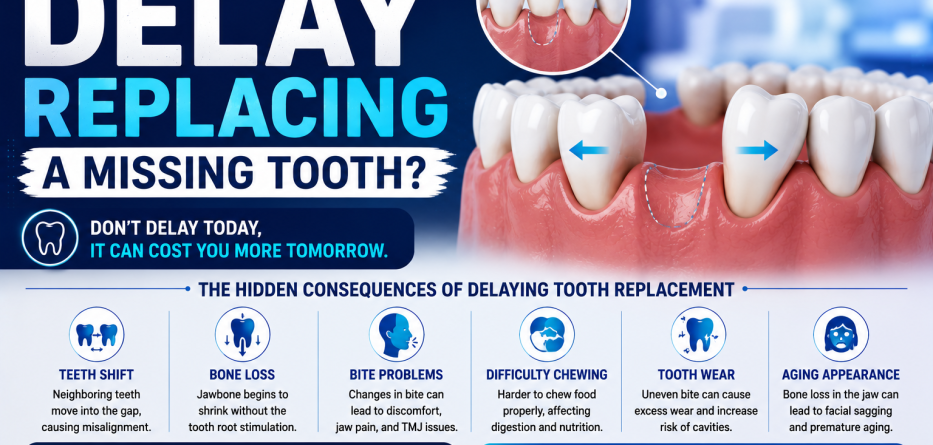
However, a missing tooth can affect far more than your appearance. Delaying tooth replacement can lead to significant oral health problems, including bone loss, shifting teeth, bite issues, gum disease, and even additional tooth loss.
Understanding the consequences of postponing treatment can help you make informed decisions and protect your long-term oral health. In this article, we’ll explore what happens when a missing tooth is left untreated and why timely replacement is important.
Why Replacing a Missing Tooth Matters
Every tooth in your mouth plays a specific role in maintaining:
- Proper chewing function
- Bite alignment
- Jawbone health
- Speech clarity
- Facial structure
When a tooth is lost, the balance of your entire oral system can be disrupted.
Even a single missing tooth can trigger a chain reaction of dental problems over time.
1. Jawbone Loss Begins Immediately
One of the most serious consequences of tooth loss is jawbone deterioration.
Why Does Bone Loss Occur?
Natural tooth roots stimulate the jawbone whenever you chew.
After tooth loss, this stimulation stops.
As a result:
- Bone density decreases
- Jawbone begins shrinking
- Bone volume is gradually lost
Long-Term Effects
- Weakened jawbone
- Reduced implant options
- Changes in facial appearance
- Increased treatment complexity
Bone loss can begin within the first few months after tooth extraction.
2. Neighboring Teeth Begin to Shift
Teeth naturally support one another.
When a gap is left untreated, surrounding teeth may gradually move into the empty space.
Problems Caused by Tooth Movement
- Crooked teeth
- Bite misalignment
- Food trapping
- Increased plaque buildup
- Difficulty cleaning teeth
Even small shifts can affect your overall oral health.
3. Opposing Teeth Can Over-Erupt
When a tooth loses its opposing partner, it may continue moving outward.
This process is known as super-eruption or over-eruption.
Consequences Include
- Bite problems
- Uneven chewing surfaces
- Increased wear
- Difficulty replacing the missing tooth later
The longer the space remains untreated, the more likely these complications become.
4. Chewing Becomes Less Efficient
Every tooth contributes to effective chewing.
Missing teeth can make it difficult to process food properly.
Common Issues
- Avoiding certain foods
- Reduced chewing efficiency
- Digestive discomfort
- Nutritional limitations
Many people unconsciously shift chewing to one side of the mouth, creating additional stress on remaining teeth.
5. Increased Risk of Tooth Wear
When one tooth is missing, neighboring teeth often absorb additional chewing forces.
This extra pressure may cause:
- Tooth wear
- Cracks
- Fractures
- Sensitivity
Over time, healthy teeth may become damaged due to uneven force distribution.
6. Higher Risk of Gum Disease and Decay
The gap created by a missing tooth can become a trap for food particles and bacteria.
This increases the risk of:
- Plaque accumulation
- Gum inflammation
- Periodontal disease
- Tooth decay
Shifting teeth can make brushing and flossing more difficult, further increasing these risks.
7. Changes in Facial Appearance
Your teeth and jawbone provide support for facial muscles and soft tissues.
As bone loss progresses, facial changes may occur.
Potential Effects
- Sunken cheeks
- Wrinkles around the mouth
- Premature aging appearance
- Loss of facial volume
Many people are surprised to learn that missing teeth can significantly impact facial aesthetics.
8. Speech Problems Can Develop
Certain teeth play a crucial role in pronunciation.
Missing teeth can affect sounds such as the following:
- S
- F
- V
- TH
Speech changes may include:
- Slurring
- Whistling sounds
- Difficulty pronouncing words clearly
These issues can affect confidence in social and professional situations.
9. Additional Tooth Loss May Occur
The consequences of untreated tooth loss often create conditions that increase the likelihood of future tooth loss.
Factors include:
- Bone deterioration
- Gum disease
- Excessive tooth wear
- Bite imbalance
Replacing a missing tooth promptly can help preserve surrounding teeth.
10. Future Treatment Becomes More Complex
The longer a missing tooth remains untreated, the more complicated replacement may become.
Potential Additional Procedures
- Bone grafting
- Orthodontic treatment
- Gum surgery
- Bite correction
Early intervention often results in simpler and less expensive treatment options.
How Quickly Do Problems Begin?
The timeline varies from person to person, but common changes include:
| Time After Tooth Loss | Possible Changes |
|---|---|
| First Few Months | Bone loss begins |
| 6–12 Months | Noticeable bone reduction |
| 1–2 Years | Tooth shifting may occur |
| Several Years | Significant bite and facial changes |
The sooner replacement occurs, the easier it is to preserve oral health.
Best Options for Replacing a Missing Tooth
Dental Implants
Often considered the gold standard because they:
- Replace the root and crown
- Prevent bone loss
- Preserve neighboring teeth
- Provide long-term stability
Dental Bridges
Useful when neighboring teeth can support the restoration.
Partial Dentures
A removable option for replacing one or more missing teeth.
Your dentist can recommend the most suitable treatment based on your needs.
Benefits of Early Tooth Replacement
Replacing a missing tooth promptly helps:
- Preserve jawbone density
- Maintain proper alignment
- Improve chewing function
- Support facial structure
- Protect surrounding teeth
- Enhance confidence
Early treatment often provides better long-term outcomes and lower overall costs.
Frequently Asked Questions
Is it okay to leave a missing tooth untreated?
While it may seem harmless initially, untreated tooth loss can lead to bone loss, shifting teeth, and other oral health complications.
How long can I wait before replacing a missing tooth?
The sooner you replace it, the better. Bone loss can begin within months after tooth loss.
Will a missing tooth affect other teeth?
Yes. Neighboring teeth can shift into the empty space, affecting bite alignment and oral health.
Can dental implants prevent bone loss?
Yes. Dental implants stimulate the jawbone similarly to natural tooth roots and help preserve bone density.
What is the best replacement option for a missing tooth?
Dental implants are often considered the most effective long-term solution because they replace both the root and visible tooth structure.
Conclusion
Delaying the replacement of a missing tooth may seem harmless at first, but the consequences can be significant. From jawbone loss and shifting teeth to bite problems, gum disease, and facial changes, untreated tooth loss can affect both your oral health and quality of life.
The good news is that modern dentistry offers several effective tooth replacement options, with dental implants often providing the most comprehensive long-term solution. Acting early can help preserve your smile, protect your remaining teeth, and prevent more complex treatments in the future.
If you’ve lost a tooth, scheduling a consultation with your dentist as soon as possible is one of the best investments you can make in your oral health.
