
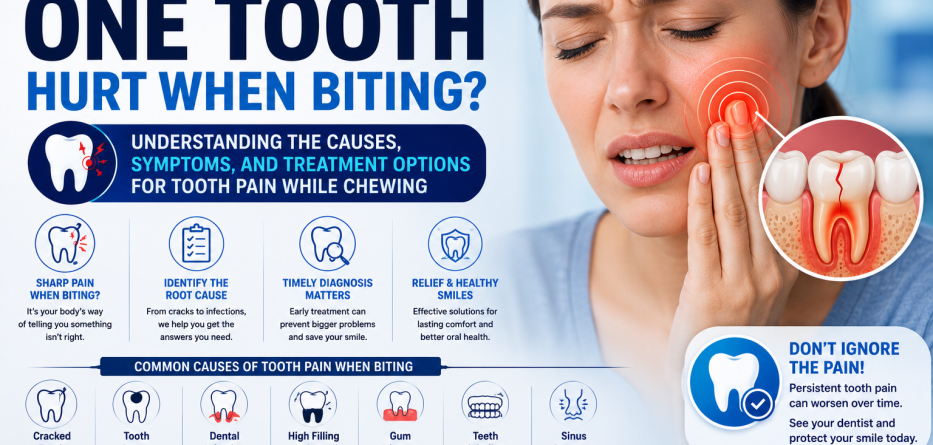
Have you ever noticed a sharp pain in one tooth when biting down on food or chewing? While occasional tooth sensitivity can be common, pain in a single tooth when biting is often a sign that something isn’t right. The discomfort may range from mild irritation to severe pain and could indicate an underlying dental issue that requires attention.
Ignoring tooth pain can allow the problem to worsen over time, potentially leading to infection, tooth damage, or more extensive treatment. Understanding the possible causes of pain when biting can help you identify when it’s time to seek professional dental care.
In this article, we’ll explore why one tooth may hurt when biting, common causes, treatment options, and ways to prevent future problems.
Is It Normal for One Tooth to Hurt When Biting?
No. While temporary sensitivity may occur occasionally, persistent pain in a single tooth when biting is not considered normal.
Pain often indicates the following:
- Tooth damage
- Infection
- Inflammation
- Bite problems
- Gum disease
The sooner the cause is identified, the easier it is usually to treat.
Common Causes of Tooth Pain When Biting
1. Cracked Tooth Syndrome
A cracked tooth is one of the most common reasons for pain when biting.
Small cracks may not always be visible, but they can cause discomfort when pressure is applied.
Symptoms
- Sharp pain while chewing
- Pain that comes and goes
- Sensitivity to hot or cold foods
- Difficulty identifying the exact source
Treatment
Depending on the severity, treatment may include:
- Dental bonding
- Crown placement
- Root canal therapy
- Tooth extraction (in severe cases)
2. Tooth Decay (Cavity)
When decay penetrates deeper layers of the tooth, biting pressure can trigger pain.
Symptoms
- Sensitivity to sweets
- Toothache
- Visible holes or dark spots
- Pain while chewing
Treatment
- Fillings
- Inlays or onlays
- Crowns
- Root canal treatment if decay reaches the pulp
3. Dental Abscess or Infection
An infected tooth often becomes painful when biting due to pressure on the inflamed tissues surrounding the root.
Symptoms
- Throbbing pain
- Swelling
- Bad taste in the mouth
- Fever
- Gum tenderness
Treatment
- Root canal therapy
- Antibiotics (if needed)
- Drainage of infection
- Tooth extraction in severe cases
Dental infections should never be ignored.
4. High Filling or Crown
A recently placed filling or crown that sits too high can cause pain when biting.
Even a slight difference in bite alignment can create excessive pressure on one tooth.
Symptoms
- Pain only when biting
- Recent dental work
- Feeling that one tooth touches first
Treatment
A simple bite adjustment by your dentist often resolves the problem quickly.
5. Gum Disease
Advanced gum disease can damage the supporting structures around a tooth.
As the gums and bone become compromised, biting pressure may become painful.
Symptoms
- Bleeding gums
- Gum recession
- Loose teeth
- Bad breath
- Tenderness around the tooth
Treatment
- Professional cleaning
- Scaling and root planing
- Periodontal therapy
- Improved oral hygiene
6. Teeth Grinding (Bruxism)
Clenching and grinding place excessive force on teeth.
Over time, this can lead to:
- Tooth sensitivity
- Cracks
- Inflamed ligaments
- Pain while chewing
Symptoms
- Morning jaw pain
- Worn tooth surfaces
- Headaches
- Tooth soreness
Treatment
- Nightguards
- Stress management
- Bite correction if necessary
7. Tooth Root Inflammation
The periodontal ligament surrounding a tooth root can become inflamed.
Common causes include:
- Trauma
- Grinding
- Infection
- Excessive biting force
Symptoms
- Pain when pressure is applied
- Tenderness around the tooth
- Feeling that the tooth is elevated
Treatment depends on the underlying cause.
8. Sinus Pressure (Upper Teeth)
Sometimes the source of pain isn’t actually the tooth itself.
Sinus infections can place pressure on the roots of upper back teeth.
Symptoms
- Facial pressure
- Nasal congestion
- Multiple upper teeth feeling sore
- Worsening symptoms when bending forward
Treating the sinus infection usually resolves the discomfort.
How Dentists Diagnose Tooth Pain When Biting
Your dentist may use several methods to identify the cause.
Diagnostic Tools
- Clinical examination
- Dental X-rays
- Bite tests
- Percussion tests
- Digital imaging
- Cold sensitivity testing
Accurate diagnosis is essential because different conditions can produce similar symptoms.
When Should You See a Dentist?
Schedule an appointment if:
- Pain lasts longer than a few days
- Pain worsens when chewing
- Swelling develops
- You notice tooth sensitivity
- A filling or crown feels uneven
- You suspect a cracked tooth
Early treatment often prevents more serious complications.
Home Remedies for Temporary Relief
While professional treatment is important, you may find temporary relief through:
Helpful Measures
- Warm saltwater rinses
- Soft foods
- Cold compresses
- Over-the-counter pain relievers
- Avoiding hard or sticky foods
Avoid
- Ignoring persistent pain
- Applying aspirin directly to gums
- Excessive chewing on the affected side
Home remedies do not treat the underlying cause.
How to Prevent Tooth Pain When Biting
Good oral care significantly reduces the risk of dental problems.
Prevention Tips
- Brush twice daily
- Floss every day
- Attend regular dental checkups
- Wear a mouthguard during sports
- Use a nightguard if you grind your teeth
- Address cavities early
- Avoid chewing hard objects such as ice
Preventive care is often the best way to avoid dental emergencies.
Frequently Asked Questions
Why does one tooth hurt when I bite down?
Common causes include cracked teeth, cavities, infections, gum disease, bite problems, and inflammation around the tooth root.
Can a cracked tooth heal on its own?
No. Cracked teeth require professional evaluation and treatment.
Why does my tooth hurt when chewing but not otherwise?
Pain triggered by pressure often suggests a crack, infection, high filling, or inflammation of the supporting tissues.
Is tooth pain when biting an emergency?
Not always, but persistent pain should be evaluated promptly to prevent complications.
Can a cavity cause pain when biting?
Yes. Deep decay can irritate the tooth’s nerve and cause discomfort during chewing.
Conclusion
If you’re wondering, “Why does one tooth hurt when biting?” the answer can vary from a simple bite adjustment to more complex issues such as tooth fractures, infections, or gum disease. While some causes are minor, others require prompt treatment to prevent further damage.
The key is not to ignore the pain. A thorough dental examination can identify the underlying problem and provide the appropriate treatment. Addressing tooth pain early helps protect your oral health, preserve your natural teeth, and restore comfortable chewing and eating.
