
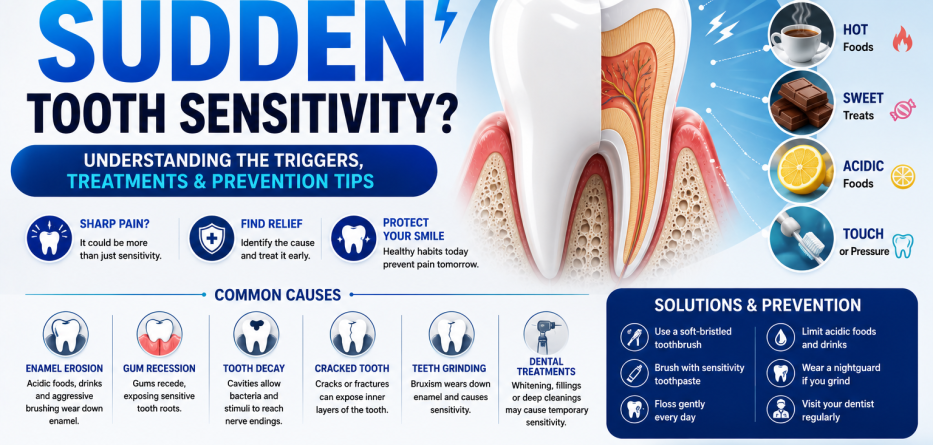
Have you ever taken a sip of cold water or enjoyed a hot cup of coffee only to feel a sudden sharp pain in your teeth? If so, you’re not alone. Tooth sensitivity is one of the most common dental complaints, affecting millions of people worldwide. While occasional sensitivity may seem harmless, sudden tooth sensitivity can sometimes signal an underlying dental issue that requires attention.
Understanding what causes sudden tooth sensitivity is the first step toward finding relief and protecting your oral health. In this guide, we’ll explore the most common causes, symptoms, treatment options, and prevention strategies to help you maintain a healthy, pain-free smile.
What Is Tooth Sensitivity?
Tooth sensitivity, also known as dentin hypersensitivity, occurs when the protective layers of the tooth become compromised, exposing the underlying dentin.
Dentin contains tiny tubules that connect to the tooth’s nerve center. When exposed, hot, cold, sweet, acidic, or even cold air can trigger discomfort or pain.
Quick Definition
Tooth sensitivity is a short, sharp pain caused by exposed dentin responding to external stimuli such as temperature changes, sweet foods, or touch.
Common Symptoms of Sudden Tooth Sensitivity
Symptoms may include:
- Sharp pain when eating hot foods
- Discomfort from cold drinks
- Pain when consuming sweets
- Sensitivity to acidic foods
- Pain while brushing or flossing
- Temporary discomfort that comes and goes
The severity can range from mild irritation to intense pain.
1. Enamel Erosion
Tooth enamel is the hard outer layer that protects your teeth.
When enamel wears away, dentin becomes exposed, leading to sensitivity.
Common Causes of Enamel Erosion
- Acidic foods and beverages
- Frequent consumption of soft drinks
- Acid reflux
- Stomach acid exposure
- Aggressive brushing
Prevention Tips
- Use a soft-bristled toothbrush
- Limit acidic drinks
- Rinse with water after acidic foods
- Use fluoride toothpaste
2. Gum Recession
Healthy gums cover and protect tooth roots.
When gums recede, the roots become exposed, increasing sensitivity.
Causes of Gum Recession
- Gum disease
- Aggressive brushing
- Aging
- Tobacco use
- Poor oral hygiene
Exposed roots are particularly sensitive because they lack enamel protection.
3. Tooth Decay (Cavities)
Cavities can create openings in the tooth structure that expose dentin and nerves.
Signs of Tooth Decay
- Sensitivity to sweets
- Persistent toothache
- Visible holes
- Dark spots on teeth
Early treatment can prevent further damage and relieve discomfort.
4. Cracked or Fractured Teeth
Small cracks can allow temperature changes and bacteria to reach the inner tooth structure.
Common Causes
- Biting hard foods
- Teeth grinding
- Dental trauma
- Sports injuries
Sensitivity from a cracked tooth may worsen while chewing.
5. Teeth Grinding (Bruxism)
Grinding or clenching teeth can wear down enamel over time.
Effects of Bruxism
- Enamel loss
- Tooth sensitivity
- Jaw pain
- Tooth fractures
- Headaches
Many people grind their teeth during sleep without realizing it.
A custom nightguard may help protect your teeth.
6. Recent Dental Procedures
Temporary sensitivity is common after certain dental treatments.
Procedures That May Cause Sensitivity
- Teeth whitening
- Dental fillings
- Crowns
- Deep cleanings
- Root planing
This type of sensitivity usually resolves within a few days or weeks.
7. Teeth Whitening Treatments
Professional and at-home whitening products may temporarily increase sensitivity.
Why It Happens
Whitening agents can penetrate enamel and temporarily irritate the nerve inside the tooth.
Tips for Relief
- Use sensitivity toothpaste
- Reduce whitening frequency
- Follow product instructions carefully
Most whitening-related sensitivity is temporary.
8. Gum Disease
Periodontal disease can damage gum tissue and expose sensitive tooth roots.
Symptoms of Gum Disease
- Bleeding gums
- Swollen gums
- Bad breath
- Gum recession
- Tooth sensitivity
Treating gum disease often helps reduce sensitivity.
9. Acidic Foods and Drinks
Frequent exposure to acids can gradually weaken enamel.
Common Acidic Foods
- Citrus fruits
- Soda
- Sports drinks
- Wine
- Vinegar-based foods
Moderation can help protect your enamel.
10. Worn Fillings or Dental Restorations
Older dental restorations may develop gaps or wear down over time.
This can expose sensitive areas of the tooth and allow bacteria to enter.
Regular dental checkups help identify restoration problems early.
When Tooth Sensitivity May Signal a Serious Problem
While sensitivity is often manageable, certain symptoms require prompt dental attention.
See a Dentist If You Experience:
- Severe pain
- Persistent sensitivity
- Swelling
- Fever
- Pain when biting
- Visible tooth damage
These symptoms may indicate infection, decay, or structural damage.
How Dentists Treat Tooth Sensitivity
Treatment depends on the underlying cause.
Common Treatment Options
Desensitizing Toothpaste
Blocks pain signals from reaching the tooth nerve.
Fluoride Treatments
Strengthen enamel and reduce sensitivity.
Dental Bonding
Covers exposed root surfaces.
Gum Grafting
Protects exposed roots caused by gum recession.
Root Canal Therapy
Recommended when nerve damage is severe.
A dental evaluation helps determine the most appropriate solution.
How to Prevent Sudden Tooth Sensitivity
Daily Prevention Tips
- Brush gently using a soft-bristled toothbrush.
- Use fluoride toothpaste.
- Floss daily.
- Limit acidic foods and beverages.
- Wear a nightguard if you grind your teeth.
- Schedule regular dental checkups.
- Treat gum disease promptly.
Preventive care is the most effective way to reduce sensitivity risk.
Best Foods for Sensitive Teeth
Foods that support enamel health include:
- Cheese
- Yogurt
- Milk
- Leafy greens
- Almonds
- Lean proteins
These foods provide calcium and nutrients that help maintain strong teeth.
Frequently Asked Questions
Why are my teeth suddenly sensitive to cold?
Sudden sensitivity to cold may result from enamel erosion, gum recession, cavities, or a cracked tooth.
Can tooth sensitivity go away on its own?
Temporary sensitivity may resolve naturally, but persistent symptoms should be evaluated by a dentist.
Is tooth sensitivity a sign of a cavity?
Yes. Cavities are one of the most common causes of tooth sensitivity.
What toothpaste is best for sensitive teeth?
Desensitizing toothpaste containing potassium nitrate or stannous fluoride is often recommended.
When should I see a dentist for sensitivity?
If sensitivity is severe, persistent, or accompanied by pain, swelling, or visible damage, schedule a dental appointment promptly.
Conclusion
Sudden tooth sensitivity can be uncomfortable and sometimes alarming, but understanding its causes can help you take the right steps toward relief. From enamel erosion and gum recession to cavities and teeth grinding, many factors can contribute to sensitivity.
Fortunately, most cases can be effectively treated with proper dental care, preventive habits, and professional guidance. If your sensitivity persists or worsens, consult your dentist to identify the underlying cause and protect your long-term oral health.
A healthy smile starts with early action—and addressing tooth sensitivity today can help prevent more serious dental problems tomorrow.
