
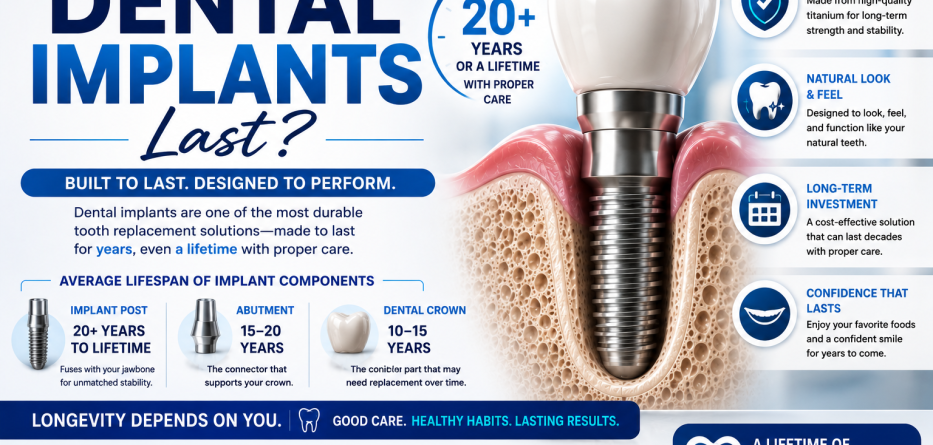
Dental implants are widely recognized as one of the most durable and reliable solutions for replacing missing teeth. Unlike dentures or bridges, dental implants are designed to become a permanent part of your oral structure, providing exceptional stability, functionality, and aesthetics. However, one of the most common questions patients ask before treatment is, “How long do dental implants last?”
The good news is that dental implants have an impressive lifespan. With proper care, many implants can last 20 years or more, and some may even last a lifetime. However, their longevity depends on several factors, including oral hygiene, lifestyle habits, overall health, and professional dental care.
In this guide, we’ll explore how long dental implants typically last, what affects their lifespan, and how you can maximize the longevity of your investment.
What Is the Average Lifespan of Dental Implants?
Dental implants consist of three main components:
- Implant post (placed in the jawbone)
- Abutment (connector)
- Dental crown (visible tooth restoration)
Each component has a different expected lifespan.
Average Lifespan of Implant Components
| Component | Typical Lifespan |
|---|---|
| Titanium Implant Post | 20+ Years to Lifetime |
| Abutment | 15–20 Years |
| Dental Crown | 10–15 Years |
The implant post is often the longest-lasting part because it integrates directly with the jawbone through osseointegration.
Can Dental Implants Last a Lifetime?
Yes, many dental implants can last a lifetime.
The titanium implant post is highly resistant to decay and designed to withstand everyday chewing forces for decades. Many patients who received implants 30 to 40 years ago still have functioning implant posts today.
However, while the implant itself may last indefinitely, the crown attached to it may eventually require replacement due to normal wear and tear.
Why Are Dental Implants So Durable?
Several factors contribute to the exceptional longevity of dental implants.
Osseointegration
One of the most important reasons implants last so long is osseointegration.
This biological process allows the jawbone to fuse directly with the titanium implant, creating a strong and stable foundation.
Benefits include:
- Long-term stability
- Reduced movement
- Improved chewing ability
- Bone preservation
Titanium Strength
Most implants are made from medical-grade titanium.
Titanium offers:
- Exceptional durability
- Corrosion resistance
- High biocompatibility
- Strong bone integration
This material has been successfully used in medicine and dentistry for decades.
Factors That Affect Dental Implant Lifespan
While implants are highly durable, their longevity depends on several important factors.
1. Oral Hygiene
Poor oral hygiene can lead to:
- Gum inflammation
- Peri-implantitis
- Bone loss
- Implant failure
Best practices include:
- Brushing twice daily
- Flossing regularly
- Professional cleanings
- Routine dental examinations
Healthy gums are essential for long-term implant success.
2. Smoking
Smoking is one of the leading risk factors for implant complications.
Smoking can:
- Slow healing
- Reduce blood flow
- Increase infection risk
- Accelerate bone loss
Patients who avoid tobacco products often experience significantly better long-term outcomes.
3. Bone Health
Healthy bone provides the support necessary for implant stability.
Bone loss may occur due to:
- Gum disease
- Long-term tooth loss
- Certain medical conditions
Patients with adequate bone density generally enjoy longer-lasting implants.
4. Teeth Grinding (Bruxism)
Excessive grinding or clenching places additional stress on implants.
Potential consequences include:
- Crown fractures
- Screw loosening
- Bone stress
- Implant overload
A custom nightguard may help protect both implants and natural teeth.
5. Overall Health
Medical conditions can affect healing and implant maintenance.
Conditions that may influence longevity include:
- Uncontrolled diabetes
- Osteoporosis
- Autoimmune disorders
Proper medical management can improve implant success.
Dental Implants vs Other Tooth Replacement Options
Longevity Comparison
| Tooth Replacement Option | Average Lifespan |
|---|---|
| Dental Implants | 20+ Years |
| Dental Bridges | 5–15 Years |
| Partial Dentures | 5–10 Years |
| Complete Dentures | 5–10 Years |
Dental implants typically outperform other replacement options in terms of longevity and stability.
Signs That an Implant May Need Attention
Although implants are highly successful, problems can occasionally develop.
Watch for signs such as:
- Gum swelling
- Bleeding around the implant
- Pain or discomfort
- Implant mobility
- Difficulty chewing
- Receding gums
Early treatment can often prevent more serious complications.
How to Make Dental Implants Last Longer
Patients can significantly extend implant lifespan by following these recommendations.
Daily Care Tips
- Brush twice daily.
- Floss around implants.
- Use antibacterial mouthwash if recommended.
- Avoid smoking.
- Eat a balanced diet.
- Wear a nightguard if necessary.
Professional Care
Regular dental visits help:
- Monitor implant health
- Remove plaque and tartar
- Detect problems early
- Preserve surrounding bone and gum tissue
Most dentists recommend checkups every six months.
What Causes Dental Implant Failure?
Although uncommon, implant failure can occur.
Early Failure
Occurs before osseointegration is complete.
Possible causes:
- Infection
- Poor healing
- Surgical complications
Late Failure
Occurs months or years after placement.
Common causes include:
- Peri-implantitis
- Smoking
- Poor oral hygiene
- Excessive bite forces
Fortunately, implant failure rates remain very low.
Success Rates of Dental Implants
Dental implants are among the most predictable procedures in modern dentistry.
Typical Success Rates
| Implant Type | Success Rate |
|---|---|
| Single Tooth Implant | 95–98% |
| Multiple Implants | 95%+ |
| Full Arch Implants | 90–98% |
These success rates contribute significantly to their long-term durability.
Frequently Asked Questions
How long do dental implants last on average?
Most dental implants last 20 years or longer, and many can last a lifetime with proper care.
Do dental implants ever need replacement?
The implant post rarely requires replacement, but the crown may need replacement after 10–15 years.
Can implants fail after many years?
Yes, although uncommon. Poor oral hygiene, smoking, and gum disease can contribute to late implant failure.
Are dental implants permanent?
Dental implants are considered a permanent tooth replacement solution because they integrate directly with the jawbone.
What is the biggest factor affecting implant lifespan?
Excellent oral hygiene and healthy gum tissue are among the most important factors.
Conclusion
So, how long do dental implants last?
The answer is encouraging: most dental implants last 20 years or more, and many remain functional for a lifetime. Their exceptional longevity is made possible by advanced materials, osseointegration, and proper oral care.
While factors such as smoking, oral hygiene, bone health, and overall health can influence outcomes, patients who maintain healthy habits and attend regular dental visits can enjoy decades of reliable function and a confident smile. Dental implants remain one of the most durable and cost-effective investments in modern dentistry.
