
Dental implants have become the gold standard for replacing missing teeth, offering a durable, natural-looking, and long-lasting solution. One of the primary reasons for their remarkable success is a biological process known as osseointegration.
But how does osseointegration work, and why is it so important for dental implants?
Osseointegration is the process that allows a dental implant to become firmly anchored within the jawbone, creating a stable foundation for a replacement tooth. Without successful osseointegration, dental implants would not be able to function like natural teeth.
In this guide, we’ll explain how osseointegration works, the stages involved, factors that influence success, and why it is the key to long-term implant stability.
What Is Osseointegration?
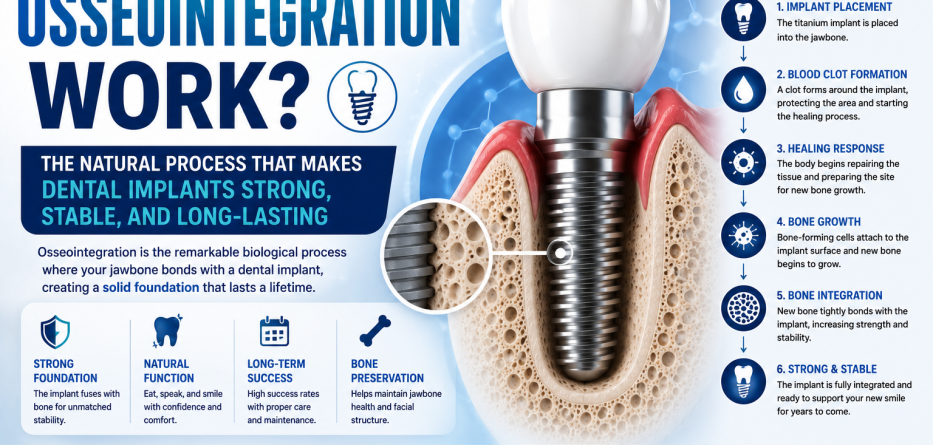
Osseointegration is the direct structural and functional connection between living bone tissue and the surface of a dental implant.
The term combines:
- Osseo = Bone
- Integration = Joining together
When a titanium implant is placed into the jawbone, the surrounding bone gradually grows around and bonds with the implant surface.
Quick Definition
Osseointegration is the natural biological process through which the jawbone fuses with a dental implant, creating a strong and permanent foundation for a replacement tooth.
Why Is Osseointegration Important?
Osseointegration is what makes dental implants different from other tooth replacement options.
Unlike dentures or bridges, implants become part of the jawbone.
Benefits of Successful Osseointegration
- Exceptional stability
- Improved chewing function
- Long-term implant success
- Bone preservation
- Natural tooth-like feel
- Reduced risk of implant failure
Without proper integration, an implant cannot effectively support a dental crown.
How Does Osseointegration Work?
The process occurs gradually over several weeks and months after implant placement.
Step 1: Implant Placement
The procedure begins when a titanium implant is surgically inserted into the jawbone.
The implant acts as an artificial tooth root and provides the framework for future bone growth.
At this stage, the implant is mechanically stable but has not yet fused with the bone.
Step 2: Blood Clot Formation
Immediately after surgery, the body begins its natural healing response.
A blood clot forms around the implant site, helping the following:
- Protect the surgical area
- Deliver healing cells
- Initiate tissue repair
This is the first stage of the healing process.
Step 3: Inflammatory Healing Response
Over the next several days, the immune system begins cleaning and repairing the surgical area.
Specialized cells remove damaged tissue and prepare the site for new bone formation.
This inflammatory response is a normal and necessary part of healing.
Step 4: Bone Cell Activation
Bone-forming cells called osteoblasts become active around the implant.
These cells begin producing new bone tissue directly on the implant surface.
This process gradually strengthens the connection between the implant and surrounding jawbone.
Step 5: Bone Growth Around the Implant
Over the following weeks, new bone develops around the implant threads.
The bone fills microscopic spaces and creates increasing stability.
During this stage:
- Implant mobility decreases
- Bone density improves
- Structural support increases
This is the heart of the osseointegration process.
Step 6: Bone Remodeling and Maturation
As healing continues, the body reshapes and strengthens the new bone.
The jawbone adapts to normal chewing forces and becomes more resilient.
Eventually, the implant becomes fully integrated and capable of supporting a dental restoration.
Why Titanium Plays a Critical Role
One reason dental implants are so successful is the use of titanium.
Benefits of Titanium
- Biocompatible
- Corrosion-resistant
- Lightweight
- Strong and durable
- Promotes bone attachment
Titanium is uniquely accepted by the body and allows bone cells to attach directly to its surface.
This property makes osseointegration possible.
How Long Does Osseointegration Take?
Healing times vary depending on the individual patient.
Typical Timeline
| Stage | Approximate Time |
|---|---|
| Initial Healing | 1–2 Weeks |
| Early Bone Formation | 2–6 Weeks |
| Osseointegration | 3–6 Months |
| Final Restoration Placement | After Integration |
Some patients may heal faster, while others require additional time.
Factors That Affect Osseointegration Success
Several factors influence how well the implant integrates with the bone.
Bone Density and Quality
Healthy bone provides stronger support and better implant stability.
Oral Hygiene
Good oral care helps prevent infection and supports healing.
Smoking
Smoking can reduce blood flow and slow the healing process.
Medical Conditions
Certain health conditions may affect bone healing, including:
- Uncontrolled diabetes
- Osteoporosis
- Autoimmune disorders
Surgical Technique
Proper implant placement by an experienced dentist significantly improves outcomes.
Signs of Successful Osseointegration
Dentists monitor healing carefully before placing the final crown.
Signs of successful integration include:
- No implant mobility
- Healthy gum tissue
- Absence of pain
- Stable bone levels
- Strong implant stability measurements
Once confirmed, the implant is ready for restoration.
What Happens If Osseointegration Fails?
Although uncommon, osseointegration may occasionally fail.
Possible Causes
- Infection
- Poor bone quality
- Excessive implant movement
- Smoking
- Poor oral hygiene
Symptoms
- Implant loosening
- Persistent pain
- Swelling
- Difficulty chewing
In some cases, the implant may need to be removed and replaced after healing.
How Dentists Improve Osseointegration Success
Modern implant dentistry uses advanced technologies to maximize success.
Techniques Include
- 3D CBCT imaging
- Digital treatment planning
- Guided implant surgery
- Surface-treated implants
- Bone grafting procedures
These innovations help create ideal conditions for bone integration.
Osseointegration vs Traditional Tooth Replacement
| Feature | Dental Implants | Bridges | Dentures |
|---|---|---|---|
| Bone Integration | Yes | No | No |
| Bone Preservation | Yes | Limited | No |
| Stability | Excellent | Good | Moderate |
| Natural Feel | Excellent | Good | Moderate |
| Long-Term Success | High | Moderate | Moderate |
Osseointegration is one of the main reasons dental implants outperform alternative tooth replacement options.
Frequently Asked Questions
Is osseointegration painful?
No. The integration process itself is painless. Patients may experience mild discomfort after surgery, but this typically resolves within a few days.
Can osseointegration fail?
Yes, although failure rates are low when implants are placed correctly and patients follow aftercare instructions.
Why is titanium used for dental implants?
Titanium is highly biocompatible and allows bone cells to attach directly to its surface.
How do dentists know osseointegration is complete?
Clinical examinations, X-rays, and implant stability testing help determine successful integration.
Can smokers achieve successful osseointegration?
Yes, but smoking increases the risk of complications and may slow healing.
Conclusion
Understanding how osseointegration works helps explain why dental implants are one of the most successful treatments in modern dentistry. Through a remarkable biological process, the jawbone gradually bonds with the titanium implant, creating a stable and long-lasting foundation for replacement teeth.
Successful osseointegration provides strength, function, comfort, and durability that closely resemble natural teeth. With proper planning, good oral hygiene, and professional care, dental implants can offer a lifetime of confident smiles.
