
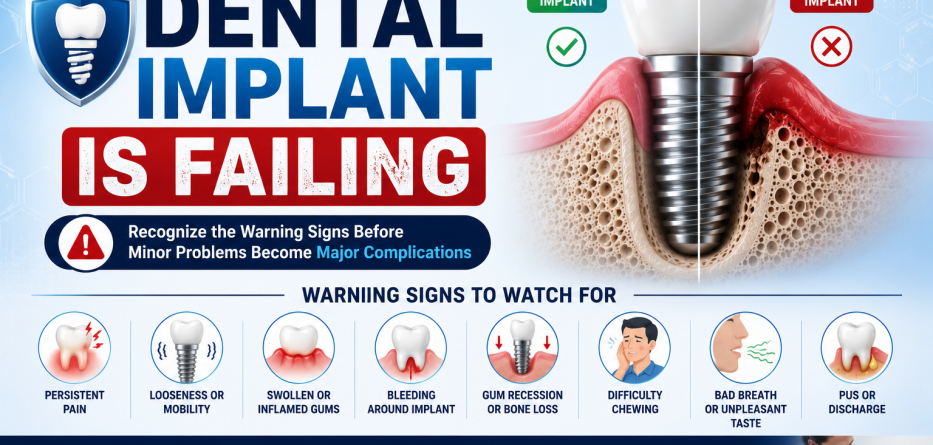
Dental implants are one of the most successful and long-lasting solutions for replacing missing teeth. With success rates exceeding 95%, most dental implants provide decades of reliable function and natural-looking results. However, like any medical or dental procedure, complications can occasionally occur.
One of the most important things patients can do is recognize the early warning signs of implant failure. Detecting problems early can often save the implant and prevent more serious oral health issues.
In this guide, we’ll explain how to know if a dental implant is failing, the causes of implant failure, treatment options, and how to protect your investment for the long term.
What Is Dental Implant Failure?
Dental implant failure occurs when the implant no longer functions properly or loses its stability within the jawbone.
Failure can occur.
Early Failure
Occurs during the healing phase before the implant fully integrates with the bone.
Late Failure
Occurs months or even years after successful placement due to infection, bone loss, or excessive stress on the implant.
Understanding the symptoms can help patients seek treatment before the condition worsens.
Early Warning Signs of a Failing Dental Implant
1. Persistent Pain or Discomfort
Some discomfort is normal immediately after implant surgery.
However, pain that
- Persists for weeks
- Returns after healing
- Gradually worsens
may indicate an underlying problem.
Possible causes include the following:
- Infection
- Implant instability
- Nerve irritation
- Failed osseointegration
Persistent pain should never be ignored.
2. Implant Mobility or Looseness
A successful dental implant should feel just like a natural tooth root.
If the implant feels
- Loose
- Wobbly
- Unstable when chewing
This is a serious warning sign.
A loose implant often indicates the following:
- Bone loss
- Failed osseointegration
- Structural damage
Immediate dental evaluation is necessary.
3. Swollen or Inflamed Gums
Healthy gums around an implant should appear pink and firm.
Signs of trouble include:
- Redness
- Swelling
- Tenderness
- Bleeding
Inflammation around implants may signal peri-implant disease, which can lead to implant failure if left untreated.
4. Bleeding Around the Implant
Occasional irritation can cause minor bleeding.
However, persistent bleeding while:
- Brushing
- Flossing
- Eating
may indicate infection or gum disease surrounding the implant.
Bleeding should always be evaluated by a dental professional.
5. Gum Recession Around the Implant
When gum tissue begins pulling away from the implant, the metal components may become visible.
Symptoms include:
- Exposed implant threads
- Increased tooth sensitivity
- Cosmetic concerns
- Increased risk of infection
Gum recession often accompanies underlying bone loss.
6. Difficulty Chewing
Dental implants should restore full chewing function.
If chewing becomes
- Painful
- Uncomfortable
- Difficult
It may suggest implant instability or surrounding tissue damage.
Changes in bite comfort should not be ignored.
7. Bad Breath or Unpleasant Taste
Persistent bad breath (halitosis) or a foul taste may indicate bacterial infection around the implant.
Possible causes include the following:
- Peri-implantitis
- Trapped food debris
- Poor oral hygiene
- Infection
These symptoms often require professional cleaning and evaluation.
8. Pus or Discharge
Pus around an implant is a sign of infection.
Symptoms may include:
- White or yellow discharge
- Swelling
- Pain
- Bad taste
This is considered a dental emergency and requires immediate treatment.
What Causes Dental Implant Failure?
Several factors can contribute to implant complications.
Perimplantitis
Peri-implantitis is one of the leading causes of late implant failure.
It is a bacterial infection that causes the following:
- Gum inflammation
- Bone loss
- Implant instability
Early treatment can often stop progression.
Failed Osseointegration
Osseointegration is the process where bone bonds to the implant.
Failure can occur due to:
- Poor bone quality
- Smoking
- Infection
- Excessive movement during healing
Without proper integration, the implant cannot remain stable.
Smoking and Tobacco Use
Smoking significantly increases the risk of:
- Delayed healing
- Infection
- Bone loss
- Implant failure
Patients who quit smoking generally experience better outcomes.
Teeth Grinding (Bruxism)
Excessive grinding can place tremendous force on implants.
Potential consequences include the following:
- Implant overload
- Crown fractures
- Bone damage
- Component loosening
A custom nightguard may help protect the implant.
Poor Oral Hygiene
Neglecting oral care can allow harmful bacteria to accumulate around the implant.
This increases the risk of:
- Gum disease
- Peri-implantitis
- Bone loss
Good hygiene remains essential for long-term success.
How Dentists Diagnose Implant Failure
If implant failure is suspected, your dentist may perform the following:
Clinical Examination
To evaluate:
- Gum health
- Implant stability
- Signs of infection
Digital X-Rays
To assess:
- Bone levels
- Implant position
- Structural integrity
CBCT Imaging
Provides detailed three-dimensional views of the implant and surrounding bone.
These tools help determine the cause and severity of the problem.
Can a Failing Dental Implant Be Saved?
In many cases, yes.
Treatment depends on the underlying cause.
Possible Treatments
Professional Deep Cleaning
Used for early peri-implant disease.
Antibiotic Therapy
Helps control bacterial infection.
Bone Grafting
May restore lost bone support.
Gum Grafting
Can improve soft tissue coverage.
Implant Replacement
In severe cases, removal and replacement may be necessary.
Early intervention offers the best chance of saving the implant.
How to Prevent Dental Implant Failure
Practice Excellent Oral Hygiene
Daily care should include:
- Brushing twice daily
- Flossing regularly
- Using recommended cleaning tools
Attend Regular Dental Checkups
Professional monitoring helps identify issues early.
Avoid Smoking
Quitting tobacco significantly improves implant longevity.
Wear a nightguard.
Protects implants from excessive grinding forces.
Follow All Post-Operative Instructions
Proper healing is critical during the first few months after placement.
When Should You Contact Your Dentist?
Call your dentist immediately if you experience:
- Implant looseness
- Persistent pain
- Gum swelling
- Bleeding
- Pus discharge
- Difficulty chewing
- Sudden changes around the implant
Prompt treatment can often prevent complete implant failure.
Frequently Asked Questions
How do I know if my dental implant is failing?
Common warning signs include pain, swelling, bleeding, bad breath, gum recession, and implant mobility.
Can a loose implant be fixed?
Sometimes. Treatment depends on the cause and extent of bone loss.
Is implant failure common?
No. Dental implants have success rates above 95%, making failure relatively uncommon.
Can infection cause implant failure?
Yes. Peri-implantitis is one of the most common causes of implant complications.
What happens if a dental implant fails?
Your dentist will assess the situation and recommend treatment, which may include cleaning, grafting, or implant replacement.
Conclusion
Dental implants are highly successful and durable, but recognizing the early signs of implant failure is essential for protecting your oral health. Symptoms such as persistent pain, swelling, bleeding, implant looseness, gum recession, and infection should never be ignored.
The good news is that many implant-related problems can be treated successfully when caught early. By maintaining excellent oral hygiene, attending regular dental visits, and seeking prompt care when symptoms arise, you can maximize the lifespan and success of your dental implant for many years to come.
