
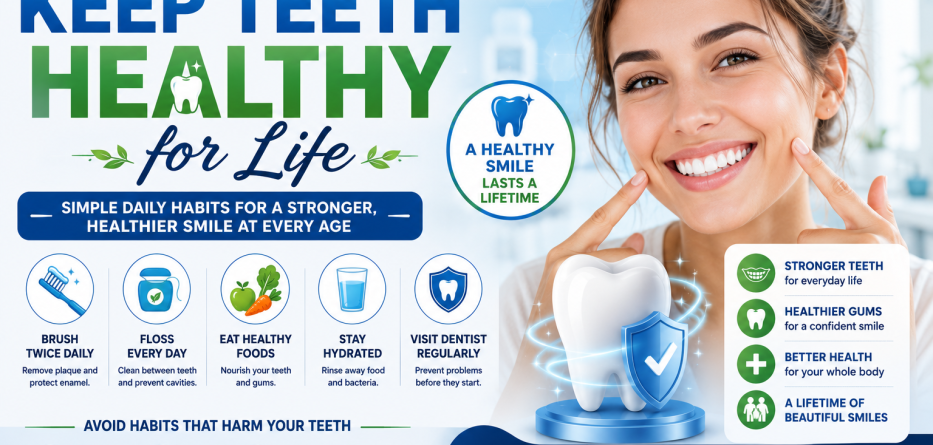
A healthy smile is more than just an attractive feature—it’s an essential part of your overall health and well-being. Strong teeth help you eat comfortably, speak clearly, and smile confidently. Yet many common dental problems, including cavities, gum disease, and tooth loss, can develop over time if proper oral care is neglected.
The good news is that most dental issues are preventable. By adopting healthy habits and maintaining consistent dental care, you can keep your teeth strong and healthy for life.
In this guide, we’ll explore the best practices for lifelong oral health, including daily hygiene routines, diet tips, preventive care, and habits to avoid.
Why Is Lifelong Dental Health Important?
Healthy teeth contribute to:
- Better chewing and digestion
- Clear speech
- Improved self-confidence
- Reduced risk of dental disease
- Better overall health
Research has linked poor oral health to several health conditions, including:
- Heart disease
- Diabetes
- Respiratory infections
- Pregnancy complications
Taking care of your teeth benefits your entire body.
1. Brush Your Teeth Properly Twice a Day
Brushing is the foundation of good oral hygiene.
Dentists recommend brushing:
- Twice daily
- For at least two minutes
- Using fluoride toothpaste
Proper Brushing Technique
- Hold the toothbrush at a 45-degree angle.
- Use gentle circular motions.
- Clean all tooth surfaces.
- Brush your tongue to remove bacteria.
- Replace your toothbrush every 3–4 months.
Proper brushing removes plaque and helps prevent tooth decay and gum disease.
2. Floss Every Day
Brushing alone cannot reach every area between the teeth.
Flossing helps remove:
- Food particles
- Plaque buildup
- Harmful bacteria
Benefits of Daily Flossing
- Healthier gums
- Reduced bad breath
- Lower cavity risk
- Prevention of gum disease
Make flossing a daily habit for complete oral care.
3. Use Fluoride for Stronger Teeth
Fluoride strengthens tooth enamel and helps prevent cavities.
Sources of fluoride include:
- Fluoride toothpaste
- Mouth rinses
- Community water supplies
- Professional fluoride treatments
Fluoride plays a crucial role in maintaining lifelong dental health.
4. Eat a Tooth-Friendly Diet
What you eat significantly affects your oral health.
Foods That Support Healthy Teeth
- Dairy products
- Leafy greens
- Crunchy vegetables
- Apples
- Nuts
- Fish
- Eggs
These foods provide essential nutrients such as
- Calcium
- Vitamin D
- Phosphorus
- Protein
Foods to Limit
- Sugary drinks
- Candy
- Sticky sweets
- Processed snacks
- Frequent sugary beverages
Reducing sugar intake helps lower cavity risk.
5. Stay Hydrated
Water is one of the best beverages for oral health.
Benefits include:
- Washing away food particles
- Neutralizing acids
- Supporting saliva production
- Reducing cavity risk
Drinking water after meals can help protect tooth enamel.
6. Avoid Tobacco Products
Smoking and tobacco use can severely damage oral health.
Risks include:
- Gum disease
- Tooth discoloration
- Tooth loss
- Delayed healing
- Oral cancer
Quitting tobacco is one of the best decisions for your teeth and overall health.
7. Limit Acidic Foods and Drinks
Acidic foods can erode enamel over time.
Common sources include:
- Soft drinks
- Sports drinks
- Citrus fruits
- Energy drinks
- Wine
Tips to Protect Enamel
- Use a straw when possible.
- Rinse with water afterward.
- Avoid brushing immediately after acidic foods.
Protecting enamel helps maintain strong teeth for life.
8. Visit Your Dentist Regularly
Routine dental visits allow early detection of problems before they become serious.
Most dentists recommend checkups every six months.
Benefits of Regular Dental Exams
- Professional cleaning
- Early cavity detection
- Gum disease prevention
- Oral cancer screening
- Personalized advice
Preventive care is often less costly and less invasive than restorative treatment.
9. Protect Your Teeth During Sports
Sports injuries are a common cause of dental trauma.
A custom-fitted mouthguard can help prevent the following:
- Chipped teeth
- Broken teeth
- Knocked-out teeth
- Jaw injuries
Athletes of all ages should wear protective mouthguards during contact sports.
10. Manage Teeth Grinding (Bruxism)
Many people grind or clench their teeth while sleeping.
Over time, this can cause:
- Tooth wear
- Cracks
- Jaw pain
- Headaches
A custom nightguard can protect your teeth and reduce damage.
11. Maintain Healthy Gums
Healthy gums provide the foundation for healthy teeth.
Signs of healthy gums include:
- Pink color
- Firm texture
- No bleeding
- No swelling
Signs of Gum Disease
- Bleeding gums
- Bad breath
- Gum recession
- Tooth mobility
Early treatment helps prevent tooth loss.
12. Replace Missing Teeth Promptly
Missing teeth can affect:
- Chewing ability
- Speech
- Bite alignment
- Jawbone health
Modern replacement options include the following:
- Dental implants
- Bridges
- Dentures
Replacing missing teeth helps preserve oral function and long-term health.
Oral Health Habits by Age
Children
- Supervised brushing
- Fluoride use
- Regular dental visits
Teens
- Orthodontic care
- Sports mouthguards
- Healthy diet choices
Adults
- Consistent oral hygiene
- Preventive dental care
- Stress management
Seniors
- Gum disease prevention
- Denture maintenance
- Dry mouth management
Healthy habits are important at every stage of life.
Common Mistakes That Damage Teeth
Avoid these harmful habits:
- Brushing too hard
- Skipping flossing
- Using teeth as tools
- Chewing ice
- Smoking
- Ignoring dental pain
- Delaying treatment
Small habits can have a big impact on long-term oral health.
Frequently Asked Questions
What is the best way to keep teeth healthy for life?
Brush twice daily, floss every day, eat a balanced diet, and visit your dentist regularly.
How often should I see a dentist?
Most people benefit from dental checkups every six months.
Is flossing really necessary?
Yes. Flossing removes plaque and food particles from areas your toothbrush cannot reach.
What foods are best for healthy teeth?
Dairy products, leafy greens, nuts, fish, fruits, and vegetables support strong teeth.
Can teeth stay healthy for a lifetime?
Absolutely. With proper care and preventive habits, many people maintain healthy natural teeth throughout their lives.
Conclusion
Keeping your teeth healthy for life requires a combination of good daily habits, smart dietary choices, and regular professional care. Brushing, flossing, fluoride use, healthy eating, and routine dental visits all play important roles in protecting your smile.
The sooner you establish strong oral health habits, the greater your chances of enjoying healthy teeth and gums for decades to come. A lifelong commitment to oral hygiene is one of the best investments you can make in your overall health and confidence.
